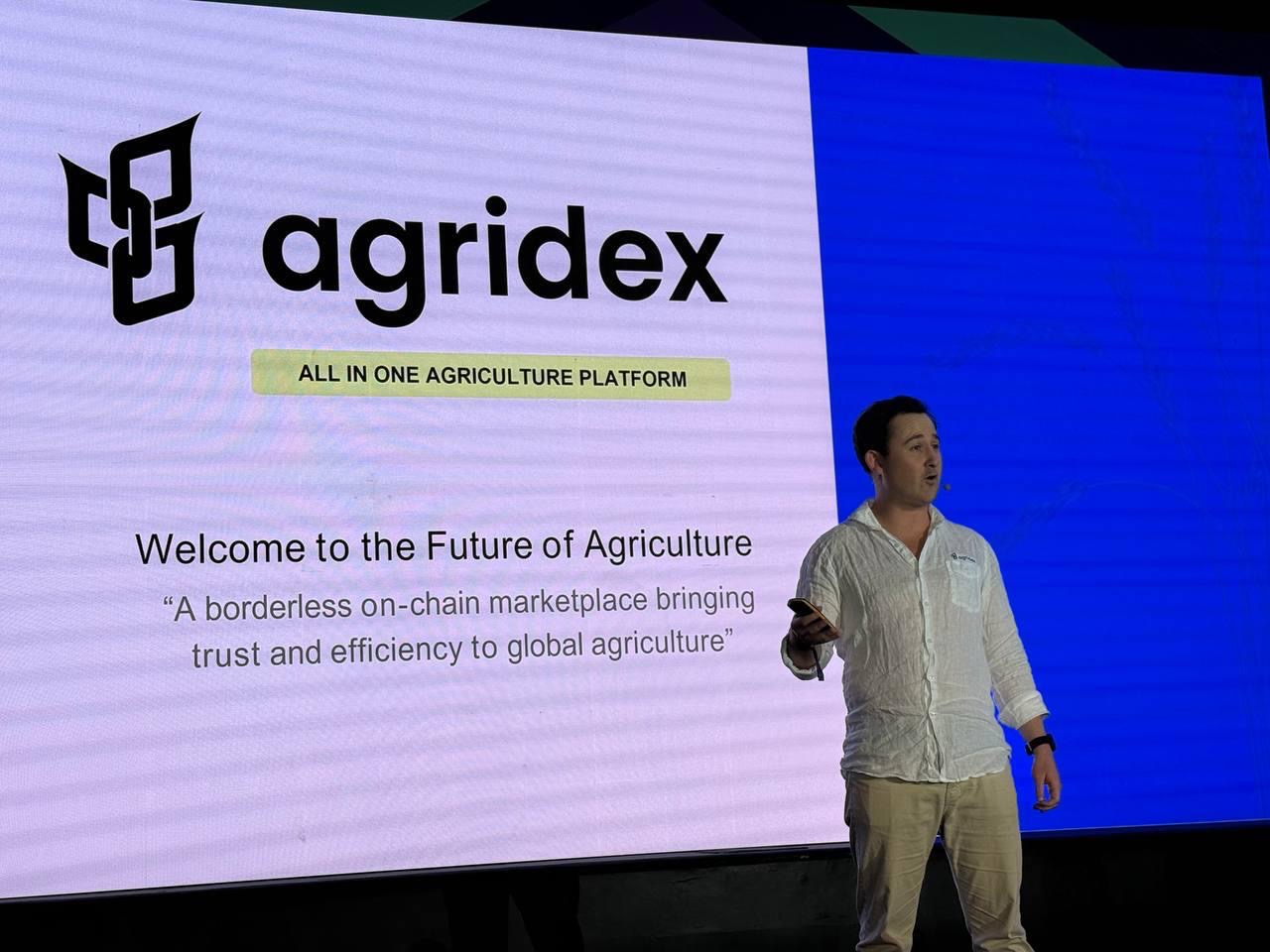
Agridex International, the fintech innovator behind the Loam digital payments and treasury optimisation platform, has announced a strategic partnership with Tradeflow Capital Management, marking a significant step forward in deploying institutional capital in Kenya’s vibrant agricultural sector and other key regional and African markets.
The collaboration is designed to strengthen access to structured trade finance and modern payment infrastructure for small and medium enterprises (SMEs) in Kenya and across Africa. By combining Tradeflow’s expertise in trade finance with Agridex’s Loam digital settlement platform, the partnership accelerates the flow of working capital to SMEs, reduces transaction costs and currency friction, improves transparency through near real-time visibility of funds, and addresses a long-standing gap in trade finance accessibility across emerging markets.

The agreement positions Agridex International, the fintech innovator behind the Loam digital payments and treasury optimization platform, at the centre of a broader transformation in Africa’s financial rails. By combining Tradeflow’s structured trade finance expertise with Loam’s near-instant cross-border settlement technology, the two firms aim to reduce the friction that has historically constrained African trade corridors.
Africa’s Structural Trade Finance Gap
The strategic importance of this partnership becomes clearer when placed against Africa’s financing realities. According to the African Development Bank, the continent faces a trade finance gap estimated at over $80 billion annually. Meanwhile, the International Finance Corporation (IFC) estimates the SME financing gap in Africa at approximately $330 billion per year. SMEs account for roughly 90 percent of businesses and contribute more than 50 percent of employment across Sub-Saharan Africa, yet access to affordable working capital remains limited.
Agriculture, which contributes about 23 percent of Sub-Saharan Africa’s GDP and employs over 60 percent of the labour force, is particularly affected. Commodity producers and aggregators often rely on costly intermediaries, slow banking rails, and opaque settlement systems. Cross-border payments within Africa can cost more than 3 percent of transaction value and take several days to clear, according to World Bank data on remittance and cross-border transfer costs.
This is precisely the friction Agridex International seeks to address through Loam.
Loam: Digital Rails for Trade Capital
At the heart of the Agridex International strategy is Loam, a proprietary digital payments and treasury infrastructure platform designed specifically for emerging markets. Loam delivers near-instant settlement with transaction costs below 0.2 percent, significantly lower than the traditional cross-border payment fees that often exceed 3 percent.
In practical terms, this means that a $1 million commodity transaction could see transaction costs fall from over $30,000 to less than $2,000, while also reducing settlement time from several working days to near real time. For SMEs operating on thin margins and tight working capital cycles, such efficiency gains are not marginal; they are transformative.
Henry Duckworth, Founder and CEO of Agridex International, underscored this structural shift, noting that Loam was built to solve real payment and settlement challenges in emerging markets. He observed that Tradeflow’s adoption of Loam as a core conduit for capital deployment demonstrates how modern payment rails can unlock scale, efficiency, and resilience in African trade finance.
By reducing delays and costs at the payment layer, Agridex International effectively shortens the cash conversion cycle for agricultural producers, exporters, and distributors. Faster settlement reduces counterparty risk, lowers exposure to currency volatility, and improves predictability in supply chain financing.
Tradeflow Capital: Scaling Structured Trade Finance
Tradeflow Capital Management brings institutional trade finance discipline to the partnership. Since inception, Tradeflow has turned over $5 billion in SME trade transactions, specializing in asset-backed, data-driven financing models and real-time supply chain risk mitigation.
Structured trade finance differs from unsecured SME lending. It relies on the underlying commodity or trade flow as collateral, combined with real-time monitoring and risk analytics. In African commodity markets, where price volatility and currency risk are constant variables, this approach enables capital to be deployed in a scalable yet disciplined manner.
Under the partnership, Tradeflow will use Loam as the foundational infrastructure for deploying structured trade finance capital into agricultural and commodity value chains across priority African markets. By leveraging Agridex International’s digital settlement rails, Tradeflow can accelerate working capital flows, materially reduce currency friction, and provide near-real-time visibility into fund movement.
For institutional investors, this combination enhances transparency and traceability, key concerns when deploying capital into emerging markets. Digital records and streamlined treasury optimization create an auditable trail that reduces operational and compliance risk.
The SME and Commodity Multiplier Effect
The economic ripple effects of improved trade finance infrastructure extend beyond individual transactions. Africa’s merchandise exports totaled approximately $682 billion in 2023, according to UNCTAD data, with commodities representing a substantial share. Yet much of the value chain remains under-financed, particularly at the SME level.
Working capital constraints limit farmers’ ability to purchase inputs, aggregators’ ability to scale, and exporters’ ability to meet international demand. When payment cycles are slow and unpredictable, businesses either shrink operations or pass costs downstream.
By enabling capital to reach SMEs faster and at lower cost, Agridex International and Tradeflow could help improve liquidity across agricultural value chains. In economies where agriculture underpins rural employment and food security, even incremental improvements in capital efficiency can translate into stronger GDP contributions, higher export competitiveness, and improved household incomes.
Furthermore, with the African Continental Free Trade Area (AfCFTA) aiming to boost intra-African trade by over 50 percent once fully implemented, modern cross-border payment infrastructure becomes indispensable. Payment harmonization and reduced transaction friction are essential to unlocking the AfCFTA’s projected economic gains, which the World Bank estimates could lift 30 million people out of extreme poverty by 2035.
Imara Group and the Broader Financial Infrastructure Push
Alongside Agridex International and Tradeflow, Imara Group continues to play a leading role in advancing financial inclusion and modern payment infrastructure across Africa. Over the past 20 years, Imara has invested $400 million across the continent, backing businesses that strengthen financial infrastructure and expand access to digital payments.
Imara’s long-term investment approach aligns with the structural nature of Africa’s financial transformation. Building resilient payment rails is not a short-term play; it requires sustained capital, regulatory engagement, and ecosystem partnerships. By supporting institutional-grade payment infrastructure, Imara contributes to the financial backbone that underpins trade, employment, and capital formation.
This layered ecosystem approach—combining fintech infrastructure, trade finance expertise, and long-term investment capital—signals a maturing African financial landscape. Rather than isolated innovations, the focus is increasingly on integrated systems capable of supporting scale.
Reducing Currency and Settlement Risk
Currency volatility remains a major concern for cross-border trade in Africa. Many SMEs transact in local currencies but settle in U.S. dollars or euros, exposing them to foreign exchange swings during multi-day settlement periods. Faster settlement via Loam reduces the time window during which exchange rate movements can erode margins.
Additionally, the reduction of transaction costs below 0.2 percent has macroeconomic implications. High transaction fees effectively function as a tax on trade. Lowering these costs enhances competitiveness for African exporters in global markets, where margins are often tight and price sensitivity is high.
Transparency is another critical factor. Digital records and near-real-time tracking reduce the opacity that has historically deterred institutional investors from African trade finance. Greater visibility improves risk pricing and could attract additional capital pools into African commodity markets.
Positioning Agridex International in Africa’s Fintech Surge
Africa’s fintech sector has been one of the fastest-growing globally over the past decade. According to BCG and QED Investors, fintech revenues in Africa are projected to reach $65 billion by 2030, driven by digital payments, lending, and embedded finance.
Within this context, Agridex International’s focus on institutional-grade payment infrastructure for trade finance represents a strategic niche. Rather than targeting retail payments alone, the company is addressing high-value trade flows that underpin national economies.
The Agridex International–Tradeflow partnership will initially focus on commodity trades and structured financing deployments across priority African markets. If successfully executed, the model could expand beyond agriculture into energy, manufacturing inputs, and broader supply chain finance.
A Shift Toward Modern Financial Rails
The announcement by Agridex International reflects a broader shift in how capital is mobilized for African development. Instead of relying solely on development finance institutions or traditional banking systems, new models are emerging that combine fintech innovation with institutional capital discipline.
By pairing Tradeflow’s structured finance expertise with Loam’s near-instant, low-cost settlement infrastructure, Agridex International is attempting to bridge the longstanding disconnect between global capital markets and African SMEs. The partnership addresses not just the availability of capital but the efficiency of its delivery.
In a continent where SMEs drive employment, agriculture anchors GDP, and trade corridors remain underdeveloped, the modernization of payment and treasury infrastructure is more than a technical upgrade. It is a structural enabler of growth.
As Africa deepens regional integration under AfCFTA and continues to digitize its economies, initiatives like this position Agridex International at the intersection of fintech, trade finance, and economic development. If the partnership delivers on its promise of faster settlement, lower costs, and greater transparency, it could represent a meaningful step toward closing Africa’s trade finance gap and unlocking scalable institutional capital for the continent’s real economy.
ALSO READ: I&M Bank Opens New Branch In Mwea, Targets Kirinyaga’s Agriculture Sector