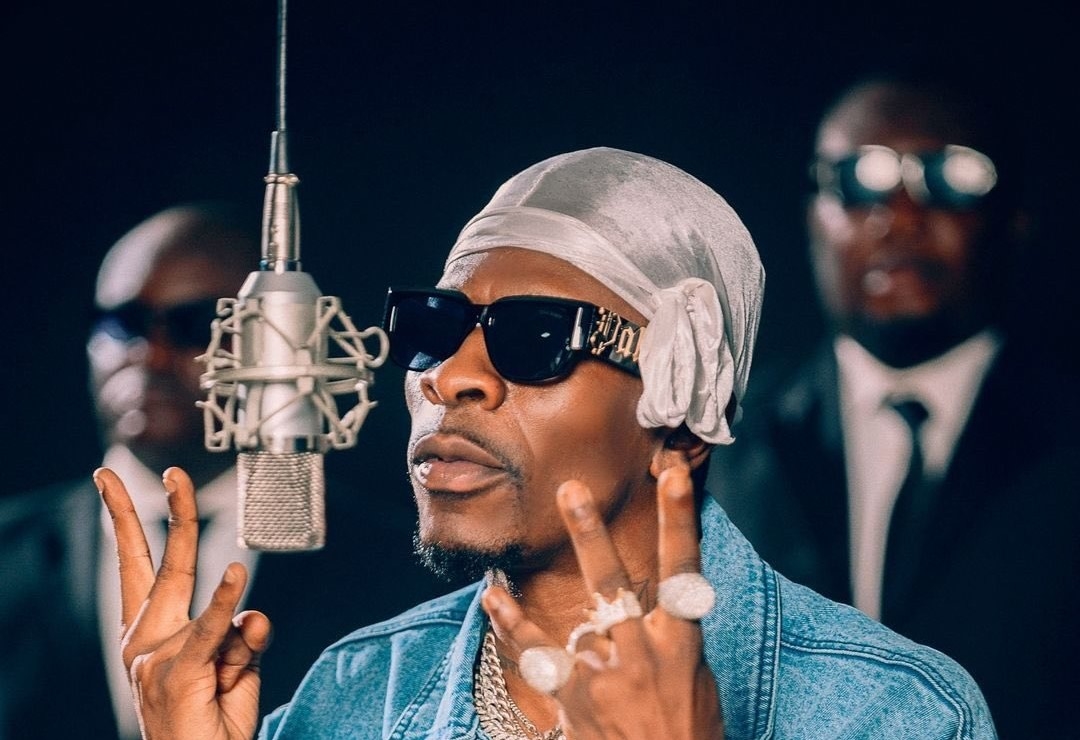
The battle between dancehall heavyweight Shatta Wale (Charles Nii Armah Mensah) and veteran producer MOG Beatz has reignited after a simmering dispute dating back to 2021. That year, MOG Beatz publicly accused Shatta Wale of failing to pay him for 10 tracks he produced on the Reign album, even though the project was a sizable success and yielded significant revenue.
Fast-forward to August 2025, and the conflict has reached a boiling point. On August 19, 2025, M.O.G Beatz took decisive action: he successfully had Shatta Wale’s two albums, Reign and Wondaboy, removed from Apple Music, citing serious intellectual property violations. M.O.G alleges that Shatta Wale not only failed to credit or compensate producers properly but also had claimed producer credits fraudulently, leveraging those credits to secure an advance from an international company, Waka Music, without informing or paying creators


M.O.G’s pointed X post read: “You sell my beats, erase my credit, then buy luxury cars.”
He warned that this removal was just the beginning, urging Shatta to “refund the company you scammed” or face more takedowns to come
Industry Perspectives and the Broader Copyright Context
UK-based music publisher Mark Darlington Osae weighed in on the intellectual property dimensions. He stated this kind of dispute is symptomatic of deeper structural failures in Ghana’s music industry, noting that weak IP-enforcement systems and ambiguous contractual practices have long left creators, especially producers, vulnerable
Darlington distilled the problem by noting that in many cases, producers are not properly credited for their work or fail to sign split-sheets that clearly outline ownership and rights. This lack of documentation leaves them exposed when disputes arise, as they have little evidence to back up their claims.
He also observed that advances paid to producers are often misunderstood within the industry. Rather than being recognized as part of a larger structure that includes producer points or publishing shares, these advances are frequently mischaracterized as full payment. As a result, producers may miss out on long-term revenue streams that should legally belong to them.
Without solid agreements in place, Darlington warned, producers can easily be stripped of their rights when songs are monetized. This is particularly problematic when music is repackaged or resold through publishing arrangements or catalogue sales, where the lack of clear contracts makes it simple for others to claim ownership or benefit financially.
He further challenged several critical questions in the case of M.O.G and Shatta Wale. What sort of agreement, if any, existed between them regarding credits or splits? Was M.O.G properly registered with his publisher or a performing rights organization (PRO) or collective management organization (CMO)? Did Shatta take credit for production work retroactively in order to secure commercial deals? And who exactly was informed when the catalogue was being sold or licensed to third parties?
If M.O.G’s allegations prove accurate, Darlington emphasized, the matter goes beyond a personal feud. It would represent serious breaches of both ethical and legal standards, with potentially far-reaching implications for how music is produced, credited, and monetized in Ghana and beyond.
Implications for Producers, Shatta Wale’s Career, and Rights Management
For producers, this unfolding drama highlights ongoing challenges that stretch across Ghana and much of Africa’s music industry. One of the most common issues is credit theft, where producer credits are assigned to individuals who had no involvement in the creative process. This not only erases the contribution of the actual producer but also denies them recognition and future opportunities.
Another recurring challenge is underpayment or outright non-payment, even for work on high-profile projects. Many producers find themselves sidelined when it comes to financial compensation, despite their critical role in shaping the sound of successful albums. This problem is compounded by the absence of effective legal remedies. Without clear documentation such as contracts or split sheets, many producers have little power to enforce their rights or claim what is owed to them.
In this context, M.O.G’s bold move to pull down Shatta Wale’s albums from a major streaming platform marks a turning point. His actions set a precedent for other producers who may feel compelled to take similarly assertive steps in enforcing their rights. It demonstrates that producers are no longer content to be sidelined and are increasingly willing to leverage digital platforms and copyright laws to demand fair treatment.
For Shatta Wale, the stakes are equally high. His reputation has come under intense scrutiny, with accusations of scamming and intellectual property theft threatening to tarnish his brand. This is especially damaging in a global industry where credibility and transparency are crucial for artists who want to monetize their catalogues on international platforms.
The financial consequences are also significant. With the removal of Reign and Wondaboy from Apple Music, Shatta risks losing substantial streaming revenue. These earnings are often a vital part of an artist’s income, and such takedowns could have long-term financial repercussions if the dispute remains unresolved.
Beyond lost revenue, there is the looming risk of legal liability. If it is proven that Shatta misled Waka Music, the international company allegedly involved in acquiring his catalogue, they could pursue damages or seek to recoup funds. This would open a new front of legal and financial battles that could further destabilize his career.
Adding to these troubles, Shatta is already entangled in other controversies, most notably issues with international agencies following the seizure of his luxury Lamborghini by authorities working with the FBI. These overlapping challenges compound the pressures he faces, raising questions about how he will navigate the turbulence while maintaining his status as one of Africa’s most influential dancehall artists.
FBI-Backed EOCO Seizure of Shatta Wale Lamborghini
In August 2025, Ghana’s Economic and Organised Crime Office (EOCO), working alongside the FBI and U.S. Department of Justice, executed a high-profile operation at Shatta Wale’s residence in Trassaco Valley, Accra. They seized a 2019 Lamborghini Urus, believed to be purchased with proceeds from U.S.-based fraud orchestrated by Nana Kwabena Amuah (aka Philip Osei Tutu), currently serving an 86-month sentence for romance scams and business email compromise (BEC) fraud
EOCO confirmed that the operation carried out at Shatta Wale’s residence was conducted in a manner that was both professional and civil. The agency stressed that despite the high-profile nature of the case, the process was handled with discretion and without unnecessary confrontation, reflecting their commitment to due process.
They further explained that Shatta Wale was given the option to voluntarily surrender the Lamborghini, a move they considered necessary given the vehicle’s symbolic value to his public image and brand messaging. By allowing him to hand it over rather than having it forcibly taken, EOCO sought to maintain a level of respect for his standing as a public figure while still fulfilling their mandate.
The agency also revealed that the United States is expected to submit a formal Mutual Legal Assistance (MLA) request to Ghana. This request would pave the way for the repatriation of the vehicle to the U.S. as part of efforts to fulfill restitution valued at approximately $4.7 million, which is owed by Nana Kwabena Amuah, the convicted fraudster linked to the purchase of the car. This step underscores the international dimension of the case and the collaboration between Ghanaian authorities and the FBI in tackling cross-border financial crimes.
Shatta’s public response criticised EOCO’s tactics, particularly the use of armed personnel, and referenced political overtones, suggesting the operation may reflect intimidation or overreach by EOCO’s leadership
Shatta Wale Welcomes New Lamborghini
Within weeks of the seizure, Shatta posted footage showing that a new Lamborghini Urus had arrived in Ghana. The timing is remarkable, signalling both resilience and the importance he places on luxury, brand image, and symbolic status
This gesture could be interpreted as a carefully calculated public relations move aimed at reassuring fans and stakeholders that Shatta Wale remains unshaken by the controversies surrounding him. By showcasing the arrival of a new Lamborghini so soon after the previous one was seized, he signalled resilience and a refusal to let setbacks dent his public image.
It also served as a bold statement of financial strength. In an industry where luxury cars and extravagant lifestyles are closely tied to an artist’s perceived success, acquiring another high-end vehicle sent a message that his wealth and influence remain intact despite the legal and reputational challenges he faces.
At the same time, the move can be read as an attempt to shift the narrative back to his music and characteristic bravado. Shatta Wale has long thrived on spectacle and controversy as part of his persona, and this new acquisition allowed him to reassert control over the public conversation, diverting attention from legal troubles and redirecting it toward his flamboyant lifestyle and enduring star power.
Shatta Wale’s History of Controversy & International Attention
Shatta Wale’s entanglements with authorities go back well before the Lamborghini saga. In October 2021, he staged a hoax shooting incident that set off a police pursuit and ultimately led to his arrest for causing public fear and panic. He was remanded in custody for a week before securing bail set at GH¢100,000, an episode that cemented his reputation as both a controversial and unpredictable figure in Ghanaian entertainment.
Beyond isolated incidents, Shatta Wale’s combative style has become part of his public identity. His frequent legal run-ins and unapologetically bold social media persona have kept him in constant headlines, often blurring the line between artistic expression, political commentary, and personal branding. This deliberate courting of controversy has won him both devoted fans and harsh critics, making him one of Ghana’s most polarising celebrities.
The 2025 FBI-linked seizure of his Lamborghini underscores how local celebrity lifestyles can become entangled with global legal matters. When assets are suspected to be connected to illicitly obtained property, even figures as prominent as Shatta Wale can find themselves caught in the web of international law enforcement. It is a reminder that in today’s interconnected world, fame offers little protection from the reach of cross-border investigations.
What This Means for the Ghanaian Music Industry
This evolving saga exposes deep structural weaknesses in the music industry, starting with the vulnerability of intellectual property for producers. Without enforceable contracts or clear publishing registration, producers are left exposed, making it easy for their work to be exploited without recognition or proper compensation.
For artists, the controversy underscores the importance of transparency. Long-term catalogue monetisation and the preservation of reputational integrity depend on maintaining well-documented agreements. In Shatta Wale’s case, the absence of such structures has not only triggered disputes with producers but has also cast a shadow over his ability to manage his music business in a way that inspires confidence among partners.
The situation also highlights legal and regulatory gaps within Ghana’s creative industries. Weak intellectual property protection mechanisms mean that disputes like this are not only common but also difficult to resolve fairly. Stronger laws and more robust enforcement systems are urgently needed to safeguard the rights of all players in the sector.
Finally, the case demonstrates how international scrutiny can quickly complicate matters for high-profile artists. Once cross-border legal issues enter the picture, as seen with Shatta Wale’s Lamborghini seizure, the risks extend beyond music. Personal brand, business partnerships, and even asset safety become vulnerable, showing just how high the stakes are in the modern globalized entertainment industry.
What Happens Next?
The clash between Shatta Wale and M.O.G Beatz is more than a feud; it’s a seismic moment shining a light on intellectual property governance in Ghana’s music industry. As of August 2025, M.O.G has taken bold steps to enforce his rights, including pulling two major albums from global streaming platforms.
Meanwhile, Shatta’s parallel battle with enforcement agencies, marked by the FBI-backed seizure of a Lamborghini, shows how personal branding, music, luxury, and international law can collide.
His rapid replacement of the vehicle demonstrates resilience, self-promotion, and perhaps a defiant statement to fans and critics alike.
For artists and producers, the takeaway is clear: document, register, and negotiate transparently. For the industry, it’s a clarion call to strengthen copyright infrastructure.
ALSO READ: Sub-Saharan Africa’s music revenues surpass $100 million mark