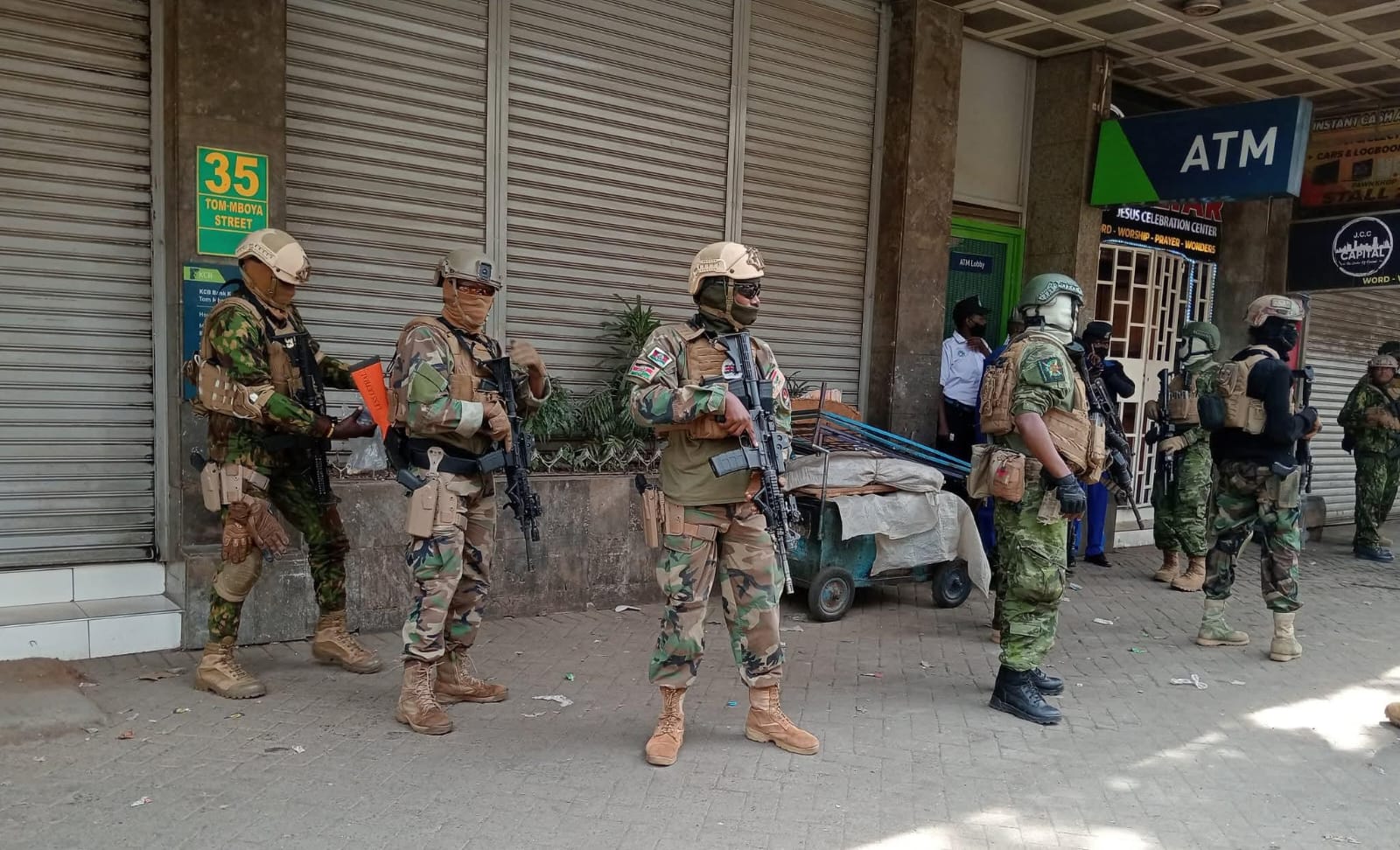
In the early hours of the morning, Nairobi’s busy roads, including Waiyaki Way, ground to a sudden halt as police officers set up roadblocks, cutting off traffic and causing major disruptions to the city’s transport system. This key arterial route, which connects Westlands to the central business district and serves thousands of daily commuters, was rendered impassable. The impact of the disruption rippled across the city.
Public service vehicles, private motorists, and delivery trucks were forced to reroute or stall for hours. Many residents were left stranded, walking long distances to reach work or school. For those running businesses along Waiyaki Way and in adjacent areas, the blockade resulted in a loss of income, missed appointments, and a sense of growing unease. While the visible explanation for the police presence was anchored in security measures, the larger context lies in the rising tension surrounding the Saba Saba protests planned for July 7th.


Why Was Waiyaki Way Blocked Ahead Of Saba Saba Protests?
The Saba Saba protests have become a significant moment in Kenya’s political and civil society calendar, marking the struggle for multiparty democracy and citizens’ rights. Historically rooted in the demonstrations of July 7, 1990, Saba Saba has evolved into a broader platform for expressing discontent with government policy, corruption, inflation, and police brutality.
This year’s protests have gained momentum through social media mobilisation, with civil rights activists, students, political figures, and concerned citizens calling for reforms. Key grievances include the rising cost of living, lack of transparency in public financial management, youth unemployment, and an overbearing approach to policing dissent.
The symbolism of Saba Saba combined with contemporary frustrations has set the stage for heightened demonstrations, particularly in Nairobi and other urban centers.
In anticipation of the protests, police deployed preemptive tactics to control potential unrest, and the blockade of Waiyaki Way was part of this strategy. However, this approach has drawn sharp criticism. Critics argue that instead of preventing chaos, such disruptive actions inflame public anger and create unnecessary inconvenience for law-abiding citizens.
The economic impact is also significant. Nairobi’s road network is the lifeblood of the city’s productivity, and when major routes are closed without clear communication or coordination, small and large businesses alike suffer. Hawkers, transport operators, logistics firms, office workers, and retail owners experience losses that further strain their already stretched finances in a tough economic climate.
The public frustration was evident across social platforms, where photos and videos of stranded commuters, stalled vehicles, and empty shops trended under hashtags linked to the Saba Saba protests. Citizens called out the government for appearing more focused on suppressing dissent than addressing the root causes of discontent.
Meanwhile, those planning to join the protests interpreted the police action as confirmation of the government’s fear of public scrutiny. Tension in various neighbourhoods continued to rise, with fears of potential clashes between protesters and security personnel, especially in informal settlements and youth-dominated suburbs.
The disruptive nature of these police actions brings to the fore deeper questions about how Kenya balances public order with constitutional freedoms. The right to protest, as enshrined in Article 37 of the Kenyan Constitution, is a pillar of democratic participation. However, the right to protest must be exercised peacefully and with mutual respect for other citizens’ rights, including the right to work, travel, and conduct business.
The police, in turn, have a duty not only to maintain public order but to do so within a framework that respects human rights and civil liberties. Blocking roads without prior public communication or alternative arrangements not only violates this principle but also signals a regression in democratic maturity.
Understanding the roots of the Saba Saba movement and the current national mood is essential in crafting a more effective response from authorities. The anger among citizens is not spontaneous; it is a reflection of long-standing grievances.
With rising inflation, fuel prices, tax burdens, and public sector inefficiencies, many feel abandoned by the political elite. The growing debt burden, coupled with perceived wastage and corruption in government, has led to widespread scepticism about official policies. Protest, therefore, becomes not just a form of defiance but a cry for attention and accountability. Suppressing this cry with roadblocks and force, rather than engagement and reform, only widens the trust gap between the state and the people.
There is also a critical need to analyse the psychology of policing in Kenya. The country’s security apparatus, shaped by years of colonial legacy and post-independence authoritarianism, tends to default to forceful crowd control rather than modern, rights-based policing.
The 2010 Constitution sought to change this by embedding community policing principles and enhancing the independence and professionalism of the police service. However, reforms have been uneven, and public confidence in the police remains low. High-profile cases of police brutality, including the use of excessive force during protests, have not helped. While the police claim to act in the interest of peace and security, their methods often betray a deeper fear of civic activism and a lack of training in de-escalation.
To move forward, both the government and the public must embrace a new framework of engagement. First, there must be a commitment to uphold constitutional freedoms without compromise. Citizens must be allowed to protest peacefully, and protest organisers must take responsibility for ensuring discipline and coordination during such events. Second, the police must undergo more intensive training in public order management, especially focusing on non-violent crowd control, human rights, and communication skills. The use of force should be the last resort, not the first instinct.
In addition, the government must begin to see civic activism not as a threat, but as a mirror of public sentiment. Instead of attempting to suppress protests through roadblocks and intimidation, authorities should open dialogue platforms where grievances can be aired and addressed. Meaningful public participation, genuine accountability mechanisms, and open government data on spending and reform progress would go a long way in restoring trust. Youth engagement, particularly through structured town halls and digital platforms, would ensure that voices are heard early before frustration spills into the streets.
For the Saba Saba commemorations to fulfill their democratic potential, they must be framed not just as protest days, but as moments for national reflection and renewal. The public must remain vigilant but peaceful. Civil society groups, religious leaders, and professional associations must step up to mediate and monitor protest activities while urging restraint from both demonstrators and law enforcers. Meanwhile, the government must read the signs of the times and shift from a reactionary posture to one of reform and responsiveness.
The events of this morning on Waiyaki Way are a warning bell. They show what happens when communication breaks down, when security takes precedence over rights, and when authorities act without accountability. The consequences are more than just logistical—they are symbolic of the growing rift between the governed and those who govern.
Blocking Waiyaki Way Has Wider Implications
Kenya, often viewed as a leader in constitutional governance in the region, finds itself at a crossroads in how it navigates public dissent and civic expression. The decision by security agencies to block not only Waiyaki Way but also several other key routes in Nairobi, including Jogoo Road, Mombasa Road, Thika Superhighway, Lang’ata Road, and parts of the Central Business District, had far-reaching consequences.
These closures disrupted the daily routines of thousands of Kenyans, many of whom rely on these routes for commuting, trade, and access to essential services. Businesses, particularly those dependent on transportation and foot traffic, experienced slowed operations, late deliveries, cancelled meetings, and in some cases, full-day shutdowns. Informal sector workers, vendors, and daily wage earners bore the brunt of the day’s losses, with many reporting zero income for the day.
The wider economic effects of such disruptions go beyond individual losses; they reduce productivity, strain supply chains, and diminish consumer confidence in the stability of the business environment. These ripple effects highlight the importance of balancing security considerations with the need to sustain economic momentum, particularly in a capital city that drives a significant portion of the country’s GDP.
While the intention behind such police actions may be to maintain public order and prevent unrest, the approach raises important questions about proportionality, communication, and coordination. There is a growing need for constructive engagement between security agencies, civil society, and the broader public. Rather than relying heavily on physical barriers and preemptive crackdowns, a more inclusive model that prioritises dialogue, clear communication, and proactive problem-solving could reduce tensions while still safeguarding public safety.
Looking ahead, it is possible that more demonstrations will occur, accompanied by further police presence in major towns. However, Kenya has the institutional and civic frameworks needed to chart a path that values both order and open expression. Building that path requires a shift in how protests are perceived and handled—not as threats, but as reflections of underlying public sentiment that should be heard and understood.
Ultimately, the goal should not merely be to manage public gatherings but to address the socio-economic conditions and governance issues that lead to such protests in the first place. If approached in this way, mornings on roads like Waiyaki Way and beyond can once again be defined by smooth traffic, vibrant commerce, and a public that feels both secure and heard.
ALSO READ: Saba Saba: Old Wounds Reopened Amid Police Brutality, Repression