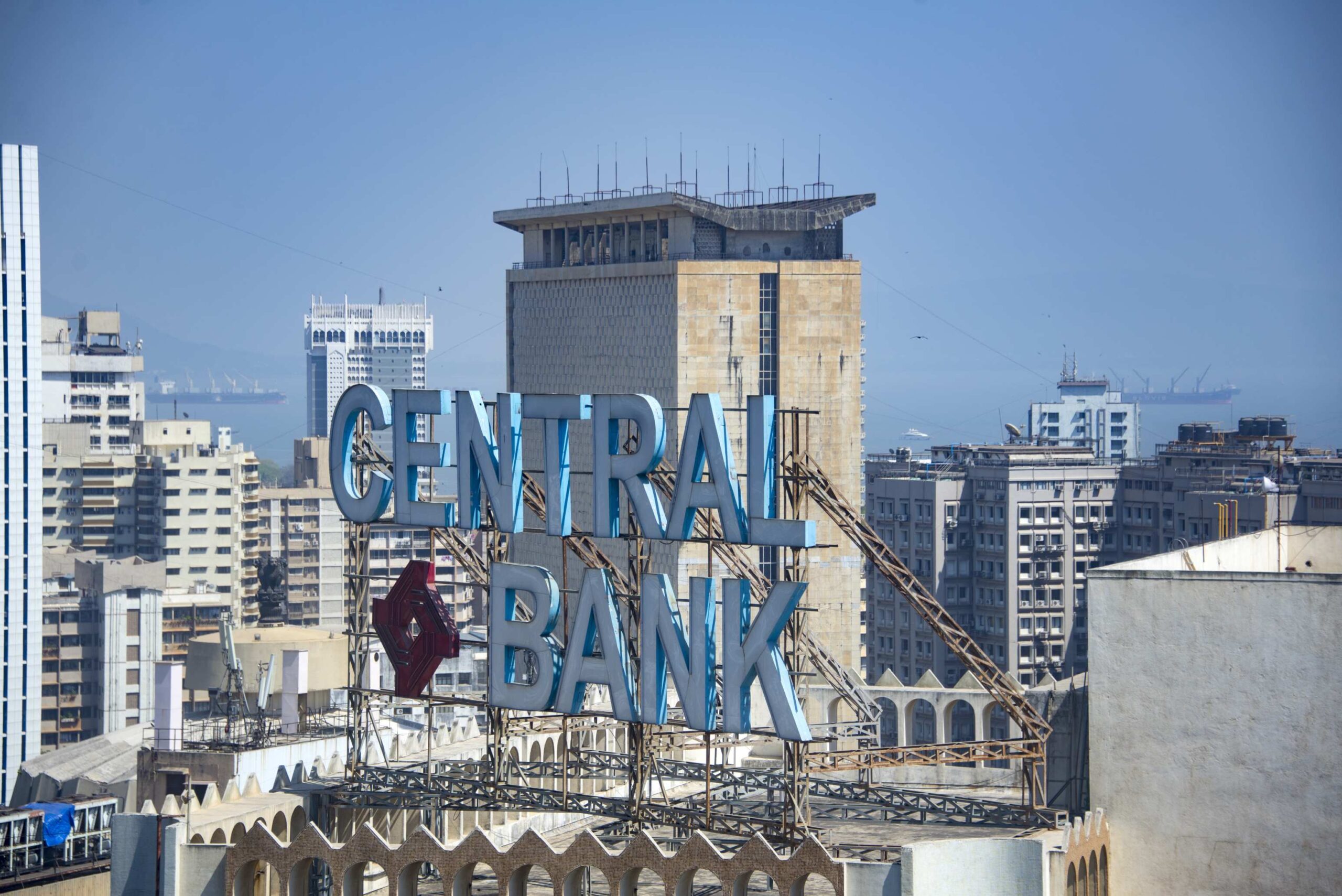
The Central Bank of Kenya (CBK) has released a draft framework for identifying and supervising Domestic Systemically Important Banks, also called D-SIBs or D-SIFIs. The new rules for Kenyan Banks will be out for public comment until 7 November 2026. The CBK reasons that some institutions are so large, so connected, or so hard to replace that their failure would hurt the whole economy. Those banks should therefore hold more capital, face closer watch, and in some cases accept limits on how fast they grow.
The idea is borrowed from the Basel rules used after the 2008 global financial crisis, then adapted for Kenya. Instead of looking at a bank’s global footprint, CBK looks at how much Kenya itself would lose if that bank disappeared.


What A Domestic Systemically Important Bank Is
A Domestic Systemically Important Bank is one whose messy collapse would disrupt Kenya’s financial system and damage the wider economy. The framework covers all licensed banks and mortgage finance companies, including the Kenyan subsidiaries of foreign groups such as Absa, Stanbic and Standard Chartered. If a local subsidiary is designated, CBK will also talk to the parent bank’s home regulator.
CBK will score every licensed institution once a year using data as at 31 December. Banks that cross the threshold will be told by 31 March. The official list will be published by 30 June. Newly designated banks, or banks moved into a higher risk bucket, get up to 12 months to meet the extra rules. They must send CBK a board-approved plan within three months of being notified.
The Five Tests CBK Will Use In Its New Rules For Kenyan Banks
- Size (40 percent).
This is the heaviest factor. CBK looks at a bank’s total exposures, assets plus off-balance-sheet items, compared with the rest of the industry. A bank with millions of customers and a balance sheet measured in trillions of shillings can freeze large parts of the payments system if it fails overnight. KCB and Equity already sit in that league, with group assets well above Sh2 trillion.
- Interconnectedness (30 percent).
This measures how tightly a bank is tied to other Kenyan financial institutions. CBK looks at deposits and balances that banks hold with each other. When banks lend to one another and hold each other’s deposits, one failure can quickly become several. That is how a single problem turns into a system-wide freeze.
- Substitutability (15 percent).
Can another bank easily take over the work if this one stops? CBK looks at lending to households, lending to trade and SMEs, and the bank’s share of Real Time Gross Settlement (RTGS) payments. If one lender dominates salary accounts, SME working-capital loans or large-value payments, its sudden exit would leave a hole that smaller banks cannot fill quickly.
- Complexity (5 percent).
This is the lightest weight, but it still matters. CBK examines securities holdings and derivatives. A bank that also runs insurance, investment banking or operations in several countries is harder to unwind in a crisis. Unwinding a simple deposit-and-loan book is one thing. Unwinding a web of contracts across borders is another.
- Importance to the domestic economy (10 percent).
This is Kenya’s own addition to the Basel template. CBK looks at a bank’s share of total customer deposits and the size of its balance sheet relative to GDP. A bank can be modest by global standards and still be indispensable at home.
A bank can be designated if its overall score is high enough or if it scores unusually high on even one category. Designated banks are then placed in three buckets. Extra Common Equity Tier 1 capital, the strongest form of capital, ranges from 0.5 percent to 2.5 percent of risk-weighted assets. The most systemically important names would sit in the top bucket.
What changes once a bank is labelled D-SIB
Higher capital is only the starting point. The extra buffer is meant to absorb losses so that taxpayers are less likely to pay for a bailout. CBK is explicit about that goal: reduce the chance that a major institution needs public money.
Supervision also tightens. Designated banks can expect more frequent examinations, closer review of their risk appetite, quarterly stress tests, and annual capital and liquidity adequacy assessments. They must file recovery and resolution plans every year by 30 April, documents that set out how the bank would keep critical services running or be wound down without crashing the system. CBK may also restrict expansion or new products if those moves would raise the bank’s systemic risk. That clause will matter for groups that have been pushing hard into Uganda, Tanzania, Rwanda, DRC and beyond. Growth that looks good on an earnings call can look different to a supervisor who is thinking about how to resolve the group if something goes wrong.
None of this means the named banks are weak today. Kenya’s banking sector as a whole still reports comfortable capital and liquidity ratios. The point is preparation, not punishment.
Why this is happening now
Kenyan banks have grown fast and gone regional. That success is also the source of new risk. A problem in one country can travel home through the parent. Past Kenyan bank failures, Imperial, Chase, Dubai Bank and others, showed how quickly governance failures and insider lending can destroy an institution. Those collapses were painful. They were not system-wide. The next one involving a much larger, more connected bank might be.
The framework also sits alongside other capital reforms. Commercial banks are already being pushed toward a Sh10 billion minimum core capital over the coming years. D-SIB rules add another layer on top for the institutions that matter most.
There is a trade-off. Extra capital and extra scrutiny raise the cost of doing business. Some of that cost can show up in lending rates or slower product launches. Restrictions on expansion could slow the very regional growth that has made Kenyan banks influential in East Africa. Supervisors will have to judge when a limit protects the system and when it simply protects incumbents from competition.
There is also a moral-hazard risk. Once the public knows which banks are “too important to fail,” those banks can find it cheaper to raise money and may take more risk, assuming the state will not let them go under. Good supervision and credible resolution plans are the only real answers to that problem.
What it means for ordinary Kenyans
For most customers the immediate effect will be invisible. Accounts will still work. Loans will still be booked. Over time, a more tightly supervised big bank should be safer. That matters if you keep a large salary account, run a business that depends on RTGS payments, or hold deposits above the insured limit.
The proposed framework is an attempt to make a future crisis less expensive for the public purse. Whether it succeeds will depend less on the scoring formula and more on whether CBK actually uses the extra powers, including the power to slow expansion, when a designated bank starts taking risks that the rest of the country cannot afford.
Banks, analysts and the public have until early November to submit their comments. After that, Kenya will have an official list of institutions whose failure is no longer treated as a private corporate event. It will be treated as a national risk. That shift, more than any single capital percentage, is the real change.
ALSO READ: Diaspora remittances dip in February to Sh49.5B but annual inflows remain strong