


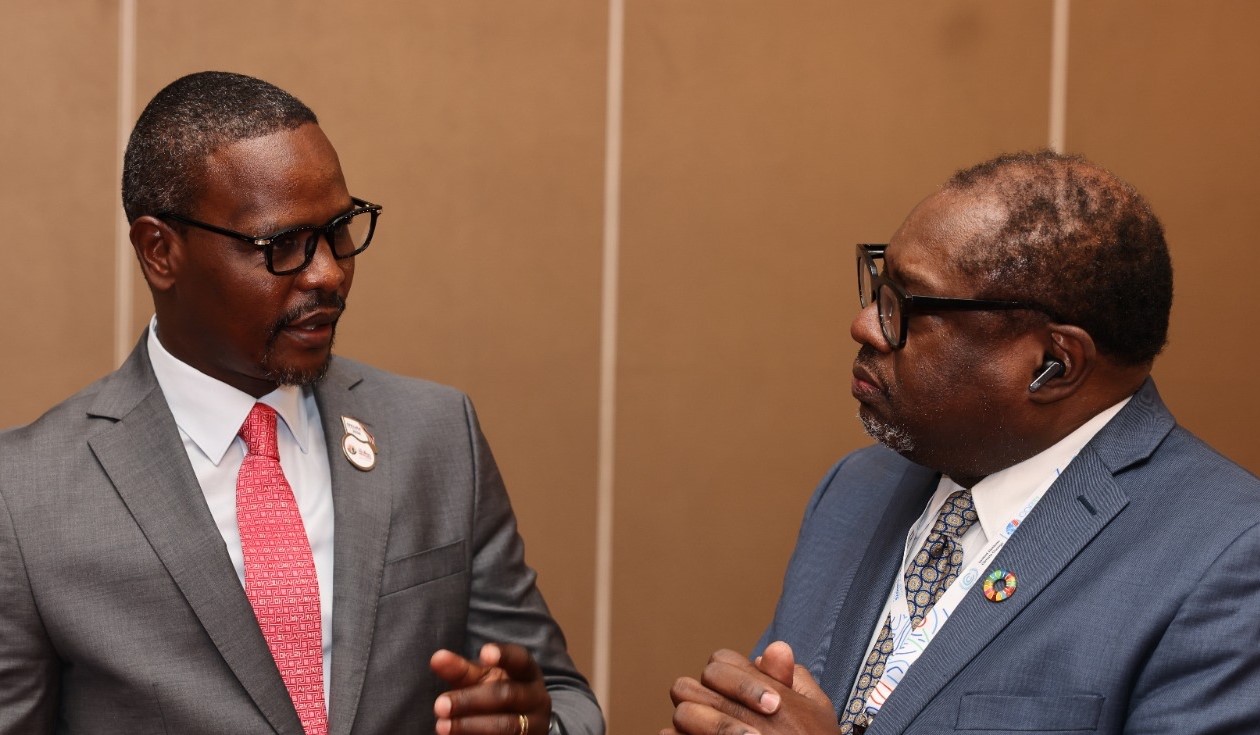
KCB hosted a high-level side event at COP31 in Antalya, Türkiye, bringing together government leaders and key stakeholders to explore opportunities for strengthening strategic partnerships in sustainable finance, climate action and investment in Kenya.
Held under the theme “Strengthening Strategic Partnerships for Sustainable Finance, Climate Action and Investment in Kenya,” the session focused on accelerating the decarbonisation and greening of the education sector through innovative financing solutions and collaborative action.

The engagement was led by KCB Bank Kenya Managing Director, Mrs Annastacia Kimtai, and attended by Hon. Dr Deborah Mlongo Barasa, Cabinet Secretary, Ministry of Environment, Climate Change and Forestry, and Dr Eng. Festus Ng’eno, Principal Secretary, State Department for Environment and Climate Change.
Since 2022, KCB has rolled out a clean energy financing pilot valued at over KSh2 billion, supporting 600 schools and 60 TVET colleges to transition to cleaner energy solutions. The initiative has contributed to lower energy costs, reduced reliance on biomass fuels and improved energy reliability across participating institutions.
Speaking at the event, Cabinet Secretary Hon. Dr Deborah Mlongo Barasa outlined the Government’s policy frameworks and commitment to achieving universal access to clean cooking by 2028. She further highlighted the potential to scale the programme to 10,000 secondary schools, 250 TVET institutions and 42 universities, requiring an estimated US$460 million in financing.
Discussions highlighted the need to mobilise additional capital through concessional financing, de-risking instruments and technical assistance to attract greater participation from development finance institutions and private investors.
KCB’s Clean Energy Financing for Kenyan Schools
Through its clean energy financing initiatives, KCB is strengthening the role of financial institutions in supporting Kenya’s climate commitments while advancing access to cleaner energy, protecting natural resources and creating healthier, more sustainable learning environments.
Today Kenyan schools consume more than 685,000 tonnes of firewood and charcoal annually. This has massively contributed to deforestation, high food costs, and respiratory illnesses for people involved in meal preparations for students in Kenyan schools.
Under its clean energy financing model, KCB provides grants covering 10–30% of the cost of installing Liquefied Petroleum Gas systems, while also financing the remainder through affordable loans and financing mechanisms.
In August 2025, a single pilot program rolled out clean energy products for 30 schools. The entire program totaled Ksh 30 million in grants and Ksh 60 million in loans. The success of that program prompted structural realignments to roll out clean energy access frameworks for more learning institutions in need across the country.
The program has so far supported more than 600 basic learning institutions while 38 tertiary institutions have benefitted from KCB’s clean energy financing framework.
KCB Bank Head of MSME Banking says the program does not have a life span as it presents an opportunity to support Kenya’s education sector while advancing the bank’s sustainable finance agenda.
The bank rolled out the clean energy loan in 2022 to support the adoption of clean cooking solutions in the learning institutions.
COP31 Conference in Turkey is expected to continue until 20 November 2026. More leaders and climate change experts are expected to continue having conversations and building roadmaps to a more sustainable future.
ALSO READ: Top 10 Most Valuable Brands In Kenya