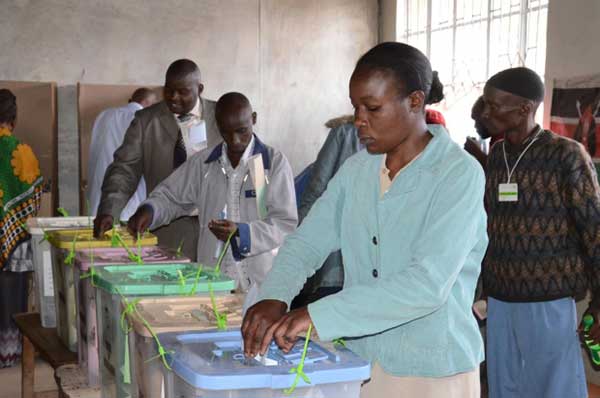
Kenya’s electoral integrity faces renewed scrutiny as the Elections Observation Group (ELOG) intensifies demands for full access to the voter register ahead of the 2027 polls, citing unresolved anomalies that threaten democratic credibility.
The coalition’s push comes amid persistent concerns over duplicate entries, deceased voters, and opaque audit processes, echoing historical flaws in Kenya’s electoral infrastructure.


The ELOG Chairperson, Victor Nyongesa warned that unresolved register issues could undermine public trust, emphasizing: “Addressing the integrity of the RoV is essential as we prepare for the 2027 elections.”
His remarks underscore broader anxieties about Kenya’s electoral preparedness, particularly after the 2022 polls saw limited transparency in voter register audits despite IEBC’s KPMG-commissioned review.
The group’s critique aligns with Kenya’s turbulent electoral history, where voter register disputes have fueled post-election violence. In 2017, KPMG estimated up to 1 million deceased voters remained on the register, while ELOG’s audits in 2012 and 2017 uncovered over 300,000 duplicate records. These systemic gaps persist despite IEBC’s biometric voter registration (BVR) systems, which were hailed as transformative when introduced in 2009 but have struggled to eliminate manual errors.
ELOG’s demands for independent audits and IEBC reconstitution mirror civil society’s long-standing calls for electoral reforms. The coalition advocates a “people-to-list” verification process and public participation in register cleanup, citing the National Dialogue and Reconciliation Committee (NADCO) report’s recommendations for stakeholder collaboration.
However, IEBC’s reluctance to share granular data, such as unredacted voter details has fueled tensions, with critics arguing privacy concerns outweigh transparency needs.
The IEBC’s handling of voter register audits remains contentious. While the commission gazetted a final register of 22.1 million voters in 2022, stakeholders lamented delayed access to KPMG’s audit findings and the absence of machine-readable results data. ELOG’s parallel vote tally aligning with IEBC’s 2022 figures offers partial reassurance, but unresolved issues like politically motivated voter transfers and incomplete deceased voter removals linger.