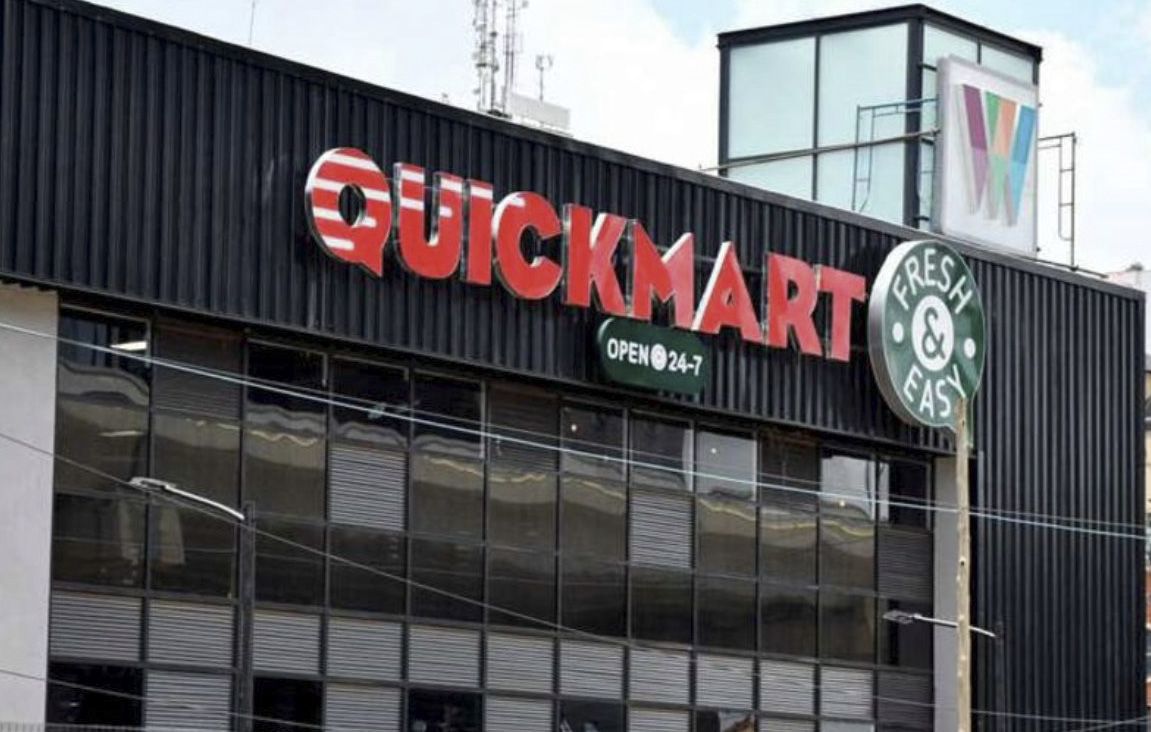
On 5th October 2026, QuickMart announced that it had received the requisite regulatory approvals for its Initial Public Offering (IPO) and subsequent listing of its Ordinary Shares on the Main Investment Market Segment of the Nairobi Securities Exchange. The Quickmart IPO is by way of an Offer for Sale of 2,000,000,000 existing Ordinary Shares at a value of KES 0.20 and an Offer Price of KES 7.50.
For investors considering the reported offer price of KSh 7.50 per share and a proposed dividend payout of 80%, the central question is not simply whether Quickmart is a popular supermarket brand. It is whether the business can consistently convert its sales into profits and cash, maintain its competitive position, finance future growth and deliver attractive long-term returns to shareholders.


Here is everything you need to know about the Quickmart IPO.
What is the Quickmart IPO?
Quickmart is a Kenyan supermarket chain that has grown from a single store in Nakuru in 2006 into one of the country’s largest formal grocery retailers. Its proposed IPO offers members of the public an opportunity to buy shares in the business and participate in its future profits, risks and growth.
According to the company’s official IPO website, Quickmart operates 72 stores across 16 counties, serves more than five million customer transactions monthly and works with over 700 suppliers. Its Q-Points loyalty programme has approximately 2.5 million members.
The company has announced an offer price of KSh 7.50 per share and plans to offer two billion existing ordinary shares, representing 50% of its issued share capital, in a transaction expected to raise KSh 15 billion for the selling shareholder.
The offer opened on 5 October 2026 and is scheduled to close at 5 p.m. East African Time on 30 October 2026. Trading on the Nairobi Securities Exchange (NSE) is expected to begin on 12 November 2026, subject to regulatory approvals and the published timetable.
The first thing investors should understand is that this is an offer for sale, not a conventional capital-raising exercise in which the company receives the money raised.
The shares are being sold by Sokoni Retail Kenya Limited, Quickmart’s existing owner. The KSh 15 billion expected from the transaction will therefore go to the selling shareholder rather than directly into Quickmart’s bank account for opening new stores, buying stock or repaying debt.
That distinction does not automatically make the IPO unattractive. It does, however, change the investment argument. Investors are buying an ownership stake in an established business whose future growth must be financed through its own cash flows, borrowing or future fundraising, rather than assuming the IPO proceeds will directly finance expansion.
The transaction will also broaden ownership and subject the company to the disclosure and governance requirements associated with being publicly listed. These can benefit investors, provided the company maintains strong reporting and accountability after listing.
Is Quickmart a viable Investment Vehicle?
There is a credible investment case for Quickmart, but prospective shareholders must distinguish between a good business and a good investment at the price being offered.
Quickmart has several characteristics that investors generally look for in a consumer-facing business: an established brand, repeat customers, a national store network, supplier relationships and a product range covering everyday household needs.
Its size also matters. A supermarket chain purchasing products for dozens of stores can potentially negotiate better prices and commercial terms than a small independent retailer. It can spread logistics, technology, marketing and management costs across a larger sales base.
The company’s history of growth provides an initial basis for assessing this opportunity.
That is meaningful growth. Revenue nearly doubled in four years, suggesting that Quickmart has expanded its customer reach and ability to generate sales.
However, revenue growth alone is insufficient. A retailer can sell more goods while earning little additional profit if its costs rise faster than sales or it has to discount heavily to compete.
Quickmart’s reported statutory profit for 2025 was approximately KSh 1.51 billion, compared with adjusted profit after tax of about KSh 1.71 billion. The difference is important because adjusted earnings exclude certain items that management or the reporting accountants treat as non-recurring. Investors should understand those adjustments and establish whether the excluded costs are genuinely exceptional or likely to recur.
The other important question is whether the company can sustain its growth without stretching its finances. Opening new stores requires investment in inventory, staff, fittings, technology and distribution. Even where premises are leased, expansion consumes cash.
How Much Is Quickmart Share Price?
This is arguably the most important question for an investor considering the IPO.
A share price of KSh 7.50 can look affordable because it requires relatively little money to purchase a small number of shares. But the nominal price of a share does not establish whether it is cheap or expensive.
The appropriate starting point is the company’s total valuation compared with its earnings, cash flows, assets and growth prospects.
The offer involves two billion shares representing 50% of the company. On that basis, the implied total share count is four billion shares, and the offer price implies an equity valuation of approximately KSh 30 billion.
The following calculations use the reported 2025 figures and the implied share count. They are indicative valuation measures, not a substitute for the prospectus’s detailed valuation analysis.
The KSh 7.50 price is not automatically a bargain simply because Quickmart is a familiar brand. Investors need to decide whether its expected future earnings growth and dividends justify paying roughly 18–20 times its latest annual profit.
A full valuation should also compare Quickmart with other listed retailers where meaningful data are available, as well as with the broader NSE market. Differences in business models, debt, accounting policies and growth rates must be considered rather than comparing P/E ratios in isolation.
Is Quickmart’s 80% dividend payout sustainable?
Quickmart’s proposed dividend policy is one of the most attractive features of the IPO for investors seeking regular income. It is also one of the areas that deserves the closest scrutiny.
The company’s official IPO information states that the board intends to target a dividend payout ratio of 95% of profit after tax for the 2026 financial year, 90% for 2027 and at least 80% annually thereafter, with payments expected semi-annually. The distributions remain subject to financial performance, capital requirements and board discretion.
A dividend payout ratio measures the proportion of profit after tax distributed to shareholders. If a company earns KSh 1 billion and pays out KSh 800 million in dividends, its payout ratio is 80%.
The question is whether paying out such a large proportion of profits leaves sufficient money to expand its store network, upgrade technology, maintain existing outlets and withstand unexpected economic pressures.
What could investors earn in dividends And Is It sustainable?
At the KSh 7.50 offer price, an investor’s return depends on the actual dividend declared per share, not simply the advertised payout ratio.
Consider a scenario using Quickmart’s 2025 reported profits. Assuming the implied four billion shares, and assuming all profit is attributable to ordinary shareholders, the following estimates illustrate the potential income.
An 80% payout based on 2025 statutory earnings would imply an annual gross dividend yield of roughly 4%, before any applicable dividend tax. That is a useful income stream, but it is not a particularly high yield when compared with the recent indicative returns on Kenyan Treasury bills.
The comparison changes if Quickmart’s profits grow substantially, but investors should not assume future growth will automatically translate into higher dividends.
Supermarkets can generate cash quickly because customers usually pay at the till while suppliers may allow the retailer to settle invoices later. If inventory moves rapidly and supplier terms remain favourable, the business can generate operating cash without holding excessive amounts of money in stock.
Quickmart also leases its stores rather than buying all the underlying properties. This reduces the upfront capital required to establish outlets, although it does not eliminate rent, lease liabilities or the costs of fitting out stores.
These characteristics can support dividends, particularly when the business is mature enough to generate more cash than it needs for expansion.
A supermarket’s accounting profit is not the same as the cash available for distribution. A business can report profits while using cash to increase inventory, pay suppliers, meet lease obligations or finance new outlets.
If Quickmart pays out 80% or more of annual earnings, it retains only a relatively small share of profit to finance growth and absorb unexpected shocks. That may be manageable if its stores generate strong cash flows, but more difficult if competition intensifies or suppliers shorten payment terms.
Investors should therefore examine the company’s cash-flow statements, capital expenditure plans, lease commitments and dividend history together. A generous dividend is most reassuring when it is supported by recurring free cash flow rather than temporary movements in working capital.
How Quickmart is positioning itself to avoid the fate of Nakumatt, Uchumi and Tuskys
Kenya’s supermarket industry carries a difficult history. Nakumatt, Uchumi and Tuskys experienced severe financial distress, while international retailers such as Shoprite also exited the Kenyan market.
Their experiences demonstrate that a well-known brand and busy shops do not necessarily translate into a financially healthy business. Retailers can run into trouble when supplier debts accumulate, stock becomes unavailable, expansion outpaces financial capacity or customers and suppliers lose confidence.
Quickmart has several features that could help it avoid similar problems, but investors should assess the evidence rather than assume that its current size guarantees resilience.
An asset-light business model
Quickmart’s leased-store model allows it to expand without purchasing every property on which it operates. This can reduce the initial cost of entering new markets and make it easier to adjust its store network.
However, leases create contractual obligations that continue even when a store underperforms. Investors should look at the maturity profile of leases, rental costs and the company’s ability to generate sufficient cash from each outlet.
Supplier relationships and working capital
One of Quickmart’s most important competitive advantages is its ability to obtain goods from suppliers on credit and pay for them after sales have begun generating cash.
Business reporting on the IPO has highlighted Quickmart’s low bank borrowing and supplier-supported working-capital model. As at 30 June 2026, reported bank borrowings were approximately KSh 6.8 million, while supplier obligations were much larger.
This can be a powerful retail model: customers pay immediately, inventory moves through the stores and supplier credit helps finance the time between receiving goods and paying for them.
But it is also a source of vulnerability. If major suppliers demand shorter payment periods, reduce credit limits or insist on cash before delivery, Quickmart could face a substantial funding requirement even if it remains profitable.
That is why investors should not judge the company’s financial health by its bank loans alone. Trade payables, supplier payment terms, cash balances and lease liabilities are equally important.
Inventory management and operational discipline
Retailers must keep shelves stocked without allowing too much capital to become trapped in slow-moving products. Poor inventory management can lead to wastage, theft, markdowns and cash shortages.
Quickmart’s ability to maintain stock availability, forecast demand and control losses will be important as it expands. Its direct-to-store supplier model may reduce distribution costs, but investors should examine whether it remains efficient as the network grows.
Corporate governance and transparency
Listing on the NSE should increase public disclosure and subject Quickmart to the reporting and governance requirements applicable to listed companies.
That is a positive development, but listing itself does not prevent financial distress. Investors will need to monitor audited results, related-party transactions, board decisions, supplier-payment practices and changes in management.
The company’s prospectus and future annual reports should provide the evidence needed to determine whether its controls are strong enough to support a growing retail chain.
Quickmart versus other NSE shares
Buying Quickmart would give an investor exposure to the supermarket and consumer retail sector. Other listed companies may offer exposure to banking, telecommunications, manufacturing, insurance or other sectors.
A diversified portfolio can reduce dependence on the fortunes of one company. An investor who already owns several retail or consumer-related stocks should consider whether buying Quickmart increases concentration risk.
The best choice is not necessarily the investment with the highest advertised return. It is the investment whose risk, expected return and liquidity match your financial goals.
How much money do you need to invest in the Quickmart IPO?
According to the published application guidance from Dyer & Blair Investment Bank, the minimum application is 500 shares, equivalent to KSh 3,750 at the offer price of KSh 7.50 per share. Additional applications must follow the specified increments of 100 shares, equivalent to KSh 750. Investors should verify these terms in the official Information Memorandum before applying.
What happens after Quickmart lists on the NSE?
Once trading begins, Quickmart’s shares will be exposed to normal market supply and demand. The market price could rise above KSh 7.50, remain around the offer price or fall below it.
The first days of trading can be influenced by investor sentiment, the number of shares available for trading, expectations about dividends and broader market conditions. Short-term price movements should not be confused with changes in the company’s underlying financial performance.
Investors should monitor the company’s published results, store expansion, comparable-store sales, cash flow, supplier relationships and dividend announcements. These indicators will help determine whether the original investment case remains valid.
The IPO is also an opportunity to assess how public-market scrutiny changes the company’s approach to capital allocation. Investors should watch whether management balances shareholder distributions with the investment required to keep the business competitive.
ALSO READ: Naivas, Carrefour, and Quickmart Under Investigation Over Misleading Price Tags