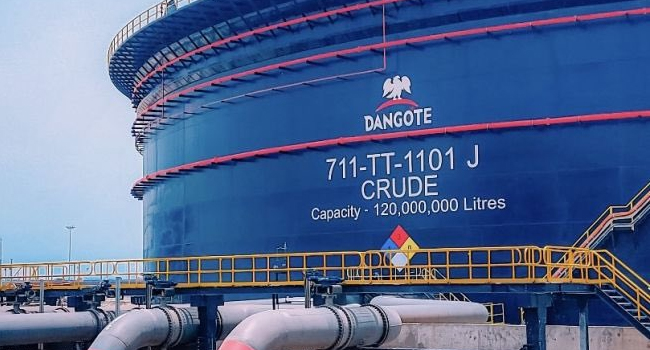
Kenya’s ambitious plan to attract large-scale investment into its energy sector has received a potential boost after a court lifted an earlier order restricting work on land earmarked for the proposed Sh2.2 trillion Dangote refinery in Lamu.
The court’s decision removes an immediate legal obstacle to the project, which has drawn attention because of its potential scale, the prospect of new investment in Kenya’s petroleum industry and the land dispute surrounding the proposed development.


The court’s directions require residents who filed the petition to correct errors in their pleadings and serve the respondents before seeking fresh orders.
While the lifting of the earlier restriction may allow the project to move forward, the dispute over the land and the legal process surrounding it may still have to be resolved.
Dangote Refinery Land Dispute: Why the Court Ruling Matters
The legal challenge centres on land in the Hindi/Manda Magogoni area of Lamu County, where residents have contested the development plans and the treatment of land they claim their families have occupied for generations.
133 residents of Chandavai filed a petition raising concerns about alleged displacement, damage to property, compensation and resettlement. The residents claim that their families have used the disputed land for farming and livestock keeping and that homes, religious structures and family burial sites are located on the property. These are allegations presented by the petitioners and should not be treated as judicially established facts.
The earlier proceedings before the Malindi Environment and Land Court, presided over by Justice Jane Onyango, involved an order requiring the parties to maintain the status quo on the disputed land pending a hearing scheduled for October 14, 2026. The court had also directed that the respondents be served with the application and given an opportunity to respond.
The reported lifting of the restriction is therefore significant because it may allow work on the affected land to proceed without the earlier interim restraint. However, the precise scope of the latest order matters: lifting an interim restriction does not automatically settle ownership, determine compensation claims or resolve every legal question surrounding the project.
The dispute also highlights the challenge facing large infrastructure investments in areas where government development plans intersect with claims of longstanding community occupation. Even when a project promises substantial economic benefits, the legal process for acquiring land and addressing affected residents’ interests remains an important part of its implementation.
Sh2.2 Trillion Refinery Could Transform Kenya’s Energy Sector
The proposed Dangote East Africa Petroleum Refinery is one of the most ambitious industrial investments planned for Kenya. The project is estimated to cost approximately $15 billion to $16 billion, equivalent to about Sh2.2 trillion, and is designed to process up to 700,000 barrels of crude oil per day.
Reuters reported that the refinery is expected to be completed around 2030 and is intended to serve Kenya and a wider regional market. Its groundbreaking ceremony took place on September 30, 2026, with President William Ruto and Nigerian industrialist Aliko Dangote among those present.
The planned facility could change the structure of petroleum supply in East Africa by allowing more crude oil to be processed within the region rather than relying so heavily on imported refined products.
Kenya currently relies on imports to meet its demand for refined petroleum products. A refinery of the proposed capacity could create opportunities for domestic and regional value addition, although the actual impact will depend on construction progress, crude supply arrangements, operating costs and the competitiveness of the products it produces.
For Kenya, the potential benefits extend beyond the refinery itself. A project of this scale could generate demand for transport, engineering, storage, port services, maintenance and other supporting industries.
Nevertheless, these benefits remain dependent on successful project delivery. The refinery’s projected capacity and completion timeline describe the plan, not an operational facility that is already producing fuel.
Why Dangote Chose Lamu for the Refinery
Lamu’s strategic position on Kenya’s coastline is central to the project’s appeal. The county is associated with the Lamu Port-South Sudan-Ethiopia Transport (LAPSSET) Corridor, a wider infrastructure programme intended to improve transport and trade connections between Kenya and neighbouring countries.
In an interview, Dangote said a feasibility study had identified Lamu as a better location for the refinery than Mombasa or Tanzania’s Tanga. The choice reflects the importance of location, infrastructure and access to markets when developing a major petroleum-processing facility.
A coastal location can support the movement of crude oil and finished petroleum products through maritime transport, while proximity to port infrastructure could help connect the facility to international suppliers and regional customers.
The refinery is also expected to process crude from Kenya’s Turkana oilfields and other African sources, according to Reuters reporting on the project. This could strengthen the commercial links between oil-producing areas and petroleum-consuming markets across the region.
However, the success of the investment will depend on more than its geographical advantages. Reliable supplies of crude oil, adequate transport infrastructure, financing and a clear regulatory framework will all be necessary to turn the planned capacity into a commercially viable operation.
Land Rights and Compensation Remain Central to the Dispute
Although the court’s latest decision is a development for the refinery project, the residents’ underlying concerns remain an important part of the story.
The petitioners have argued that their families have occupied and used the disputed land for generations and have raised concerns about compensation, resettlement and the alleged destruction of property. Their claims bring into focus the relationship between large-scale infrastructure development and the rights of people who say their livelihoods depend on the land.
Kenya’s Constitution provides protections for property rights and addresses compensation for people who have interests in property acquired compulsorily. Article 40 sets out constitutional protections relating to property, including provisions concerning compensation for certain interests in property that is compulsorily acquired. The application of those protections to the Lamu dispute will depend on the facts, the relevant land records and the court’s consideration of the claims.
The key question is not simply whether the refinery should proceed, but whether the land arrangements and any applicable acquisition, compensation and resettlement processes meet the requirements of Kenyan law.
The lifting of an interim court order does not, by itself, establish that the residents’ claims are unfounded. Equally, the existence of a petition does not establish that the project or its land arrangements are unlawful.
The substantive dispute must be distinguished from the procedural decision concerning whether an interim restriction should remain in force.
What the Ruling Means for the Project’s Timeline
The immediate significance of the latest ruling is that it removes an earlier court-imposed obstacle to work on the disputed land, potentially reducing the risk of delays associated with the interim restriction.
Large industrial projects require substantial coordination among investors, contractors, government agencies, financiers and infrastructure providers. Uncertainty over access to project land can complicate construction schedules and increase costs if work has to be delayed or reorganised.
The refinery’s groundbreaking ceremony in September demonstrated the government’s commitment to advancing the investment. However, the ceremony did not itself resolve the separate land proceedings.
The reported decision to lift the restriction therefore represents a procedural development rather than a final resolution of all legal issues. The residents must comply with the court’s directions to correct errors in their petition and serve the respondents before seeking fresh orders.
The subsequent course of the case will help determine whether further applications are made and whether the court issues additional directions affecting the project.
For investors and contractors, the distinction is important because the refinery’s long-term schedule will depend not only on financing and engineering but also on whether outstanding legal and land-related issues can be managed lawfully.
Transparency Will Be Important as the Investment Advances
Beyond the immediate land dispute, the Dangote refinery has attracted questions about transparency and public accountability.
A separate petition seeks disclosure of agreements and other details surrounding the project, including public commitments and arrangements involving the government. That case is distinct from the residents’ land petition and should not be confused with the proceedings in Malindi.
The existence of a separate transparency challenge illustrates the public interest surrounding an investment of this magnitude, particularly where government commitments, infrastructure, land and possible public-sector participation are involved.
Clear information about the project’s financing, regulatory approvals, contractual arrangements and the respective responsibilities of public and private entities would help Kenyans assess the benefits and obligations associated with the investment.
Transparency would also help distinguish the project’s expected economic gains from the financial and regulatory risks that may arise during construction and operation.
For a project presented as a major step in Kenya’s industrial development, public confidence will depend partly on the availability of credible information about how the investment is structured and implemented.
What the Dangote Refinery Means for Kenya’s Economy
The proposed refinery could become an important addition to Kenya’s industrial base if it is completed and operates as planned. Its scale offers the possibility of supporting petroleum processing, logistics, trade and related services while strengthening regional energy supply chains.
However, the investment’s ultimate contribution will depend on whether it delivers measurable economic benefits, including competitive petroleum products, sustainable employment, business opportunities and reliable supplies to regional markets.
The project must also navigate land-related disputes and any applicable environmental and regulatory requirements. Addressing these issues transparently and in accordance with the law would help reduce uncertainty and strengthen the investment’s long-term prospects.
ALSO READ: Oregen Energy Bolsters Stake in Namibia’s Orange Basin