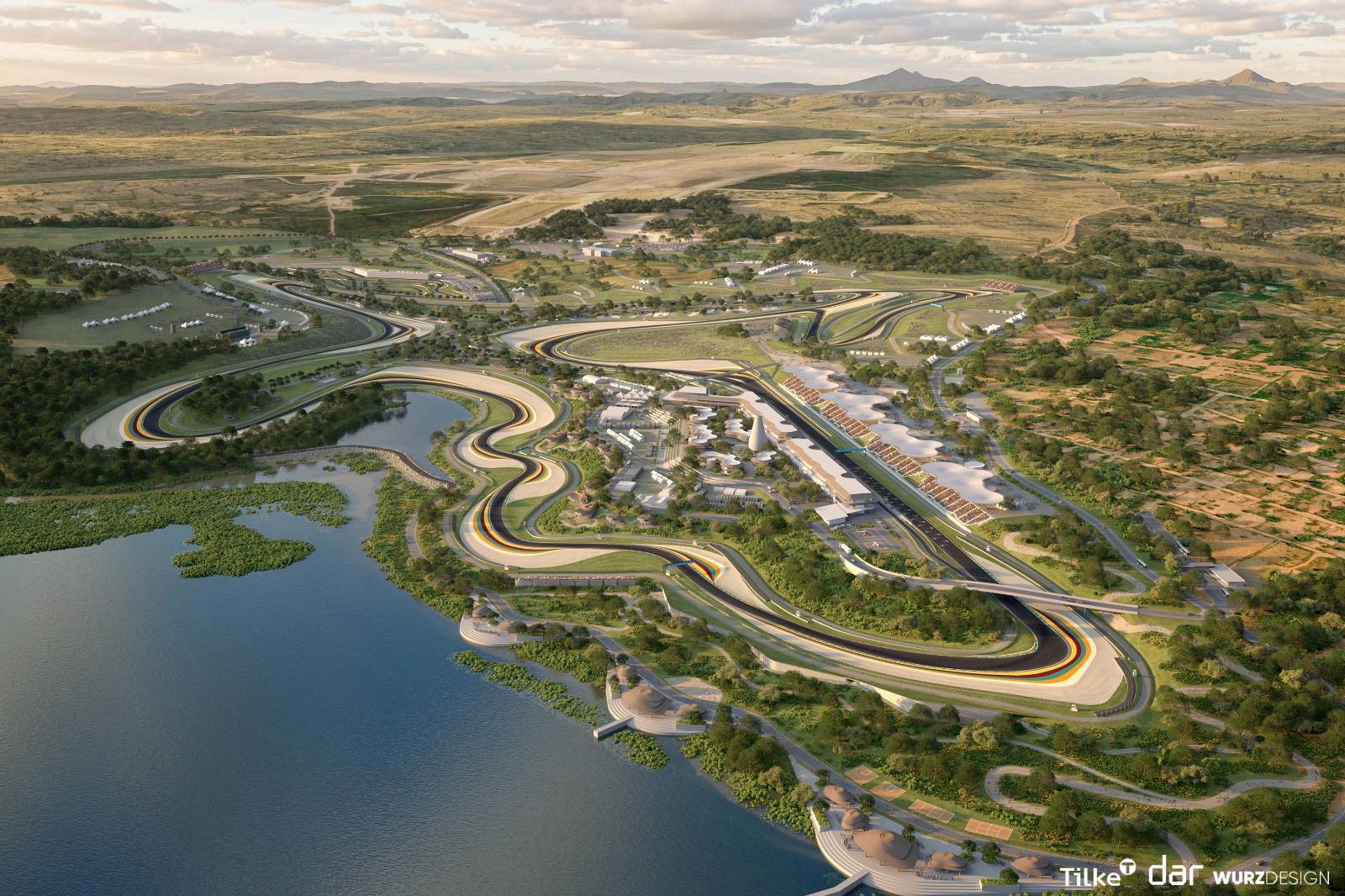
Rwanda has secured a landmark 10-year agreement to host a Formula 1 Grand Prix from the early 2030s, setting the stage for the return of the world’s premier motor racing championship to Africa for the first time since 1993.
The deal represents a major milestone in Rwanda’s ambition to position itself as a leading destination for international sporting events, tourism and investment.

The race, officially branded the Formula 1 African Grand Prix, presented by Visit Rwanda, will take place at a purpose-built circuit planned for Bugesera, approximately 40 kilometres south of Kigali, the country’s capital. The proposed venue will be located near the new Kigali International Airport and is expected to meet the FIA’s Grade 1 standards required to host Formula 1 races.
The agreement means Rwanda is preparing to bring one of the world’s most commercially powerful sporting competitions back to a continent that has been absent from the Formula 1 calendar for more than three decades.
The Grand Prix is an opportunity to attract international visitors, strengthen its global brand, create business opportunities and demonstrate its capacity to organise major international events.
How Rwanda Secured Hosting Rights For Formula 1 Grand Prix
Formula 1 confirmed that Rwanda had secured a 10-year agreement to host the African Grand Prix, with the inaugural race expected in the early 2030s once the new circuit is completed.
The announcement was made in Kigali by Formula 1 chief executive Stefano Domenicali alongside Rwandan President Paul Kagame and FIA president Mohammed Ben Sulayem.
The deal follows years of efforts by Rwanda to bring the championship to the country. Kagame formally announced Rwanda’s bid in December 2024, when the country hosted an FIA gathering that brought together leading figures from international motorsport.
The agreement marks the culmination of a campaign to establish Rwanda as a serious contender for a place on the Formula 1 calendar.
According to Formula 1, the Bugesera circuit will form part of a wider sports, tourism, infrastructure and commercial development project led by the Rwanda Development Board.
The venue is intended to operate beyond the annual Grand Prix, potentially hosting other motorsport competitions, conferences, entertainment events and international gatherings.
That approach is important because Formula 1 circuits require substantial investment and specialised infrastructure. Their long-term value depends partly on whether they can generate economic activity outside the limited period occupied by a race weekend.
The 10-year agreement provides a framework for a sustained partnership between Rwanda and Formula 1. However, the inaugural race date has not yet been announced, and the project remains dependent on the successful completion of the circuit and the necessary preparations.
Why Rwanda Has Emerged as Africa’s Formula 1 Destination
Rwanda’s selection reflects a broader national strategy to use international events as a platform for economic development and global visibility.
Over the past decade, the country has invested in positioning itself as a destination for international conferences, sporting competitions and high-profile business gatherings.
Kigali has hosted major events including the 2023 FIFA Congress, the Basketball Africa League and international cycling competitions. Rwanda also hosted the 2024 FIA General Assemblies and Awards Ceremony, providing an opportunity to engage directly with the international motorsport community.
These events have helped Rwanda build experience in hosting global audiences, coordinating logistics and attracting international visitors.
The Formula 1 agreement takes that strategy into a more commercially demanding arena.
Unlike a single conference or tournament, a Formula 1 race requires a specialised circuit, strict safety certification, extensive hospitality facilities, reliable transport infrastructure and coordination between sporting authorities, governments, sponsors and private businesses.
Securing the agreement suggests that Rwanda and Formula 1 have reached a common understanding about the country’s proposed hosting plans. Delivering the race, however, will require substantial work on infrastructure, funding, operational planning and international event management.
Rwanda’s location also offers a potential logistical advantage. The planned circuit will sit near the new Kigali International Airport, which is being developed to expand the country’s international aviation capacity.
If the airport and circuit projects progress as planned, their proximity could support the movement of international visitors, racing teams, technical personnel and equipment.
Yet infrastructure proximity alone will not guarantee success. The country will need sufficient accommodation, efficient transport links, dependable utilities and the capacity to handle a surge in visitors during race week.
The Infrastructure Behind the Grand Prix at Bugesera Circuit
At the centre of Rwanda’s Formula 1 ambitions is a new purpose-built circuit in Bugesera, south of Kigali.
Formula 1 says the track will be developed to FIA Grade 1 standards, the highest circuit homologation category and a requirement for hosting its championship races.
The proposed circuit is expected to use the area’s natural elevation changes to create a challenging layout for drivers while offering viewing opportunities for spectators.
The project is also being positioned as a multipurpose venue rather than an asset that will sit idle outside the Grand Prix season.
That distinction matters because Formula 1 circuits are expensive to build and maintain. Beyond the track itself, a host venue requires extensive safety systems, medical facilities, pit buildings, team garages, spectator stands, broadcast infrastructure and access roads.
The operating costs can remain substantial even when no race is taking place.
Rwanda’s plan to use the facility for other sporting competitions, conferences and entertainment events could help generate revenue throughout the year. Whether that model succeeds will depend on the venue’s ability to attract enough events and visitors to justify its construction and maintenance costs.
The wider Bugesera development also creates an opportunity to coordinate investment in transport, hospitality and commercial facilities.
The Rwandan government will need to ensure that infrastructure development is aligned with realistic demand forecasts and long-term economic priorities. A world-class circuit can become a valuable national asset, but only if it has a viable operating model and delivers benefits beyond its international profile.
Formula 1 Returns to Africa After 33 Years
Rwanda’s entry into the Formula 1 calendar will end a prolonged absence of the championship from Africa.
The last Formula 1 World Championship race held on the continent took place at South Africa’s Kyalami circuit in 1993. The absence has been particularly notable because Africa is home to a large and growing population of motorsport enthusiasts, yet has remained outside the championship’s modern global schedule.
Formula 1 has expanded considerably over the years, adding races in new markets and strengthening its commercial presence across Asia, the Middle East and the Americas.
The return to Africa is therefore significant not simply as a sporting development but also as a recognition of the continent’s commercial potential.
Formula 1 said Africa is home to more than 100 million fans of the sport. Its return could bring the championship closer to existing supporters while creating opportunities to attract new audiences, particularly among younger Africans.
The sport’s growing popularity through television, digital platforms and streaming services has also expanded its appeal beyond traditional motorsport markets.
Rwanda’s agreement gives Formula 1 a platform from which to deepen its African presence, although the extent of that opportunity will depend on ticket affordability, broadcasting reach, regional transport links and the development of local motorsport communities.
The deal could also encourage more African companies to engage with the sport through sponsorships, hospitality partnerships and commercial agreements.
For African fans, the most immediate attraction is the prospect of watching the world’s leading drivers compete on the continent without having to travel to Europe, Asia or the Middle East.
For the wider motorsport industry, the race could provide a platform for introducing more young Africans to careers in engineering, vehicle technology, race management and other specialised fields.
Tourism, Jobs and Foreign Investment Present viable Economic Opportunities
Rwanda’s Formula 1 agreement is part of a wider effort to use tourism and international events to stimulate economic activity.
A Grand Prix attracts more than drivers and spectators. Teams, engineers, mechanics, sponsors, broadcasters, hospitality operators and international media all travel to host destinations, creating demand across multiple sectors.
Hotels, restaurants, transport operators, tour companies and event suppliers can benefit from the influx of visitors. Local businesses may also gain opportunities to provide catering, logistics, merchandising, security and other services.
The race could create employment during construction and operation, while strengthening demand for skills in hospitality, event management, engineering and technical services.
The potential benefits could extend to other East African economies. Rwanda’s location within the region means that international visitors could combine the Grand Prix with safaris, cultural tourism and other destinations in neighbouring countries, provided travel arrangements are convenient and competitively priced.
Kenya, Uganda and Tanzania could potentially benefit from increased regional tourism demand, although such spillover effects are not guaranteed.
The scale of the economic opportunity will depend on how much spending remains within Rwanda. If local firms secure contracts and residents fill skilled and semi-skilled positions, a greater share of the economic benefits could reach the domestic economy.
Conversely, if most high-value services are imported and a substantial proportion of event revenue leaves the country, the wider benefits could be more limited.
The government will therefore need to consider how local businesses can participate in the supply chain and how workers can acquire the skills required to access new opportunities.
It will also be important to distinguish between gross visitor spending and the net economic benefit after accounting for construction costs, public expenditure, operating expenses and the possibility that some tourism activity may simply shift from other periods or destinations.
The Financial Risks Rwanda Must Manage
Despite the excitement surrounding the announcement, hosting Formula 1 is an expensive undertaking.
The construction of a Grade 1 circuit, the development of supporting infrastructure and the costs associated with preparing for a Grand Prix can require significant financial commitments.
Formula 1 host arrangements also involve commercial negotiations and event-related expenses whose precise terms are not always publicly disclosed. Rwanda’s agreement does not, by itself, establish the total cost of hosting the race or the amount of public funding that may be required.
This makes transparency an important consideration as the project progresses.
The government will need to communicate the expected capital expenditure, financing arrangements, projected operating costs and anticipated revenue streams. It will also be important to clarify the division of financial responsibilities between the state, private investors, event organisers and commercial partners.
These details will help taxpayers and investors assess whether the project offers value for money.
Rwanda’s economic strategy has placed considerable emphasis on international visibility and tourism-led development. The Formula 1 deal could reinforce that approach, but the return on investment will depend on more than publicity.
The country must attract enough visitors and events to support the circuit while ensuring that the benefits outweigh the financial commitments.
There is also an opportunity cost. Public resources devoted to a major sporting project cannot simultaneously be used for other priorities without careful consideration of available funding.
That does not mean the Grand Prix is necessarily a poor investment. It means its economic case must be demonstrated through credible forecasts, transparent financing and measurable results.
Rwanda’s Global Brand and the Visit Rwanda Strategy
The Grand Prix is also a major development for Rwanda’s international branding strategy.
The race will be presented as the Formula 1 African Grand Prix, presented by Visit Rwanda, connecting the event to the country’s broader tourism promotion campaign.
Rwanda has previously used international sporting partnerships to increase its visibility, including sponsorship arrangements in football and basketball. The Formula 1 agreement offers access to a global audience and a platform for promoting the country’s tourism attractions and investment opportunities.
The potential value of such exposure extends beyond the race itself. International coverage can introduce viewers to Rwanda’s landscapes, wildlife, hospitality industry and business environment.
However, visibility does not automatically translate into tourist arrivals or foreign investment.
The country will need to convert interest generated by Formula 1 into actual bookings, business visits and longer-term commercial relationships. That requires competitive tourism products, effective marketing, convenient travel arrangements and an investment environment that encourages companies to establish or expand operations.
The brand benefits will also depend on how the country is represented during international coverage and whether the event is delivered to the standards expected by teams, spectators and commercial partners.
For Rwanda, the Grand Prix is therefore both a sporting commitment and a long-term marketing investment.
Can Rwanda Deliver a World-Class Grand Prix?
Securing the 10-year agreement is a major achievement, but building and operating a Formula 1 race is a complex undertaking.
The circuit must meet FIA safety requirements, construction must be completed to the necessary standard, and organisers must establish reliable systems for crowd management, medical response, security, transport and broadcasting.
The surrounding infrastructure will also be critical. Visitors must be able to travel between the airport, hotels, the circuit and Kigali efficiently, particularly during a race weekend when demand for transport and accommodation could rise sharply.
Rwanda’s experience hosting international sporting events provides a useful foundation. Nevertheless, Formula 1 operates at a different level of technical complexity, commercial scrutiny and logistical intensity.
The country will also need to plan for the long-term operation of the circuit, including maintenance, staffing, safety upgrades and the attraction of events between Grand Prix weekends.
Formula 1 has made clear that the inaugural race will depend on completion of the new venue. No precise opening date has yet been confirmed, and the early-2030s target should not be interpreted as a fixed race date.
The next major milestones will include construction progress, financing arrangements, regulatory approvals and the development of supporting facilities.
Delivering those milestones on time and within a sustainable budget will determine whether Rwanda’s ambition becomes a successful sporting reality.
What the Grand Prix Means for Kenya and East Africa
Rwanda’s success in securing the Formula 1 agreement will inevitably attract attention across East Africa, particularly in Kenya, which has a well-established tourism industry, international sporting profile and motorsport community.
The development creates opportunities for regional collaboration in tourism, transport, hospitality and business services.
Kenyan tour operators could potentially develop packages that combine a Rwanda Grand Prix weekend with wildlife tourism and other East African destinations. Airlines and hospitality businesses may also find opportunities to serve travellers attending the event.
However, Rwanda’s achievement also highlights the importance of long-term planning and coordinated investment when pursuing major international sporting events.
For Kenya, the relevant lesson is not necessarily that it must build its own Formula 1 circuit. Such a project would require careful assessment of demand, financing and opportunity costs.
Rather, the opportunity is to consider how existing sporting infrastructure, tourism attractions, motorsport facilities and private-sector capabilities could be developed into a stronger regional events economy.
Kenya could benefit from the wider attention generated by Formula 1’s return to Africa, even without hosting a race itself. Regional tourism packages, cross-border travel arrangements and partnerships between businesses could help spread some of the economic benefits.
At the same time, Rwanda’s agreement raises the competitive stakes for African destinations seeking international conferences, sporting events and tourism investment.
Countries will increasingly need to demonstrate that they can provide reliable infrastructure, efficient administration, attractive visitor experiences and credible long-term commercial partnerships.
The race for international sporting investment is therefore also a race to build the institutions and services that support sustainable economic growth.
Rwanda’s agreement to host the Formula 1 African Grand Prix from the early 2030s marks a historic moment for African sport and international tourism.
The 10-year deal will bring Formula 1 back to the continent for the first time since the 1993 South African Grand Prix, placing Rwanda at the centre of a major development in the championship’s global expansion.
ALSO READ: TECNO Football Pitch Renovation Seeks To Transform African Grassroots Sports Development