Saving money is an essential part of achieving financial stability. Whether you are planning to buy land, build a house, pay school fees, start a business or prepare for retirement, the place where you keep your money can significantly influence your financial progress. In Kenya, savers have several options, including Savings and Credit Cooperative Organizations (SACCOs), money market funds (MMFs), ordinary bank savings accounts and fixed deposit accounts.
Each option has its advantages, limitations and risks, making it important to understand how they work before deciding where to put your money.


Choosing a savings vehicle should involve more than comparing advertised interest rates. Accessibility, fees, taxation, institutional stability, investment risk and the purpose of the savings all matter. Money intended for emergencies, for instance, should generally be easier to access than money being accumulated for a goal several years away. Similarly, funds that you can afford to leave untouched for a specified period may be suitable for products with fixed maturity dates or withdrawal restrictions.
The best savings strategy is therefore not necessarily about choosing one product over another. It is about understanding the available options and matching them to your financial needs. Here are 4 of the best savings options in Kenya.
- SACCO Deposits
Savings and Credit Cooperative Organisations, or SACCOs, play an important role in Kenya’s financial sector. They provide members with opportunities to save regularly, participate in a cooperative institution and, depending on the SACCO’s policies, access credit. For salaried employees, entrepreneurs and other income earners, SACCOs can provide a structured way to build savings while establishing a relationship with an institution that may also offer loans for personal, educational, business or property-related needs.
One of the main advantages of SACCOs is that they encourage disciplined saving. Members may be required to make regular monthly contributions, helping them develop a consistent savings habit. Some SACCOs also offer interest on eligible deposits or dividends on share capital, depending on their financial performance, bylaws and applicable rules. Members may benefit from access to credit, although loan approval depends on the SACCO’s lending criteria, the borrower’s repayment capacity and other applicable requirements.
However, it is important to understand that not all SACCO savings are the same. Some deposits are withdrawable, while others are classified as non-withdrawable deposits and may only be refunded when a member exits the SACCO, subject to the institution’s rules. Share capital is also different from ordinary savings deposits because it represents ownership in the cooperative and may be subject to separate refund and transfer conditions. Before joining a SACCO, members should establish precisely how their money is classified and under what circumstances it can be accessed.
Liquidity is one of the main disadvantages of SACCO deposits. If you need money urgently, you may discover that some of your contributions cannot be withdrawn immediately. This makes certain SACCO products less suitable for emergency savings. Members should also consider the institution’s financial health, governance, loan portfolio and withdrawal procedures. Poor management or financial difficulties can affect an institution’s ability to meet its obligations.
Another consideration is the relationship between savings and borrowing. Some SACCOs use members’ deposits as security for loans, while loan guarantees may expose members to financial obligations if borrowers default, depending on the guarantee agreement and applicable law. Consequently, joining a SACCO should involve understanding both the savings benefits and the financial responsibilities that come with membership.
Before committing money, check whether the SACCO is appropriately licensed or authorised by the Sacco Societies Regulatory Authority (SASRA) for the business it conducts. Review its membership requirements, contribution obligations, audited financial statements, withdrawal terms and record of governance. You should also understand whether any returns are guaranteed or depend on annual performance. A SACCO can be a useful savings vehicle for people seeking disciplined saving and access to cooperative credit, but it should not automatically be treated as a place for money that must be available at short notice.
2. Money Market Fund
Money market funds have become a popular option for Kenyans looking for alternatives to traditional bank savings accounts. An MMF is a collective investment scheme that pools money from investors and invests it in eligible short-term, interest-bearing instruments. Depending on the fund’s investment mandate, these may include Treasury bills, bank deposits and other permitted money-market securities.
Unlike an ordinary bank savings account, an MMF is an investment managed by a professional fund manager. The returns investors receive depend on the performance of the underlying investments, the fund’s expenses and applicable taxes. Many Kenyan funds publish daily or periodic yields, allowing investors to monitor their performance. However, advertised yields can change, and investors should establish whether a quoted figure is gross or net of fees and taxes before comparing funds.
One of the main attractions of money market funds is their potential to provide competitive returns while maintaining relatively convenient access to money. Some funds also have modest minimum investment requirements, making them accessible to people who are beginning their savings journey. Professional management and diversification across eligible investments can further reduce the burden of managing individual securities.
MMFs can be useful for money being accumulated for school fees, insurance premiums, annual bills or other planned expenses. They may also provide an option for savings that are not needed immediately but should remain reasonably accessible. Nevertheless, withdrawal arrangements differ between providers. Redemption requests may take time to process, and some funds have cut-off times or settlement periods. Investors should confirm these conditions rather than assuming that their money will be available instantly.
It is equally important to understand that money market funds do not provide the same guarantees as eligible bank deposits. Their returns are not fixed or guaranteed, and investment performance may be affected by changing interest rates, credit events and liquidity conditions. Although diversification can reduce certain risks, it does not eliminate the possibility of losses or delayed access to funds.
Investors should also consider management fees, other fund expenses and tax treatment because these affect the final return. Before investing, confirm that the scheme and its relevant service providers have the appropriate approvals from the Capital Markets Authority (CMA). Review the fund’s investment policy, underlying portfolio, historical performance, withdrawal terms and offering documents. Historical returns can help explain how a fund has performed, but they should not be treated as a promise of future performance.
For many savers, an MMF can form part of a broader financial plan, particularly when they want their money to earn investment returns without committing it to a fixed-term deposit. However, the right fund depends on the investor’s financial goals, risk tolerance and need for liquidity. Money required for an immediate emergency should not be placed in a fund without first understanding how quickly it can be redeemed.
3. Ordinary Bank Account
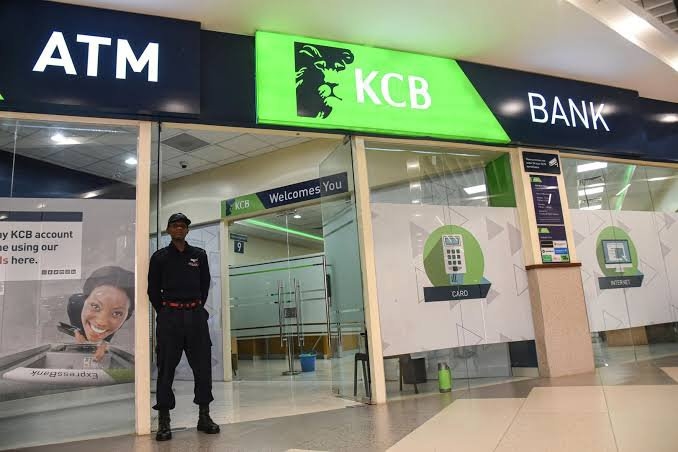
An ordinary bank savings account remains one of the most familiar and convenient ways to save money in Kenya. It allows customers to deposit money, receive payments and access their balances through services such as mobile banking, internet banking, ATMs and bank branches, depending on the account. For people who are starting to save, it can provide a straightforward way to separate money from everyday spending and monitor financial progress.
The greatest advantage of a bank savings account is accessibility. Money may be needed unexpectedly for medical expenses, urgent home repairs, school requirements or temporary loss of income. Having readily available savings can help a household manage such expenses without immediately resorting to borrowing. Many banks also offer automated transfers and transaction notifications, making it easier to save consistently and monitor account activity.
Another important advantage is the protection available for eligible deposits at institutions that are members of the Kenya Deposit Insurance Corporation (KDIC). KDIC’s published coverage limit is KSh 500,000 per depositor per member institution, subject to the applicable eligibility requirements and rules. Deposits held in eligible accounts at the same member institution are consolidated when determining coverage. Savers should therefore confirm that their bank is a KDIC member and understand which balances qualify for protection.
Despite these advantages, ordinary savings accounts may not offer the highest returns. Some pay modest interest, while others provide little or no interest depending on the account terms. Fees, minimum balance requirements and transaction charges can also reduce the value of savings, particularly for people maintaining relatively small balances. Inflation presents another challenge because the purchasing power of money can decline if the account’s return is lower than the rate at which prices rise.
There is also a behavioural consideration. Money kept in an account used for everyday transactions can be easier to spend impulsively. Maintaining a separate savings account, setting automatic transfers and establishing a clear savings target can help address this problem.
For these reasons, a bank savings account is particularly useful for emergency funds and money needed for near-term expenses. It may not be the most suitable place for every shilling intended for long-term growth, but convenience and accessibility are valuable features that should not be overlooked. Before opening an account, compare interest rates, minimum balance requirements, account maintenance charges, withdrawal conditions and mobile banking fees. A slightly lower interest rate may be acceptable if the account provides reliable access to money when it matters most.
4. Fixed Deposit Accounts
Fixed deposit accounts provide another savings option for people who have money they can set aside for a predetermined period. Under this arrangement, a customer places a lump sum with a bank for an agreed term, often in exchange for an interest rate specified in the contract. Depending on the bank, the term may run for a few months or longer, and the minimum deposit, interest payment arrangements and available rates vary between institutions.
The main attraction of fixed deposits is predictability. Where the interest rate is fixed for the agreed term, the saver can estimate the interest payable before committing the money. This can make the product useful for people who have accumulated a lump sum and want to earn interest before using the money for a planned expense. For example, someone preparing to pay school fees in six months might consider a fixed deposit that matures before the payment deadline.
Fixed deposits can also encourage financial discipline because the money is less convenient to access than funds held in an ordinary bank account. Some banks offer higher rates on fixed deposits than on standard savings accounts, although the difference depends on the amount deposited, the term, prevailing market conditions and the bank’s pricing policies.
However, fixed deposits come with liquidity limitations. The money is generally committed for the agreed period, and early withdrawal may be restricted, require approval or lead to reduced interest or other charges. Anyone considering this option should read the contract carefully and ensure that the maturity date aligns with the intended use of the money. Locking away funds needed for an emergency can create financial difficulties if an unexpected expense arises.
Fixed deposits also carry opportunity costs. If interest rates rise after a customer has locked in a fixed rate, the customer may miss out on potentially higher returns available on new deposits. In addition, inflation can erode the purchasing power of the interest earned, especially when the deposit’s return is lower than the rate of price increases.
Taxation should also be considered when calculating the actual return. Interest may be subject to withholding tax, depending on the applicable tax rules and the customer’s circumstances. The Kenya Revenue Authority provides guidance on withholding tax, including the treatment of qualifying interest payments. Savers should verify the applicable rate and calculate the expected net interest rather than relying exclusively on the gross rate advertised by a bank.
To illustrate, suppose a bank offers an annual interest rate of 10% on a fixed deposit of KSh 300,000 for six months. Assuming simple interest, the gross interest for the six-month period would be KSh 15,000. If a withholding tax rate of 15% applied to that interest, the tax would be KSh 2,250, leaving KSh 12,750 in net interest. The maturity amount would therefore be KSh 312,750 under these assumptions. This is an illustration rather than a current bank offer; actual calculations, fees, tax treatment and contractual terms may differ.
Eligible fixed deposits held at KDIC member institutions can fall within the deposit insurance framework, subject to the applicable rules and coverage limit. Nevertheless, savers should confirm the institution’s membership and understand that the KSh 500,000 limit applies per depositor per member institution across eligible deposits, rather than separately to every account.
Fixed deposits may be suitable for people who have a lump sum they do not expect to need until a specified date. They are less suitable for money that must remain immediately accessible. Before committing funds, compare rates across institutions, check the minimum deposit, understand the early withdrawal policy and ensure that the maturity date fits your financial plans.
Choosing the Best Savings Options in Kenya
SACCO deposits, money market funds, ordinary bank savings accounts and fixed deposit accounts each serve different financial purposes. SACCOs can encourage disciplined saving and may provide access to cooperative credit, but some deposits are subject to withdrawal restrictions. Money market funds offer professionally managed investment exposure and potentially competitive returns, although their yields vary and investment risks remain. Ordinary bank accounts provide convenient access to money and may offer eligible deposit insurance protection, while fixed deposits can provide greater certainty about interest over an agreed term.
The most appropriate option depends on when you will need your money, the return you hope to earn, the level of risk you can accept and the conditions attached to each product. Rather than focusing exclusively on interest rates, consider liquidity, fees, taxation, institutional stability and applicable protections.
For many Kenyans, combining different savings vehicles can provide a practical balance. An accessible bank account can hold emergency funds, an MMF can accommodate certain planned expenses and additional savings, while a SACCO or fixed deposit can serve longer-term objectives where the terms are suitable. The exact allocation should reflect your income, financial obligations and goals.
ALSO READ: Consequences Of Guaranteeing A Loan In Kenya