Kenya has suspended hotel-based government meetings, seminars and conferences following confirmation of the country’s first imported case of Bundibugyo Ebola virus. The suspension is a precautionary move that underscores the growing urgency of the public health response.
The directive, issued through an internal memorandum by Principal Secretary for Public Health and Professional Standards Mary Muthoni, ordered the immediate suspension of meetings scheduled to take place in hotels within the State Department for Public Health. Exceptions would require approval from the Principal Secretary’s office.


The suspension will remain in effect until further notice. However, the directive should not be interpreted as a blanket ban covering every government ministry, as the reported memorandum specifically addresses the State Department for Public Health.
The move comes as health authorities intensify surveillance, contact tracing and preparedness measures following the confirmation of an imported Ebola case on October 6.
Ebola Case Raises Public Health Concerns
According to the Ministry of Health, the confirmed case involved a Kenyan citizen who had been living in the Democratic Republic of Congo (DRC), where an outbreak of Bundibugyo Ebola virus disease has caused deaths of more than 5000 people.
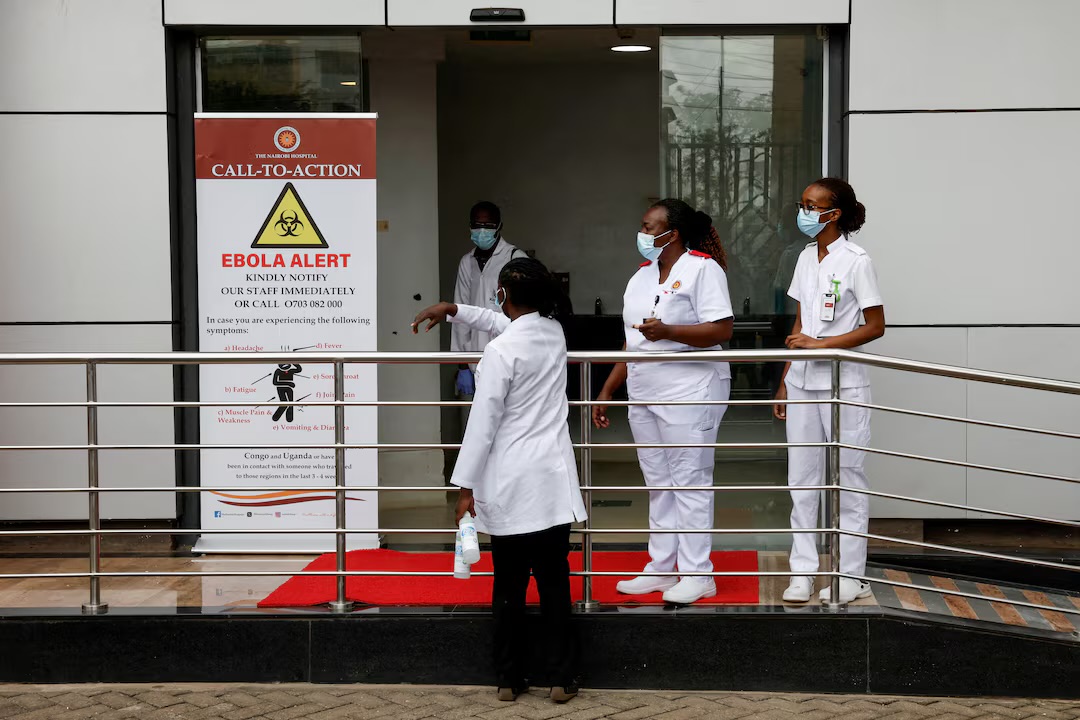
The patient travelled by air to Kampala, Uganda, before boarding a flight to Nairobi on October 3. After arrival at Jomo Kenyatta International Airport, the patient was taken to Nairobi Hospital, where medical teams assessed the symptoms and subsequently confirmed the infection through laboratory testing.
The patient later died, prompting health authorities to initiate contact tracing and implement additional containment measures.
In its October 6 update, the Ministry of Health reported identifying 28 contacts, including family members and healthcare workers who attended to the patient. Authorities were also tracing 23 passengers and four crew members from the flight on which the patient travelled.
Kenya had also heightened surveillance and worked with international health partners following confirmation of the case.
The circumstances surrounding the patient’s journey have drawn attention to the challenges of detecting infections during cross-border travel, particularly when symptoms may not be apparent during initial screening.
Why Has the Government Suspended Hotel Meetings?
The suspension is a preventive administrative measure intended to help the health department concentrate on emergency preparedness and response.
Government meetings, seminars and conferences often require staff to coordinate travel, attend lengthy sessions and interact in shared venues. Suspending such engagements can free up personnel and resources for urgent responsibilities, including contact tracing, public health surveillance, coordination with healthcare facilities and implementation of infection prevention measures.
The measure also signals that the government is treating the imported case as a serious public health event requiring coordinated action.
However, it is important to distinguish between reducing unnecessary gatherings and preventing Ebola transmission directly.
Ebola is primarily transmitted through direct contact with the blood or other bodily fluids of an infected person who is symptomatic, or the body of someone who has died from the disease. It is not spread simply because people occupy the same building or attend a meeting together.
Consequently, the suspension should be understood as part of a broader precautionary response rather than evidence that hotels or conference venues are inherently unsafe.
The effectiveness of the measure will depend on how well it supports the health department’s operational priorities and whether it is accompanied by timely surveillance, contact tracing, appropriate isolation and clear public communication.
What Is Bundibugyo Ebola Virus Disease?
Bundibugyo Ebola virus disease is caused by Bundibugyo virus, one of the viruses known to cause Ebola disease in humans.
The disease can cause fever, fatigue, muscle pain, vomiting, diarrhoea and, in severe cases, internal or external bleeding. Symptoms can initially resemble those of other illnesses, making clinical assessment, travel history and laboratory testing important components of diagnosis.
Transmission occurs through direct contact with the bodily fluids of an infected person who has developed symptoms, contaminated materials, or the body of a person who has died from the disease.
The identification of an imported case does not, by itself, establish that widespread community transmission is occurring in Kenya. That distinction is essential when interpreting the government’s response and communicating risk to the public.
Implications for Kenya’s Hotel and Conference Industry
Beyond the immediate health response, the suspension raises questions about the potential economic effects on Kenya’s hospitality and meetings industry.
Hotels in Nairobi and other major towns rely on conferences, workshops, training sessions, government consultations and seminars as sources of revenue. Public-sector events can generate income not only from conference-room bookings but also from accommodation, catering, transport and other services.
A suspension of hotel-based meetings within the affected department could therefore disrupt scheduled bookings and force event organisers to postpone engagements, seek approval for exceptions or consider alternative arrangements.
The impact will depend on the directive’s scope, how many events are affected and how long the restrictions remain in place.
If the measure is extended to additional government departments, the commercial consequences could become more substantial. Conversely, a limited suspension followed by a clearly communicated review process could reduce uncertainty for businesses.
Hotels should avoid assuming that the directive amounts to a general prohibition on private conferences, tourism or ordinary hotel operations. The reported order is specifically connected to government meetings within the State Department for Public Health.
For the industry, the immediate priorities are to clarify the directive’s scope, communicate with affected clients, review cancellation policies and maintain appropriate hygiene and infection prevention procedures.
The wider lesson is that public health emergencies can create economic uncertainty even when the restrictions introduced are targeted rather than nationwide.
Preparedness Kenya Suspends Hotel Meetings After Ebola Scare
The suspension also brings Kenya’s emergency preparedness systems into sharper focus.
According to the Ministry of Health, Kenya had screened more than 652,000 travellers as at October 6 and trained nearly 5,000 health workers in Ebola prevention and management. The country had also undertaken laboratory testing and maintained surveillance at points of entry.
These measures demonstrate the importance of preparedness before an imported infection is detected. Screening, however, cannot identify every infected traveller in every circumstance, particularly when symptoms are absent, unclear or masked.
The confirmation of the case therefore places renewed emphasis on contact tracing, rapid testing, healthcare worker protection and coordination between national and county health authorities.
Contact tracing is particularly important because it allows officials to identify people who may have been exposed, assess their risk and arrange appropriate monitoring or other public health measures.
The response also requires adequate protective equipment, trained healthcare personnel, isolation facilities and reliable communication between hospitals, laboratories and public health teams.
International cooperation remains important. The Africa Centres for Disease Control and Prevention and the World Health Organization have been involved in supporting the regional response.
The challenge is to ensure that preparedness measures translate into a timely, coordinated and evidence-based response without unnecessarily disrupting essential public services.
Could the Suspension Affect Business Confidence and Tourism?
Public health emergencies can influence perceptions of a country’s safety, particularly when international travel and cross-border transmission feature prominently in news coverage.
For Kenya, a major regional transport and business hub, maintaining confidence among travellers, investors, conference organisers and international partners is an important consideration.
A precautionary suspension can demonstrate that authorities are taking a confirmed infection seriously. At the same time, poorly communicated or unnecessarily broad restrictions could create confusion about the level of risk and the activities that remain permitted.
The government’s challenge is therefore twofold; to contain the risk of further transmission and to communicate clearly about what the evidence shows.
Official statements should distinguish confirmed cases from suspected infections, explain what contact tracing has established and clarify whether new restrictions apply to particular departments, locations or activities.
Businesses and travellers should rely on official health guidance rather than unverified social media reports.
The World Health Organization has also emphasised the importance of evidence-based measures in responding to Ebola outbreaks. Its recommendations should be considered alongside Kenya’s own epidemiological assessments and public health directives.
At this stage, the existence of an imported case alone is not sufficient evidence to conclude that Kenya is experiencing widespread community transmission or that tourism and ordinary business activities should stop.
How Long Should the Suspension Last?
The decision to suspend meetings until further notice raises a broader policy question about the duration and review of emergency restrictions.
Precautionary measures can be useful during the early stages of an outbreak investigation, when authorities are still establishing the extent of potential exposure. But open-ended restrictions can make planning difficult for government departments, service providers and businesses.
A transparent review process would help establish whether the suspension continues to serve its intended purpose.
Relevant considerations include the progress of contact tracing, the identification of any additional cases, the capacity of health facilities, the availability of protective equipment and the operational needs of public health teams.
Clear criteria for exemptions would also help prevent inconsistent implementation. Where meetings are essential, authorities could assess whether they can be conducted virtually, postponed or held under appropriate safeguards, subject to the applicable government instructions.
These are possible policy options rather than confirmed provisions of the current directive.
What Should Members of the Public Do?
Members of the public should follow updates from the Ministry of Health and seek medical advice promptly if they develop symptoms that raise concern, particularly after a potential exposure or relevant travel history.
People should avoid direct contact with the bodily fluids of anyone suspected or confirmed to have Ebola and follow instructions from trained healthcare professionals.
Anyone concerned about a possible exposure should contact a recognised health facility or follow the Ministry of Health’s official guidance rather than attempting to manage a suspected infection independently.
The Ministry has encouraged the public to observe hand hygiene, avoid close contact with sick people arriving from areas reporting active transmission and use recognised healthcare services when unwell. Its published guidance also identifies the toll-free health information line 719 as a channel for assistance.
Equally important is avoiding stigma. People should not be blamed or discriminated against because of their nationality, travel history or perceived association with an affected area. Public health responses work best when people can report symptoms and seek medical care without fear.
Kenya’s suspension of hotel-based meetings within the State Department for Public Health is an early administrative response to the country’s first imported case of Bundibugyo Ebola virus disease.
The decision highlights the competing demands facing authorities during a public health emergency: concentrating resources on containment, protecting healthcare workers and the public, limiting unnecessary disruption and preserving confidence in the country’s institutions and economy.
The immediate priority remains effective contact tracing, timely risk assessment and clear communication about the evolving situation.