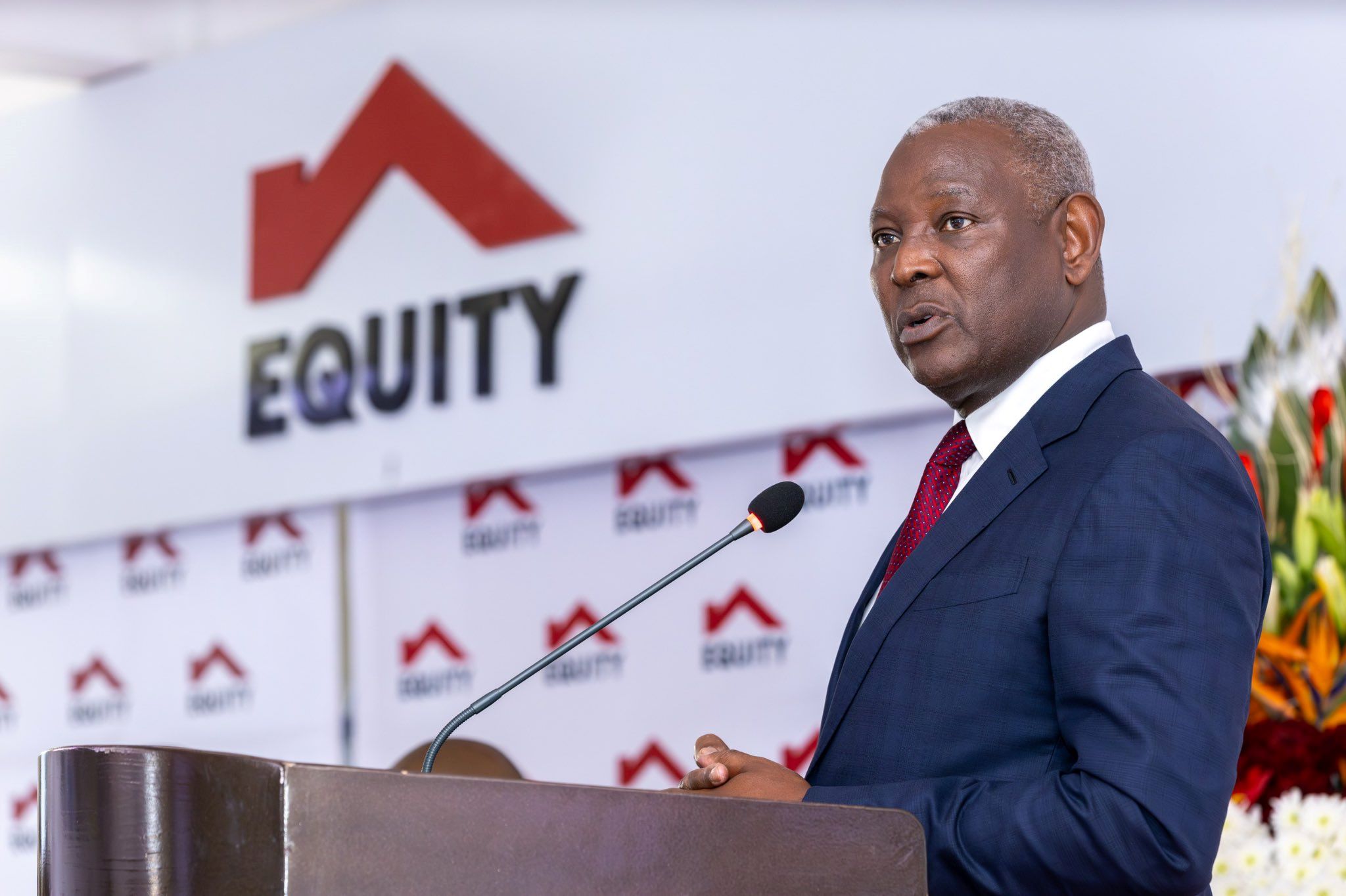
Equity Group has unveiled plans to expand into Southern Africa, with planned expansion into Zambia, Angola and Mozambique signaling a strategic shift tied closely to the emerging economic importance of the US-backed Lobito Corridor.
The move reflects the lender’s ambition to deepen its footprint along some of Africa’s fastest-growing trade and mineral routes.


Dr Mwangi said Equity is seeking acquisitions in the three Southern African markets to capture growth linked to infrastructure investment, mining activity and cross-border trade flows.
“We have become systemic in the market and across the region, playing a critical role in facilitating cross-border trade and supporting economic growth. Through strong regional partnerships, integrated financial solutions, and a deep understanding of market dynamics, we continue to connect businesses and communities to greater opportunities across borders. It’s not just about countries, it’s about following our customers and following trade routes,” Dr Mwangi.
The strategy places the Lobito Corridor at the centre of Equity’s next phase of regional expansion.
The corridor, a massive rail and logistics network connecting Angola’s Atlantic port of Lobito to the mineral-rich regions of Zambia and the Democratic Republic of Congo (DRC), is increasingly being viewed as one of Africa’s most consequential infrastructure projects. Supported by the United States, European Union and multilateral financiers, the project is expected to reshape how copper, cobalt and other strategic minerals move from Central Africa to global markets.
Analysts say Equity’s interest in Angola, Zambia and Mozambique reflects a broader recognition that African banking growth is increasingly being driven by trade corridors, commodity flows and regional integration rather than traditional domestic retail banking alone.
Why the Lobito Corridor Is Attractive To Investors
The Lobito Corridor has become strategically important because it offers an alternative export route for minerals from the Copperbelt region of Zambia and the DRC, reducing reliance on congested eastern and southern African ports.
The Africa Finance Corporation is reportedly seeking between $3 billion and $5 billion in financing for the corridor’s construction phase, with projections indicating the route could increase transport capacity tenfold and reduce export costs by up to 30 percent.
Trade finance, infrastructure financing, foreign exchange services, supply-chain banking, SME financing, insurance and digital payments are all expected to grow around the corridor. Financial institutions with early presence in these markets could gain long-term advantages as industrial activity expands.
This partly explains why Equity sees the region as strategically important.
The lender already has substantial exposure to the DRC, where it became one of the country’s largest banks following acquisitions completed in 2015 and 2020. The DRC business has since emerged as one of Equity’s strongest-performing subsidiaries.
That experience appears to be informing its Southern Africa strategy.
Mwangi indicated that Angola is currently the most advanced target, with Equity reportedly in discussions for a majority stake in an undisclosed Angolan bank before the end of the year.
Equity Group Diversification Beyond Kenya
Equity’s expansion push also reflects a deliberate effort to reduce dependence on the Kenyan market.
Investor briefing documents show the Group has increasingly diversified earnings geographically, with a growing share of profits now generated outside Kenya.
That diversification has become particularly important at a time when East African banking markets are facing slower credit growth, rising regulatory pressure and changing consumer behaviour.
By expanding into resource-rich economies tied to infrastructure-led growth, Equity is effectively betting that Africa’s next economic boom will be driven by industrialisation, energy transition minerals and regional trade integration.
Zambia and the DRC remain among the world’s key copper producers, while Angola is Africa’s second-largest oil producer. Mozambique, meanwhile, holds some of the continent’s largest natural gas reserves.
These economies are also expected to benefit from rising global demand for transition minerals used in electric vehicles, batteries and renewable energy technologies.
For Equity, that creates an opportunity to position itself as a regional financial intermediary servicing mining firms, logistics operators, exporters and governments linked to these sectors.
Risks and Challenges Remain
Southern Africa’s banking sector is highly competitive, with dominant South African lenders such as Standard Bank, FirstRand and Absa Group already deeply entrenched across the region.
Political and regulatory risks also remain significant, particularly in Angola and Mozambique, where currency volatility, governance concerns and sovereign debt pressures continue to affect investor confidence.
There are also execution risks associated with cross-border acquisitions, especially in markets with different legal systems, languages and regulatory environments.
Mwangi himself acknowledged that acquisitions are preferable to starting operations from scratch because establishing new businesses in unfamiliar markets can be difficult.
Still, Equity’s track record in the DRC may provide investors with some confidence.
The bank’s DRC expansion was initially viewed as risky due to political instability and operational complexity. Yet the business has since become one of the Group’s strongest growth engines, helping Equity become one of the largest banking groups in East and Central Africa.
Continued Shift in African Banking
Equity’s Lobito Corridor strategy also highlights a broader transformation underway in African banking.
Historically, many African banks focused primarily on domestic retail markets. Increasingly, however, lenders are following regional trade flows, infrastructure corridors and supply chains as the African Continental Free Trade Area (AfCFTA) gradually reshapes commerce across the continent.
This shift is likely to intensify competition among banks seeking to dominate trade finance and cross-border payments in Africa.
It may also accelerate consolidation in the sector as lenders pursue acquisitions to secure regional scale.
The Southern Africa expansion is therefore about more than geographic growth; It represents a strategic attempt to be at the centre of Africa’s emerging industrial and trade architecture.
Whether the bet pays off will depend partly on how quickly the Lobito Corridor delivers on its promise of transforming mineral logistics and regional commerce.
ALSO READ: Equity Group’s net profit up 12pc to Sh48.8B