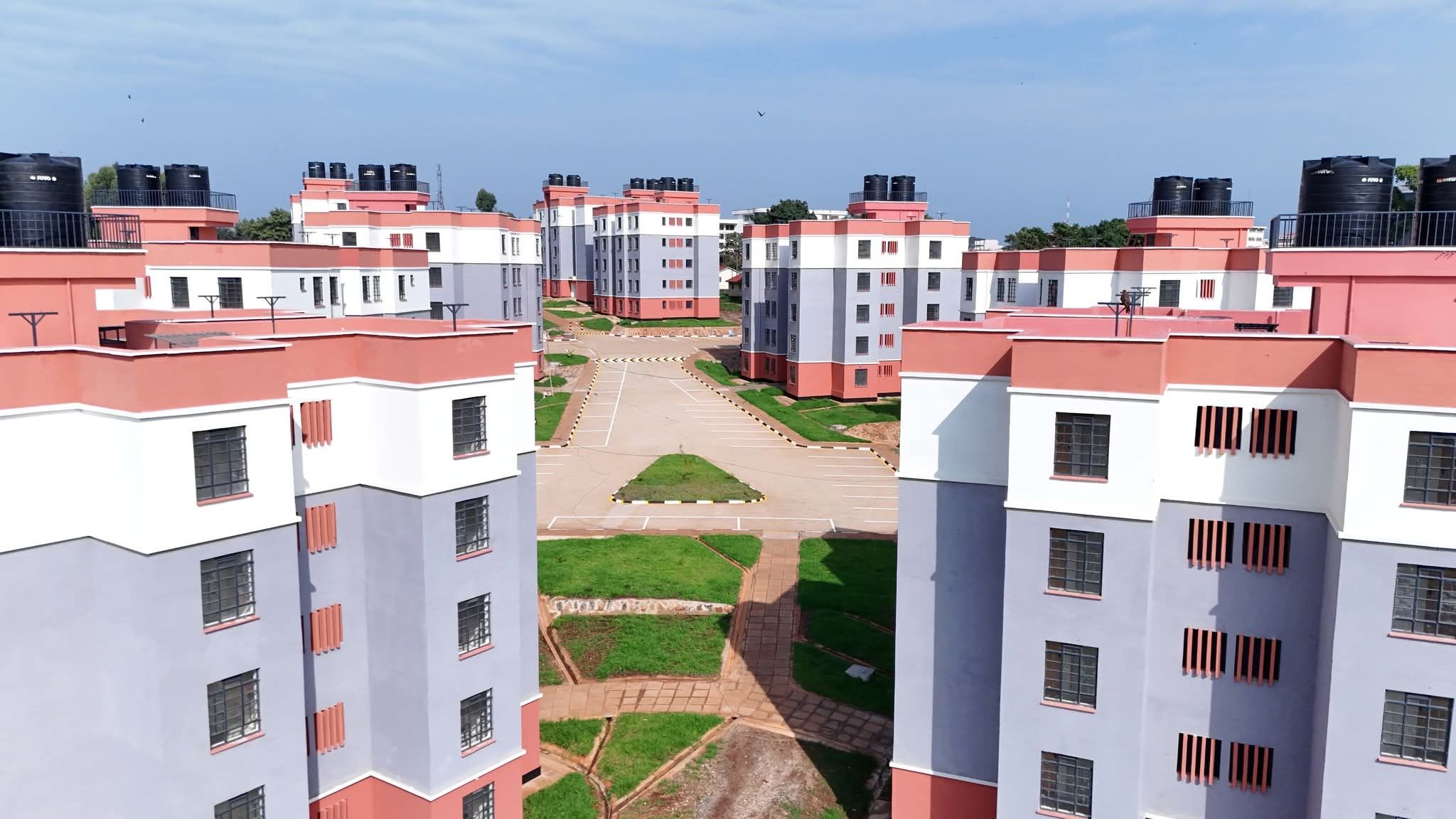
President William Ruto used the global stage at the World Urban Forum to position Kenya’s affordable housing programme as one of Africa’s most ambitious urban transformation initiatives, arguing that affordable housing has become central to economic development, climate resilience, and social inclusion across the Global South.
Addressing delegates at the Baku Convention Center in Azerbaijan, President Ruto said rapid urbanisation in Africa and Asia is reshaping development priorities globally, making housing one of the defining policy challenges of the coming decades.


“Meeting this demand requires reform of the international financial architecture to address financing inequalities affecting Africa and the Global South,” the President said, while also emphasising Africa’s increasing focus on financing its own development through domestic resource mobilisation and stronger African institutions.
The remarks come as Kenya’s Affordable Housing Programme continues attracting international attention for combining housing delivery, employment creation, informal settlement transformation, and climate-conscious urban planning under a single policy framework.
The government has consistently framed the programme as more than a construction initiative, arguing that it functions simultaneously as a social welfare intervention, an industrial stimulus plan, and a long-term urban development strategy.
Kenya’s Growing Housing Crisis
Kenya’s housing shortage remains one of the country’s most pressing development challenges. According to analysis by investment and research firm Cytonn Investments, Kenya faces an annual housing demand of approximately 250,000 units against a supply of only about 50,000 units, leaving a deficit that continues to widen every year.
The shortage has been accelerated by rapid urbanisation, with cities such as Nairobi, Mombasa, Kisumu, Nakuru, and Eldoret experiencing sustained population growth over the last two decades.
Data from United Nations Human Settlements Programme shows that Africa is expected to account for a significant share of global urban population growth by 2050, placing enormous pressure on infrastructure, transport systems, housing, sanitation, and public services.
A large percentage of urban residents in Kenya continue to live in informal settlements where overcrowding, poor sanitation, insecure land tenure, and limited access to social amenities remain widespread.
It is within this broader urban challenge that Kenya’s Affordable Housing Programme has emerged as one of the country’s most politically and economically significant projects.
Scale of Kenya’s Affordable Housing Programme
Government figures indicate that the programme has expanded rapidly since 2022.
According to the official Kenya Kwanza delivery scorecard, more than 260,000 affordable housing units had either been launched or were under construction by August 2025, up from fewer than 9,000 units in 2022.
Separately, a progress review by Cytonn Investments noted that the government was targeting 500,000 affordable housing units by December 2026, with projects already spread across nearly all 47 counties.
Recent data from the Kenya National Bureau of Statistics showed that completed affordable housing units rose significantly in 2025, reaching 7,148 units valued at approximately KSh8.4 billion, compared to 1,655 units worth KSh4 billion in the previous year.
While these numbers remain below Kenya’s annual housing demand, they nonetheless represent one of the fastest expansions of public housing infrastructure in the country’s history.
Jobs and Economic Impact
One of the programme’s most heavily promoted aspects has been job creation.
Government figures released through the Kenya Kwanza scorecard claim that employment tied to affordable housing projects rose from about 17,700 jobs in 2022 to more than 640,000 jobs by 2025.
Independent fact-checking organisation Africa Check has, however, questioned the consistency of some official employment figures, noting that different numbers have been cited publicly by government officials at different times.
Still, there is broad agreement among economists that large-scale housing construction carries substantial multiplier effects across the economy.
The programme has generated activity in cement manufacturing, steel production, transport, electrical installation, plumbing, furniture supply, and the informal “Jua Kali” sector.
Government reports indicate that at least KSh11 billion has already been channelled toward Jua Kali artisans and micro, small, and medium enterprises supplying materials and services to housing projects.
In the Coast region alone, affordable housing developments valued at approximately KSh46 billion are expected to deliver more than 20,000 housing units while supporting over 12,000 direct jobs.
Economists note that construction projects often stimulate broader domestic demand because they rely heavily on local labour and locally sourced materials.
This partly explains why the government increasingly presents Kenya’s Affordable Housing Programme as both a social intervention and an economic recovery mechanism.
The Housing Levy Debate
Financing remains at the centre of the programme’s political and economic debate.
The Affordable Housing Levy, introduced under the Affordable Housing Act 2024, requires employees and employers to each contribute 1.5 percent of gross salary toward housing development.
The levy has become one of the most controversial fiscal measures introduced by the government in recent years.
Supporters argue that the model represents a rare example of domestic resource mobilisation for infrastructure development, reducing reliance on external borrowing and expensive sovereign debt.
Critics, however, argue that the levy increases pressure on already strained households amid high living costs, taxation concerns, and economic uncertainty.
The levy also faced legal challenges after courts previously ruled against earlier versions of the framework before Parliament enacted revised legislation.
Despite this, the government continues defending the levy as necessary for financing large-scale housing delivery and long-term urban planning.
President Ruto, speaking in Baku, praised Kenyans for “demonstrating how locally mobilised resources through the Housing Levy can help address the challenges of rapid urbanisation.”
Climate Resilience and Urban Planning
A major reason Kenya’s Affordable Housing Programme is drawing international attention is its attempt to integrate climate resilience into housing policy.
Many projects are being developed with supporting infrastructure such as drainage systems, sewer connections, roads, public spaces, schools, and commercial facilities.
Urban planners increasingly argue that African cities cannot address housing shortages without simultaneously addressing environmental risks linked to flooding, poor waste management, congestion, and inadequate infrastructure.
The government says several housing projects are designed around “live-work-play” models intended to reduce commuting pressures while improving access to services and economic opportunities.
However, experts caution that long-term success will depend on affordability, transparency, and accessibility.
One recurring concern is whether lower-income Kenyans — particularly those in informal employment — will realistically afford the completed units despite subsidised financing structures.
There are also concerns about land ownership documentation, allocation transparency, and uptake rates in some completed projects.
A Closely Watched African Experiment
Even with ongoing debate, Kenya’s Affordable Housing Programme is increasingly becoming one of Africa’s most closely watched urban policy experiments.
The initiative reflects a wider continental challenge: how African governments can accommodate rapidly expanding urban populations while balancing social equity, fiscal sustainability, and climate resilience.
For Kenya, the programme’s long-term success may ultimately depend not only on the number of units completed, but also on whether the housing delivered remains genuinely affordable, economically sustainable, and integrated into broader urban planning systems.
As African cities continue growing, housing policy is likely to remain central to discussions around inequality, infrastructure financing, employment, and sustainable development — placing Kenya’s housing model under continued regional and global scrutiny.
ALSO READ: How Institutional Real Estate Investment Can Drive Affordable Housing