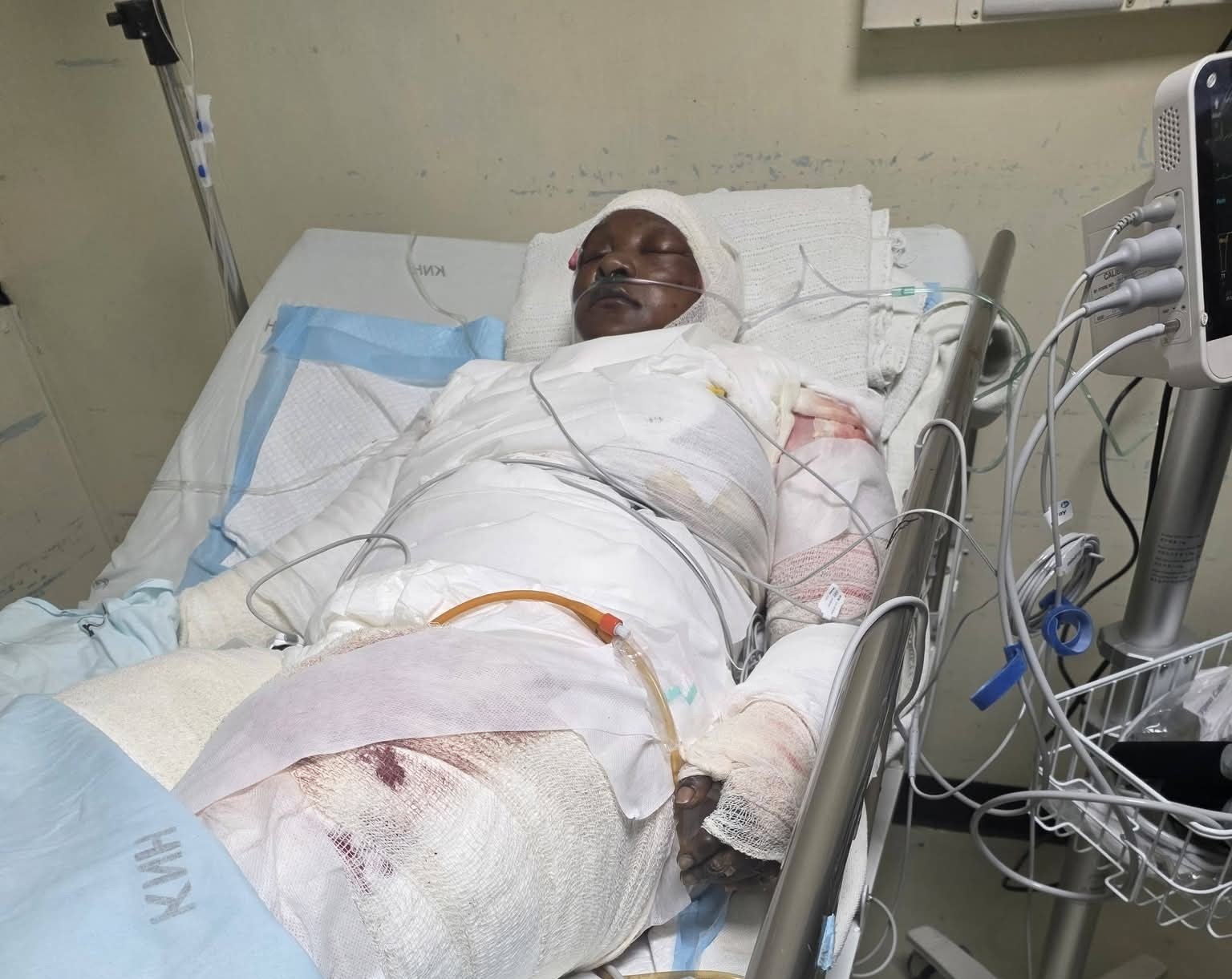
Gospel singer Rachel Wandeto has died while receiving treatment at Kenyatta National Hospital days after she was allegedly attacked and set ablaze by unknown assailants in Mwiki, Kasarani, in an incident that has shocked the country and reignited debate about political intolerance in Kenya.
Wandeto succumbed to her injuries early Monday morning following complications after surgery, according to reports from hospital sources and local media. The singer had suffered severe burns covering nearly 70 percent of her body after being doused with petrol during the Friday night attack along Obama Road in Mwiki, Nairobi.


The death of Rachel Wandeto has triggered widespread grief online, with many Kenyans describing her as a victim of growing political hostility and extremism ahead of the 2027 election cycle.
What Happed to Rachel Wandeto?
According to preliminary police investigations, Wandeto was confronted by three men on Friday night near her residence in the Mwiki area of Kasarani. Reports indicate the attackers accused her of allegedly benefiting financially from President William Ruto because of her vocal public support for him and her widely publicized tattoos bearing the President’s image and political slogans.
Relatives told investigators the attackers demanded money they believed she had received from the Head of State due to her political loyalty. When she reportedly told them she had nothing, the assailants poured petrol on her and set her on fire before fleeing the scene.
Residents rushed to help the singer before she was first taken to Uzima Uhai Hospital for emergency treatment and later transferred to Kenyatta National Hospital due to the severity of the burns. Doctors reportedly fought to save her life over the weekend before she passed away Monday morning.
Viral Tattoos Put Rachel Wandeto in National Spotlight
Rachel Wandeto had become a controversial but recognizable figure in recent months after images of her tattoos went viral online. The tattoos included President Ruto’s portrait and political slogans associated with support for his administration and calls for him to serve two terms.
The tattoos sparked fierce reactions across social media, with some praising her loyalty while others criticized her actions. Reports also indicated that the publicity surrounding the tattoos caused tension in her personal life, including challenges within her marriage.
Despite the criticism, Wandeto remained publicly outspoken in support of the President and government policies, something investigators are now considering as they examine whether political motives played a role in the attack.
Murkomen Condemns the Attack
Interior Cabinet Secretary Kipchumba Murkomen visited Wandeto at Kenyatta National Hospital on Sunday alongside Inspector General of Police Douglas Kanja and other security officials.
During the visit, Murkomen strongly condemned the assault, warning against rising political intolerance and incitement.
“Our vibrant democracy, backed by a robust Constitution, allows for free expression of political opinion that cannot be taken away by anybody,” Murkomen said.
He further directed police and Directorate of Criminal Investigations officers to fast-track investigations and ensure those responsible are arrested and prosecuted. Authorities have since confirmed that a specialized DCI team has taken over the case. However, no arrests had been made by Monday afternoon.
Political Tensions Under Scrutiny
The death of Rachel Wandeto comes at a time of heightened political tension in Kenya, with the country witnessing increasing confrontations linked to political rivalry, online activism, and youth mobilization.
Although police say investigations are still ongoing and robbery has not been ruled out as a possible motive, many Kenyans have interpreted the incident as a worrying sign of growing intolerance based on political affiliation.
Kenya has historically experienced politically charged violence during periods of heightened political competition, particularly in the years leading to general elections. Analysts say the rise of social media has further intensified political polarization, often exposing outspoken supporters and critics alike to harassment, threats, and public targeting.
The Wandeto case has particularly resonated because it involves personal expression through tattoos and public political identity. Human rights observers and civil society groups have warned that normalizing violence over political opinion risks undermining democratic freedoms guaranteed under the Constitution.
Following confirmation of her death, tributes flooded social media platforms from fans, gospel artists, politicians, and ordinary Kenyans.
Many described Rachel Wandeto as a woman who stood firmly by her beliefs regardless of criticism. Others mourned the tragic manner of her death, saying no Kenyan should lose their life because of political differences.
Her death has now become a powerful symbol in ongoing conversations about political extremism, online hostility, and the dangerous consequences of radicalized political discourse in Kenya.
As investigations continue, pressure is mounting on authorities to identify and prosecute those behind the brutal attack, while many Kenyans continue to demand justice for Rachel Wandeto.
ALSO READ: ‘Visionary Leader’ Dalmas Otieno Dies At 80