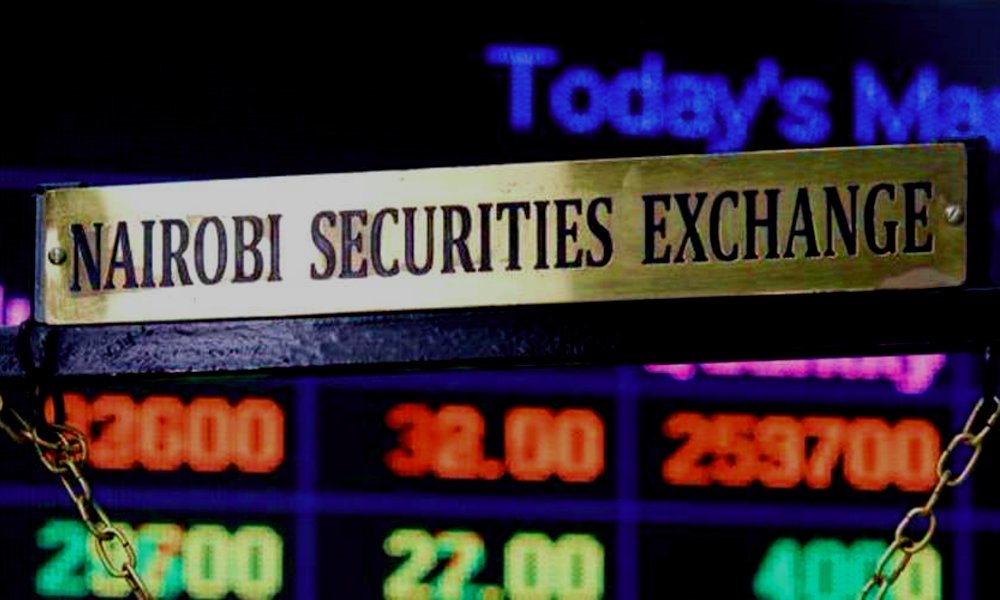
Foreign investors at the Nairobi Securities Exchange (NSE) offloaded more than Sh4 billion worth of NSE shares in March 2026. This was triggered by the escalation of the Iran war, underscoring a structural vulnerability in Kenya’s capital markets. What appears at first glance to be a routine bout of investor caution is, in reality, a reflection of broader geopolitical tremors reverberating across emerging markets.
Data from multiple market reports show that foreign investors sold a net of approximately Sh4.2 billion worth of NSE shares beginning early March, coinciding with the onset of the Iran conflict. This figure is consistent with broader first-quarter data, which indicates total foreign outflows of about Sh8.78 billion, with nearly half occurring after the war began.


March itself was particularly brutal. Foreign investors were net sellers in 17 out of 22 trading sessions, dumping shares worth Sh8.61 billion against purchases of just Sh4.3 billion. The result was a sharp erosion of investor wealth and confidence, with the NSE losing roughly Sh300–Sh340 billion in market capitalisation within the month.
All major NSE indices declined between 8.5% and 10.5% during the period, highlighting the breadth of the sell-off across sectors. Even fundamentally strong blue-chip companies were not spared, collectively shedding about Sh200 billion in value as foreign investors exited.
The Iran War and the Global Risk-Off Shift
To understand the sell-off in NSE shares, one must situate it within the wider global context. The 2026 Iran war has triggered what analysts describe as one of the largest energy supply disruptions in modern history, sending oil prices sharply higher and fuelling fears of inflation and recession.
Such conditions typically trigger a “risk-off” sentiment among global investors. In times of uncertainty, capital tends to flow out of emerging and frontier markets—like Kenya—into perceived safe havens such as U.S. Treasury bonds and dollar-denominated assets.
This pattern is not unique to Kenya. In India, for instance, foreign investors have withdrawn tens of billions of dollars from equities since the conflict began, contributing to sharp declines in major indices. The same dynamics are playing out globally: rising oil prices, currency volatility, and inflation fears are pushing investors to reduce exposure to riskier markets.
For Kenya, which is both an oil importer and a frontier market, the impact is amplified. Higher oil prices worsen the country’s trade balance, weaken the shilling, and raise inflation—all of which reduce the attractiveness of NSE shares to foreign investors.
Why NSE Shares Are Particularly Vulnerable
The sell-off highlights several structural characteristics of the NSE that make it sensitive to foreign investor behavior.
First, foreign investors play an outsized role in market activity. In some trading weeks, they account for more than half of total turnover, meaning their entry or exit has a disproportionate impact on prices and liquidity. When they sell aggressively, the market lacks sufficient domestic depth to absorb the shock.
Second, the NSE is heavily concentrated in a few large-cap stocks, particularly in banking and telecommunications. These stocks are typically the primary targets of foreign institutional investors. When global funds rebalance their portfolios, these blue chips experience the most significant price pressure.
Third, Kenya’s status as a frontier market means it is often grouped with other higher-risk jurisdictions in global asset allocation models. During periods of uncertainty, such markets are the first to experience capital flight.
The Dollar Effect and Capital Reallocation
A key driver of the foreign sell-off in NSE shares is the strengthening of the U.S. dollar. As global investors shift into dollar assets, emerging market currencies come under pressure, reducing returns when converted back into dollars.
For foreign investors in Kenya, this creates a double risk: declining equity prices and currency depreciation. Even if a stock holds its value in shillings, a weakening currency can erode dollar returns. This dynamic incentivizes early exit, accelerating sell-offs.
Moreover, rising global interest rates—partly driven by inflation linked to higher oil prices—make developed market assets more attractive. Investors can earn higher, safer returns in U.S. bonds compared to riskier equities in markets like Kenya.
Domestic Impact: Wealth Erosion and Investor Confidence
The consequences of the foreign sell-off extend beyond market indices. The loss of over Sh300 billion in market value represents a significant erosion of investor wealth, affecting pension funds, institutional investors, and retail participants.
Reduced foreign participation also impacts liquidity. Lower trading volumes make it harder for investors to enter and exit positions efficiently, increasing volatility and further dampening confidence.
Additionally, the sell-off can have broader economic implications. The stock market serves as a barometer of economic health, and sustained declines can affect business sentiment, capital raising, and investment decisions.
Is This a Temporary Shock or a Structural Concern?
While the current sell-off is clearly linked to geopolitical events, it raises deeper questions about the resilience of Kenya’s capital markets.
On one hand, such episodes are cyclical. Global crises—from the COVID-19 pandemic to previous oil shocks—have historically triggered temporary capital flight, followed by recovery once conditions stabilise.
On the other hand, the repeated vulnerability of NSE shares to external shocks suggests structural weaknesses. Limited domestic institutional participation, low retail investor penetration, and high reliance on foreign capital leave the market exposed.
Encouragingly, there are signs of resilience. Even during periods of selling, foreign investors continue to account for a significant share of trading activity, indicating that the NSE remains relevant in global portfolios. Moreover, valuations often become more attractive after sell-offs, potentially drawing back long-term investors once uncertainty subsides.
The Road Ahead for NSE Shares
The trajectory of NSE shares in the coming months will largely depend on global developments. A de-escalation of the Iran conflict, stabilisation of oil prices, and easing inflationary pressures could restore investor confidence and reverse capital outflows.
Domestically, policy measures aimed at deepening the capital markets could help mitigate future shocks. Expanding the domestic investor base, enhancing market liquidity, and improving regulatory frameworks would reduce reliance on foreign capital.
In the meantime, the current sell-off serves as a reminder of the interconnectedness of global financial markets. Events thousands of kilometres away, from oil fields in the Middle East to policy decisions in Washington, can have immediate and profound effects on NSE shares.
The Sh4 billion foreign sell-off in March is more than just a reaction to geopolitical tension; it is a manifestation of deeper global financial dynamics. As investors retreat to safety amid uncertainty, frontier markets like Kenya bear the brunt of capital reallocation.
For the NSE, the challenge lies not only in weathering the current storm but in building a more resilient market structure capable of withstanding future shocks. Until then, NSE shares will remain highly sensitive to the ebbs and flows of global risk sentiment, a reality that investors must continue to navigate carefully.
ALSO READ: Ethiopia Invites Kenyan Stockbrokers To Its New Stock Market