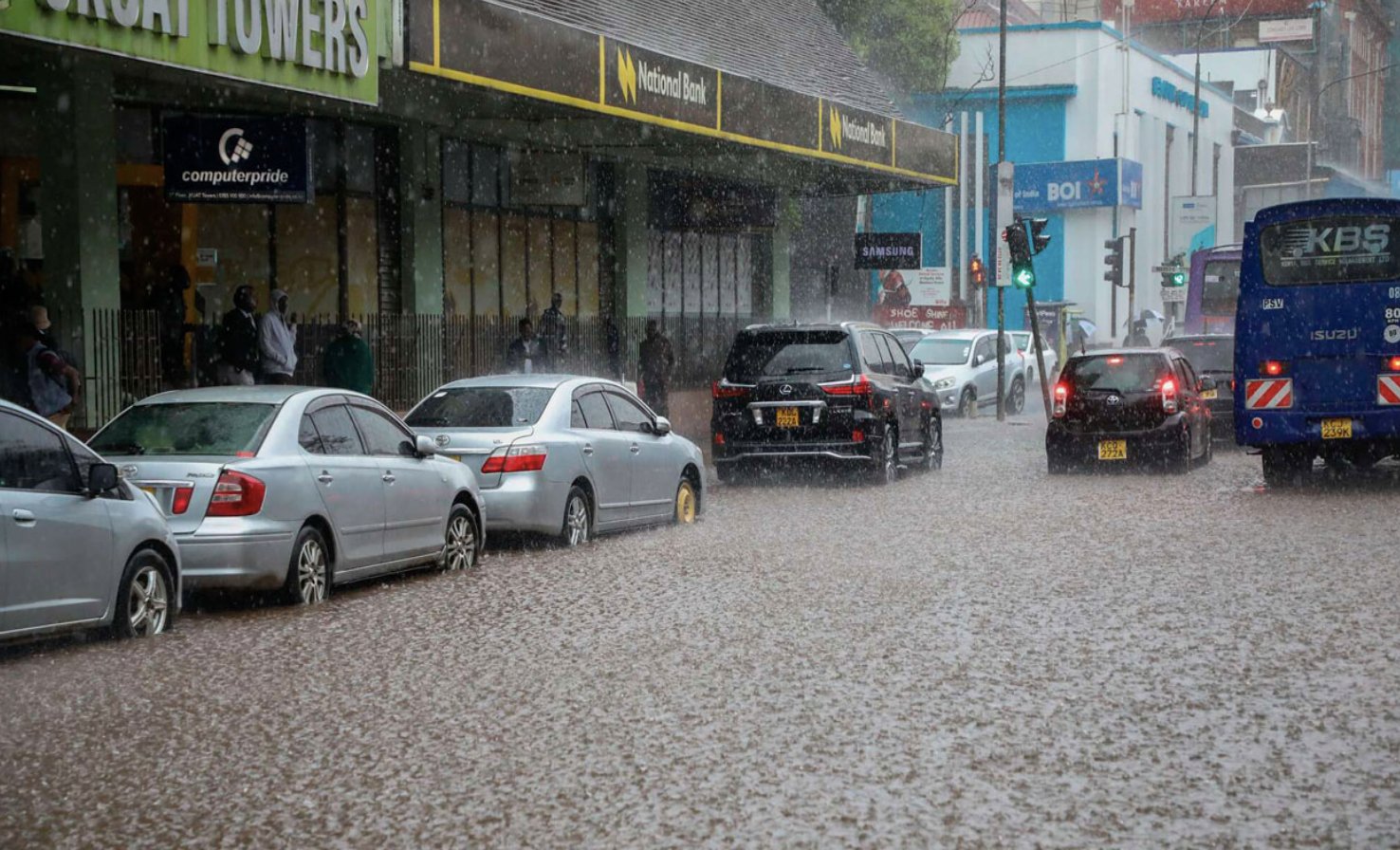
The Kenya Meteorological Department has warned that there shall be heavy rains across several counties as the predicted El Niño rains take hold following delays. The department warns that there is a real possibility of flooding across more than 30 counties in the country.
Kiambu County and Nairobi County have been some of the latest counties to receive above-average rainfall almost every morning over the past 2 weeks. Surrounding counties and other places within the country are also expected to receive above-average rainfall as the expected El Nino rains take a hold of the central-to-eastern part of the country.


Other counties expected to receive above average rainfall within the first two weeks of November include parts of Baringo, Bomet, Bungoma, Busia, Elgeyo Marakwet, Embu, Garissa, Homa Bay, Isiolo, Kajiado, Kakamega, Kericho, Kiambu, Kilifi, Kirinyaga, Kisii, Kisumu, Kitui, Kwale, Laikipia, Lamu, Machakos, Makueni, Mandera, Marsabit, Meru, Migori, Mombasa, Murang’a, Nairobi, Nakuru, Nandi, Narok, Nyamira, Nyandarua, Nyeri, Samburu, Siaya, Taita Taveta, Tana River, Tharaka-Nithi, Trans Nzoia, Uasin Gishu, Vihiga, Wajir and West Pokot.
The Kenya Meteorological Service Authority Edward Muriuki said most parts of the country were expected to receive above-average rainfall in November and December during a weekly forecast that took place in early November.
Kenya Meteorological Department Says Risk Of Diseases Is High In Flooding
According to Muriuki, the increased rainfall is expected to cause flooding, cause possible damage to roads and raise the risk of diseases such as malaria, cholera and typhoid.
Muriuki said the rainfall distribution and intensity is likely to vary across the country but further warned that farmers should be prepared so that the rainfall received does not massively impact their agriculture.
The possible impact on agriculture is particularly alarming. Today, agriculture is the single largest contributor to the country’s income. According to 2025 statistics from the Central Bank of Kenya, retains top spot in economic contributions. It contributed about 23.2% to the country’s Gross Domestic Product (GDP) in 2025, up from 22.4% in 2024. Ensuring farmers have frameworks in place to deal with a sudden rise in rainfall is therefore tantamount to protecting the economy as well as the many Kenyans employed within the sector.
The Kenya Meteorological Department also warns that accumulated water from the rains could create breeding grounds for mosquitoes, potentially increasing malaria transmission in areas affected by flooding and those with a lot of sill and stagnant waters.
As schools close and most Kenyans spend time with their families, it is important that all precautions are well adhered to for added safety layers in cases of flooding. The meteorological department has advised Kenyans to use its weekly forecast alongside shorter-term updates, which provide more specific information on expected weather conditions.
How To Stay Safe During Flooding In Your Area
As the chance of flooding grows, it is important to ensure that you and your family stay safe throughout the duration of the weather event. Here is how you can do it.
- Follow the news
Following news updates on the flooding situation in your area will give you a better understanding of of what to expect well before the weather events happen. The Kenya Meteorological Department shares weekly updates to Kenyans on areas expected to receive rainfall and available emergency contacts in case of severe incidents. If your area has been earmarked to receive heavy rainfall, you should be on the lookout for updates from them and weather forecasts with helpful information.
- Have updated emergency contacts
It is also important to have updated emergency contacts. This will help with tracing in the case that you have been caught in a flood and you have no way of communicating or calling for help. Checking in from time to time with your emergency contacts will help keep you safe.
- Secure your house
If your house is connected to electricity, it is always advisable to unplug all electricity connections. Your house filling up with water during a live electricity transmission massively heightens the risk of electrocution and possible explosion.
- Move to higher ground
During flooding, moving to higher ground will help potect you and your loved ones from getting swallowed by waters.
- Protect your family’s health
Floodwaters carry a lot of contaminated material with them. It is always advisable to throw away any food remains or utensils that have been filled or contaminated with floodwater. This will be key to protecting you and your loved ones.
Always remember to stay safe and be in touch with your local authorities in case of flooding.
ALSO READ: Kenya Met Warns Of Rainfall In 43 Counties