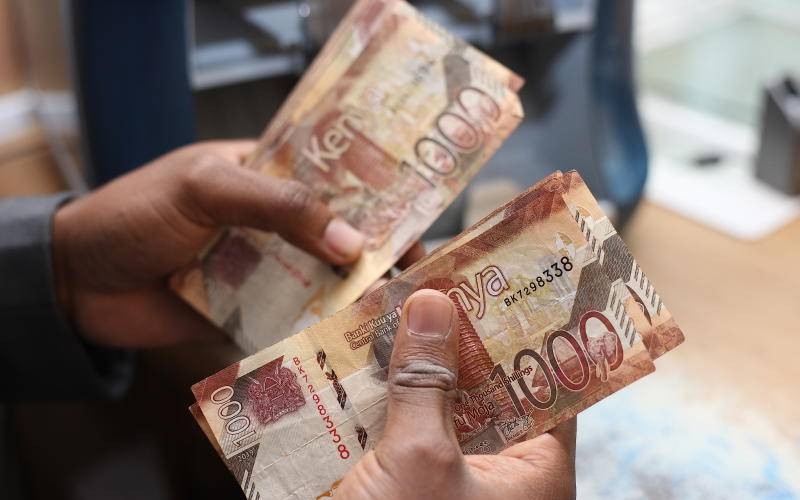
Kenya’s public debt has crossed the Sh12.8 trillion mark for the first time in the country’s history, highlighting the growing fiscal pressures facing the government amid rising expenditure demands, ambitious infrastructure commitments, and mounting debt repayment obligations.
According to the latest National Treasury data, Kenya’s public debt stood at approximately Sh12.84 trillion by February 2026, with domestic debt accounting for about Sh7 trillion while external debt stood at roughly Sh5.8 trillion.


The figures underscore the scale of the challenge confronting policymakers as the country attempts to balance economic growth, social spending, revenue mobilisation, and debt sustainability at a time when households and businesses are already under pressure from a high cost of living and elevated taxation.
Understanding Kenya’s Public Debt
Kenya’s public debt consists of two major components: domestic borrowing and external borrowing.
Domestic debt refers to money borrowed within the country, largely through Treasury bills and Treasury bonds purchased by commercial banks, pension funds, insurance firms, and individual investors. External debt, on the other hand, includes loans and sovereign bonds obtained from foreign governments, multilateral institutions such as the World Bank and IMF, and international capital markets through Eurobonds.
The current debt composition shows Kenya increasingly relying on domestic borrowing as access to cheaper international financing becomes more constrained. Treasury documents indicate that the government is now leaning more heavily toward local borrowing to finance budget deficits and refinance maturing obligations.
This shift has both advantages and risks.
Borrowing locally reduces exposure to foreign exchange fluctuations because repayments are made in Kenyan shillings rather than dollars or euros. However, domestic borrowing is often more expensive due to relatively high local interest rates. It can also crowd out private sector lending as banks prefer lending to government through Treasury securities, which are considered safer and more profitable.
Why Kenya’s Public Debt Keeps Rising
The rapid growth of Kenya’s public debt over the last decade has been driven by several structural factors.
One major driver has been large-scale infrastructure development. Successive governments borrowed heavily to fund projects such as roads, railways, energy infrastructure, airports, water projects, and affordable housing initiatives. While many of these investments were aimed at stimulating long-term economic growth, critics argue that some projects did not generate sufficient economic returns to justify the scale of borrowing involved.
At the same time, Kenya has continued running fiscal deficits — meaning government expenditure exceeds revenue collection. This gap must be financed through borrowing.
Debt servicing obligations have also become a significant factor. A growing portion of new borrowing is now being used not for development spending, but to repay existing loans and interest obligations. The Controller of Budget has warned that Kenya risks entering a “vicious cycle” where the country borrows simply to service old debt.
The burden is especially heavy because some of Kenya’s debt was acquired commercially at relatively high interest rates compared to concessional loans from multilateral lenders.
The Economic Impact of Kenya’s Public Debt
The expansion of Kenya’s public debt has wide-ranging implications for the economy.
One immediate effect is the growing share of government revenue dedicated to debt repayment. In recent years, debt servicing has consumed a substantial portion of ordinary revenue, reducing the fiscal space available for essential services such as healthcare, education, agriculture, and infrastructure maintenance.
This creates difficult budgetary trade-offs.
When more money goes toward interest payments and principal repayments, the government has less room to invest in development programmes or social protection initiatives. This can slow economic transformation and weaken public service delivery.
High debt levels can also affect investor confidence. Although Kenya remains one of East Africa’s largest and most diversified economies, rising debt ratios may increase concerns among lenders and rating agencies about fiscal sustainability.
Kenya’s debt-to-GDP ratio is now approaching 70 percent according to recent Treasury data. While debt sustainability depends on many factors beyond headline figures, including growth prospects and repayment structures, rising debt ratios often increase borrowing costs because investors demand higher returns to compensate for perceived risk.
There is also concern about the impact of heavy domestic borrowing on the private sector. When government aggressively borrows from local markets, commercial banks may allocate more funds to Treasury securities instead of lending to businesses. This can limit access to affordable credit for manufacturers, SMEs, and entrepreneurs, potentially slowing job creation and economic expansion.
Revenue Collection and the Finance Bill Debate
As debt obligations rise, pressure has intensified on the Kenya Revenue Authority (KRA) to meet increasingly ambitious revenue targets.
This explains why recent Finance Bills have proposed broader tax measures targeting digital services, imports, fuel, financial transactions, excise duties, and informal sector compliance.
The government argues that expanding the tax base is necessary to fund development and reduce dependence on borrowing. However, the challenge lies in balancing revenue mobilisation with economic growth and taxpayer fatigue.
Kenya has already witnessed public resistance to higher taxes, particularly after the nationwide protests linked to the Finance Bill 2024. Businesses and households continue to face high operating costs, weak purchasing power, and reduced disposable incomes.
This creates a difficult environment for aggressive taxation.
If taxes rise too sharply without corresponding economic growth, consumption may weaken further, businesses may struggle, and overall tax collection could actually decline instead of improving.
For revenue targets to be achieved sustainably, Kenya may need to focus less on imposing new taxes and more on improving efficiency in tax administration.
This includes expanding the formal tax base so that more individuals and businesses contribute to revenue collection, rather than placing a heavier burden on already compliant taxpayers. Kenya’s informal sector remains large, and economists have consistently argued that broadening compliance through incentives, simplified registration systems, and improved business formalisation could increase government revenues more sustainably over time.
There is also growing emphasis on reducing tax evasion and improving overall compliance. Revenue leakages through underreporting, illicit financial flows, smuggling, and weak enforcement mechanisms continue to deny the government billions of shillings annually. Strengthening oversight and improving coordination between agencies could help close some of these gaps without necessarily introducing new taxes.
Another major area of focus is the digitisation of revenue collection systems. Kenya has already made progress through electronic tax platforms and digital payment systems, but experts argue that further automation could improve efficiency, reduce human interference, minimise corruption opportunities, and enhance real-time monitoring of tax compliance across sectors of the economy.
Concerns over corruption and misuse of public resources have also intensified discussions around closing loopholes that enable financial leakages within government systems. Analysts argue that improving procurement oversight, strengthening audit mechanisms, and enforcing accountability measures could significantly improve revenue retention and reduce unnecessary expenditure pressures that contribute to borrowing.
At the same time, enhancing customs enforcement has become increasingly important as Kenya seeks to maximise revenues from international trade. Authorities continue to face challenges related to under-declaration of imports, counterfeit goods, smuggling, and tax avoidance schemes. Improving border surveillance, modernising customs systems, and strengthening enforcement capacity could help boost collections while protecting legitimate businesses.
Many economists also maintain that supporting business growth remains one of the most sustainable long-term solutions for improving revenue collection. A growing economy generates more employment, increases incomes, expands consumer spending, and ultimately widens taxable economic activity. Policies that support entrepreneurship, industrialisation, manufacturing, agriculture, and investment could therefore strengthen government revenues naturally while reducing overdependence on debt financing.
Many analysts argue that Kenya’s long-term fiscal stability depends not just on higher taxation, but on creating a larger and more productive economy.
Can Kenya Sustain Its Debt?
Despite the alarming figures, economists generally note that public debt in itself is not inherently bad if managed prudently and invested productively.
Countries around the world borrow to finance development and stimulate economic growth. The key issue is whether borrowed funds generate sufficient economic returns to support repayment over time.
Kenya still retains strengths that could support debt sustainability. The country has a relatively diversified economy, strong financial sector, expanding digital economy, vibrant services industry, and strategic regional position within East Africa.
Tourism, agriculture, technology, logistics, manufacturing, and renewable energy continue to provide growth opportunities.
However, sustaining debt requires stronger fiscal discipline and more efficient public spending.
Remedies for Kenya’s Public Debt Situation
Several policy interventions could help Kenya manage its rising debt burden more effectively. One of the biggest concerns raised repeatedly by oversight institutions is the issue of wastage, duplication, and inefficiency in public expenditure. Analysts argue that reducing non-essential spending and tightening accountability across government agencies could significantly ease borrowing pressure and improve fiscal discipline. Concerns have also been raised about recurrent expenditure consuming a large share of the national budget, leaving less room for productive development investments that can stimulate economic growth.
Economists also argue that future borrowing should increasingly be directed toward high-impact projects with measurable economic returns. Investments in infrastructure, manufacturing, energy, logistics, agriculture, and technology are often considered more sustainable when they directly contribute to job creation, export growth, productivity improvement, and expansion of the tax base. The concern in recent years has been whether all debt-funded projects have generated sufficient value to justify the cost of borrowing.
There have also been growing calls for stronger transparency and accountability in debt management. Greater public disclosure on loan agreements, repayment terms, procurement processes, and project implementation is seen as critical in strengthening public trust and improving investor confidence. Transparency is particularly important as Kenya navigates increasingly complex debt obligations involving both domestic and international lenders.
Another major issue tied to Kenya’s public debt is the country’s need to strengthen foreign exchange earnings. Since external debt repayments are largely denominated in foreign currencies such as the US dollar, Kenya requires strong inflows from exports, tourism, diaspora remittances, and foreign direct investment to support repayment obligations and stabilise the shilling. A stronger export sector could reduce vulnerability to exchange rate pressures that often make external debt more expensive over time.
At the same time, many economists maintain that supporting private sector growth is essential to improving the country’s long-term fiscal outlook. A thriving private sector creates jobs, increases incomes, expands consumption, and ultimately generates higher tax revenues without necessarily imposing new taxes. Policies that improve the ease of doing business, lower production costs, and encourage investment could therefore play an important role in reducing overreliance on borrowing.
There is also increasing discussion around the structure of Kenya’s borrowing, particularly the need to shift more toward concessional financing. Loans from multilateral institutions such as the World Bank and African Development Bank generally carry lower interest rates and longer repayment periods compared to commercial loans and Eurobonds. Financial experts argue that prioritising cheaper and longer-term financing could help reduce repayment pressure and improve debt sustainability over the coming years.
Kenya’s public debt has become one of the defining economic issues facing the country today. The Sh12.8 trillion figure reflects years of borrowing driven by infrastructure expansion, fiscal deficits, economic shocks, currency pressures, and rising repayment obligations.
At the same time, the debate should move beyond headline debt numbers toward deeper questions about economic productivity, governance, accountability, and sustainable growth.
The challenge for policymakers is no longer simply how to borrow, but how to ensure borrowing translates into broad-based economic transformation capable of generating enough revenue to support future repayments without overburdening taxpayers.
ALSO READ: Government Taps Sh35.3B From The Market For Debt Refinancing