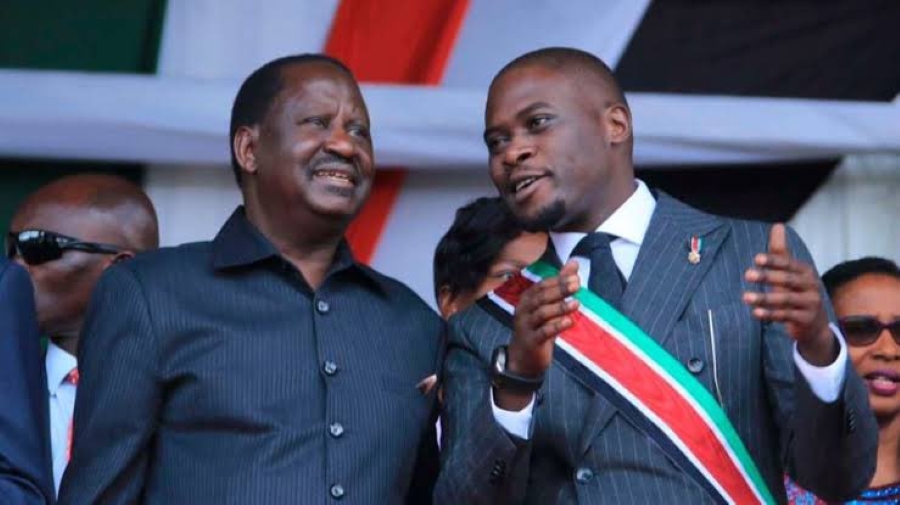
Members of the Nairobi County Assembly (MCAs) say they will table about 20 charges to push a motion for Governor Johnson Sakaja impeachment. The motion will range from corruption and misuse of public funds to misconduct and failure to honour 2022 campaign promises.
In rare bipartisan fashion, the sponsors of the Sakaja impeachment motion claim they have well beyond the minimum signatures to move it to debate, reports in recent days have cited roughly 90 MCAs backing the push. If the motion passes the Assembly by the required supermajority, the case hurtles to the Senate for trial. What happens there will depend less on political heat and more on constitutional thresholds, evidence quality, and recent impeachment jurisprudence.


What the Law Says on a possible Sakaja impeachment
Kenya’s Constitution and statute are precise about removing a county governor. Article 181 of the Constitution lists four grounds: gross violation of the Constitution or any other law; where there are serious reasons to believe the governor has committed a crime under national or international law; abuse of office or gross misconduct; and physical or mental incapacity.
Section 33 of the County Governments Act then sets the procedure: a notice by an MCA backed by at least a third of members; a two-thirds Assembly vote to impeach; and, within seven days, a Senate hearing by plenary or an 11-member special committee. If the committee (where appointed) finds any charge substantiated, the Senate must then vote. A majority of all county delegations—one vote per county under Article 123, must support at least one charge for the governor to be removed. If no charge secures that majority, the governor survives.
Those vote mechanics matter. In an impeachment “affecting counties,” each county deDishi Nlegation casts a single vote, meaning numerical party strength can be blunted by cross-county bargaining, and a governor’s survival often turns on whether delegations are persuaded that the charges are both properly framed and proved to a high evidentiary standard. Parliamentary practice guides and Senate manuals published in 2025 reiterate these steps and timelines.
List of charges in Sakaja Impeachment motion, and how each cluster must be proved
The sponsors of the Sakaja impeachment have not yet tabled a final, public charge sheet, but they have telegraphed the contours: corruption, misuse of public funds, misconduct, and dereliction of promises made to Nairobians.
High-level leaks and on-record comments point to a broad, 20-count instrument built around financial governance, procurement, service delivery, and integrity. At Senate, none of these themes will matter unless the particulars are tightly linked to the Article 181 grounds and backed by documentary proof. Here is how the likely buckets line up, and what evidence tends to persuade senators:
- Public finance management and budgeting
Expect allegations of unlawful reallocations, disproportionate recurrent spending, or ignoring Controller of Budget (CoB) advisories. For instance, Nairobi’s supplementary budget processes and ceilings have recently drawn scrutiny from the CoB, while Assembly–Executive standoffs over development shares and the Ward Development Fund (WDF) have been persistent. To cross the Senate line, MCAs would need budget documents, CoB advisories, and timelines showing the governor’s personal role in any breach—not just a generic “County did X.”
- Procurement and contracts
Garbage collection, road works, market upgrades, revenue systems, and school feeding procurement are typical flashpoints in City Hall oversight. Senate looks for Auditor-General findings, tender documents, contract variations, and delivery records that tie irregularities to executive direction. Recent audit commentary on Nairobi’s 2022/23 books flagged material weaknesses and unresolved balances—fodder for an impeachment but not proof on its own unless connected to the governor’s decisions or omissions.
- Own-source revenue and digital systems
If MCAs allege leakage or unlawful waivers, they must pair that with revenue reports, system logs, or controller approvals. Broad political complaints about “lost revenue” have repeatedly failed in Senate unless supported by paper trails and a clear nexus to the governor’s office (instructions, memos, or minutes).
- Social programmes—especially Dishi na County
The school feeding scheme is Sakaja’s flagship and has attracted both support and scrutiny. Recent reporting noted Assembly approvals, added funding lines, and questions over policy frameworks and transparency. If MCAs allege misuse here, the winning play is to bring contracts, unit-cost schedules, payment vouchers, and any Auditor-General variance notes—then show who approved them and whether law or policy was breached.
- Health and service delivery
From stalled clinics to waste management and drainage, service-delivery complaints resonate politically but are legally tricky. Senate demands proof of gross neglect or legal breach—ignored court orders, flouted statutory duties, or misapplied ring-fenced funds—rather than “the streets are dirty.”
- WDF and ward projects
Friction over WDF disbursements and scope is a Nairobi constant. The most persuasive evidence shows lawful appropriations frustrated by executive action without legal basis, plus correspondence proving the governor’s office blocked or diverted projects. Nairobi’s fiscal documents this year show the Assembly pushing WDF reinstatements and adjustments during the supplementary cycle—material that could feed either side of the argument.
- Appointments, HR, and integrity
Claims of illegal appointments, acting capacities beyond the law, or conflicts of interest must be supported by Gazette notices, HR records, and integrity clearance documentation. Senate has tossed such counts before when they lacked specifics or were cured before hearing.
- Failure to implement Assembly resolutions and public participation
If MCAs claim their binding resolutions were ignored, they must show the resolutions were lawful, served, and fell within the Assembly’s power—and that the governor expressly refused or unreasonably delayed implementation. Courts and Senate have repeatedly emphasised compliance with Section 33 timelines and public-participation standards; using those same standards against the Executive is only persuasive with evidence of concrete procedural breaches.
What has succeeded before: Waititu and Sonko as cautionary tales
Two recent removals reached the Senate and ended a governor’s tenure.
Ferdinand Waititu (Kiambu, January 2020)
The Senate upheld his removal on charges tied largely to corruption and public-finance violations. The Assembly produced a paper trail—procurement records, audit queries, and EACC-linked materials—that convinced a majority of county delegations. The case established that a Senate will convict when there is a direct nexus between the governor’s decisions and violations of the PFM Act and procurement law.
Mike Sonko (Nairobi, December 2020)
Nairobi’s former governor was removed after the Senate found abuse of office, gross violation of the law, and gross misconduct. The context included his tumultuous transfer of functions to the national government’s NMS, budget stand-offs, and integrity questions—plus voluminous records tendered by the Assembly. The Senate plenary vote went against him; the courts later affirmed that the Assembly and Senate had complied with Section 33 and Article 181. For Nairobi, that precedent looms large: senators have, within living memory, been willing to remove a City Hall boss if the evidentiary bar is cleared.
In both cases, it was the documentation, not the drama, that sealed the outcome; and the Senate’s one-county-one-vote arithmetic forced the pro-impeachment side to persuade across party lines.
Why Impeachments Have Failed At The Senate
There are equally instructive acquittals.
Anne Waiguru (Kirinyaga, 2020)
The Senate appointed a special committee which cleared the governor after finding that the Assembly’s allegations were either unproven or procedural gaps existed. Vague procurement accusations without contracts, invoices, and clear chains of command did not pass muster. The take-home: a special committee will comb through each particular for substantiation, and “political grievances” dressed as impeachment usually fail.
Kawira Mwangaza (Meru, 2022 and 2023)
Impeached twice by the Assembly, she survived twice in the Senate—first via special committee, then in plenary—because the charges were not proved to the required standard and some were viewed as political or interpersonal disputes rather than constitutional violations. Courts have since reinforced that impeachment is about accountability, not criminal culpability, and must track Article 181 and Section 33 strictly.
Martin Wambora (Embu, 2014/2018)
The long-running Embu saga led to court interventions that stressed constitutional fidelity and fair process. The broader jurisprudence warns Assemblies that cutting corners on notice, participation, and timelines can doom a case even when public anger is real.
Failed impeachments typically collapse on (i) unsubstantiated particulars (allegations aren’t backed with documents or testimony); (ii) procedural defects at the Assembly (notice, service, participation, timelines); or (iii) mismatch with Article 181 (political disagreements badged as “gross misconduct”). These are precisely the traps the sponsors of the Sakaja impeachment must avoid.
Nairobi’s governance wrangles, from Sonko to Sakaja
Nairobi is structurally contentious: a dominant capital with national-level politics baked into ward debates, giant service-delivery mandates, and a history of budget fights. Under Sonko, constant confrontations culminated in a dramatic transfer of four key functions to the national government and, eventually, his Senate removal. Under Sakaja, the knives have been out over budget shares, development funding, and marquee programmes.
In the 2024/25 cycle, the Assembly and Executive sparred over allocations, with the Assembly pushing through a Sh44.47 billion budget while arguing for more development spending and WDF protection. Nairobi’s school feeding programme (Dishi na County) attracted new money but also calls for stronger policy frameworks and transparency. Meanwhile, oversight institutions flagged serious fiscal issues: the Auditor-General’s 2022/23 report highlights unresolved balances and control weaknesses; the Controller of Budget and Assembly committees publicly pressed the Executive on ceilings, pending bills and the recurrent–development mix. These are legitimate oversight pressure points—but in impeachment, they become decisive only if reduced to charge-by-charge particulars that demonstrate gross legal breach attributable to the governor.
It is against this backdrop that MCAs now say the governor “ignored” development priorities or “misused” funds. The Senate will ask: Which vote? Which line item? Which contract? Which law? Which signature? Without demonstrable answers to these questions, the Sakaja impeachment is unlikely to be confirmed.
What each side must do to win
For those pushing the Sakaja impeachment, the Senate path to removing a governor is well-lit by precedent. Each charge must be meticulously mapped to Article 181 of the Constitution, with precise labelling that distinguishes, for instance, a “gross violation of the Public Finance Management Act” from mere administrative lapses.
Proponents will need to substantiate their claims with hard evidence—contracts, vouchers, minutes, reports from the Controller of Budget and Auditor-General, as well as witness testimony that demonstrates the governor’s personal direction or wilful neglect rather than mistakes made by a department. Equally critical is strict adherence to Section 33 of the County Governments Act.
Every notice must be properly served, timelines must be respected, public participation must be documented, and omnibus accusations avoided. Any lapse in procedure can unravel the case, as procedural sloppiness has historically proven the fastest route to acquittal. Beyond the legal framing, the political arithmetic of the Senate cannot be ignored. Because each county delegation has one vote, the case must be built in a way that persuades delegations outside Nairobi, foregrounding clean, apolitical documentation that cuts across party loyalties.
On the other side, the governor’s survival strategy is equally clear. The defence must work to disaggregate and de-politicise the charges, forcing the Senate to measure each allegation against the strict threshold of “gross” violation.
Demonstrating corrective actions, such as the introduction of new policy frameworks, procurement re-tenders, or recovery processes, can help undercut claims of intent or abuse. In addition, the governor can exploit causation gaps where MCAs rely on audit flags or oversight reports, by showing that the issues arose at the departmental level, are already under resolution, or lack a direct causal link to his office. Time and again, both courts and the Senate have rejected generic, non-particularised accusations, and that remains a strong line of defence in the current political storm.
Does Sonko’s trajectory foreshadow Sakaja’s?
Comparisons are inevitable, and imperfect. Sonko’s case mixed fiscal, administrative, and behavioural charges amid an unprecedented devolution-of-functions standoff; senators had a mountain of paper and a governor politically isolated by the time they voted.
Sakaja’s situation is more technocratic: budgets, projects, and programme transparency, against a backdrop of MCAs demanding clearer delivery and control. If the Assembly can convert today’s political momentum into granular, document-heavy charges, the Sonko precedent shows the Senate will convict a Nairobi governor. If the Sakaja Impeachment remains a catch-all indictment of “failed leadership,” Meru and Kirinyaga show how quickly such cases unspool.
The bottom line for Nairobi, and what to watch next
The coming weeks will test whether the “Sakaja impeachment” is politics or proof. Under Kenya’s framework, impeachment is not a referendum on popularity; it is a legal trial with exacting standards. Watch for three signals:
The fate of the Sakaja impeachment will ultimately hinge on three critical factors. First is the charge sheet itself: if it clearly enumerates around twenty counts, each with particulars, supporting evidence, and direct ties to Article 181 of the Constitution, then the motion carries real weight. If, however, the charges are vague or lack documentation, a Senate acquittal becomes almost inevitable.
Second is the substance behind the headlines. What will matter are not press statements or political rhetoric, but the hard evidence contained in Auditor-General observations, Controller of Budget advisories, procurement records, payment schedules, and internal memos. These are the documents that can either substantiate or collapse each charge. Finally, the process the Senate adopts will shape the outcome.
A special committee tends to be unforgiving of weak or poorly substantiated particulars, while a plenary debate introduces more overt politics but remains constrained by the rule that each county delegation casts a single vote. In either scenario, the governor can only be removed if at least one charge is convincingly proven and supported by a majority of the forty-seven county delegations.
If the Nairobi Assembly wants a different outcome from Meru and Kirinyaga, it must avoid the traps that sank those cases: imprecision, procedure, and politics. If Governor Sakaja wants a different outcome from Sonko and Waititu, he must turn audit and budget narratives into evidence of compliance, corrective action, and lawful discretion. That is the sober calculus behind the noise now swirling around the Sakaja impeachment.