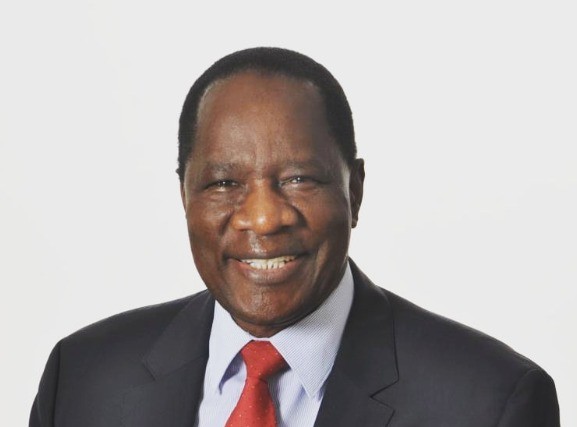
Veteran politician Dalmas Otieno has died aged 80, marking the end of an era for one of Kenya’s most thoughtful and pragmatic leaders. His passing has sparked tributes from across the political divide, with President William Ruto describing him as “a visionary leader who served the nation with honour, integrity, and distinction.” For a man whose public service spanned decades, from the late 1980s through to the second decade of the 21st century, Otieno leaves behind a rich legacy defined by resilience, intellectual depth, and a principled approach to politics.
Early Political Career and Entry into Parliament
Dalmas Otieno was first elected to Parliament in 1988 as the Member of Parliament for Rongo Constituency. His entry came at a time when Kenya was still under one-party rule, and elections were conducted under the dominance of the Kenya African National Union (KANU). Even then, Otieno stood out for his intellectual rigour and ability to frame issues in a manner that reflected both policy vision and pragmatic execution.

His first term in Parliament coincided with a period of political turbulence in Kenya. By the early 1990s, calls for multi-party democracy were growing louder, and politicians of his generation were faced with the dual challenge of responding to the winds of change while maintaining stability within their constituencies. Otieno’s reputation as a disciplined, measured, and articulate legislator helped him navigate this delicate environment.
Minister for Industrialisation (1988–1991)
Shortly after his election in 1988, Dalmas Otieno was appointed as the Minister for Industrialisation. This portfolio was crucial at a time when Kenya was pursuing an ambitious industrialisation policy, intended to diversify the economy from a heavy reliance on agriculture.
During his tenure, Otieno sought to build a framework for encouraging local manufacturing, strengthening linkages between industries, and preparing Kenya for regional competitiveness. While structural adjustment programmes imposed by international financial institutions constrained many of the industrialisation plans of the time, Otieno consistently pushed for policies that protected local industries while advocating for innovation. His leadership was characterised by foresight, though many of his proposals were cut short by broader economic challenges facing Kenya at the time.
Minister for Labour and Human Resource Development (1991)
In 1991, Dalmas Otieno was moved to head the Ministry of Labour and Human Resource Development. This was a critical period in Kenya’s history: the return of multiparty politics had brought new pressures on government, and the labour movement was playing an increasingly assertive role.
Otieno’s time at Labour was marked by attempts to harmonise industrial relations while balancing the needs of workers and employers. His background as a technocrat and policy thinker allowed him to approach labour issues with a level head. While trade unions were becoming more emboldened, Otieno insisted on negotiation, social dialogue, and long-term reform of Kenya’s labour laws. His approach helped calm several brewing industrial disputes and set the foundation for future reforms in Kenya’s employment sector.
Minister for Transport (1991–1996)
Perhaps the most defining ministerial role of Dalmas Otieno came when he was appointed as the Minister for Transport in 1991, a position he held until 1996. Transport was and remains one of Kenya’s most important and politically sensitive dockets, given its central role in economic development.
Otieno oversaw critical infrastructure planning during this time, particularly in relation to road expansion and the regulation of public transport. His tenure also coincided with an era when corruption and mismanagement in the transport sector were rampant, yet he earned respect for running the ministry with discipline and insisting on accountability.
Many contemporaries recall Otieno as a minister who would not be swayed by political expediency. He often clashed with vested interests but was seen as a firm believer in systems and processes. For him, transport was not just about roads and vehicles, but about connecting people and enabling trade. His policies laid groundwork that later administrations would build upon, particularly in road network expansion and the strengthening of Kenya’s aviation sector.
Return to Parliament
After serving in government through the early 1990s, Dalmas Otieno stepped away from Parliament following political shifts in his Rongo Constituency. But his political story did not end there. He made a strong comeback in the 2007 general elections, reclaiming his parliamentary seat on an Orange Democratic Movement (ODM) ticket.
Otieno’s return to Parliament coincided with one of Kenya’s most violent and contested elections. The 2007–2008 post-election crisis left the country on the brink, and leaders like Otieno played a key role in the reconciliation process that birthed the Grand Coalition Government. He became a trusted ally of former Prime Minister Raila Odinga and was a key figure in the efforts to stabilise the country during this fragile period.
In 2013, he once again won the Rongo seat, this time under the same ODM banner. By then, his stature as a seasoned and respected legislator was firmly established. Even when he fell out with ODM leadership later on, Otieno maintained an independent streak that earned him admiration for refusing to be bound by political dogma.
Building Reputation as a Thoughtful Statesman
What set Dalmas Otieno apart in Kenya’s political landscape was his reputation as a statesman rather than a populist. In a political culture often dominated by strong rhetoric, patronage, and ethnic mobilisation, Otieno stood out for his calm, intellectual, and policy-driven approach.
Colleagues described him as a “gentleman politician” who would rather lose an election than compromise on principle. His speeches in Parliament were measured and rarely inflammatory, yet they carried depth and weight. For many younger politicians, he was a mentor figure who embodied integrity and seriousness in public service.
Tributes from Leaders
The death of Dalmas Otieno has united Kenyan leaders in grief and reflection. President William Ruto led the tributes, calling him a visionary leader who served the nation with integrity.
“Dalmas Otieno was a visionary leader who served the nation with honour, integrity, and distinction. He stood for good governance and played his role in shaping modern Kenya. We celebrate his life and mourn his passing,” President Ruto said in his tribute.
Former Prime Minister Raila Odinga, who worked closely with Otieno during the Grand Coalition Government, also shared his condolences: “Dalmas Otieno was a dependable ally, a thoughtful leader, and a true patriot. His contribution to Kenya’s political evolution will not be forgotten. May his soul rest in peace.”
Wiper leader Kalonzo Musyoka described him as “a voice of reason in times of turbulence.” He noted that Otieno’s calm counsel during the 2007–2008 crisis was invaluable to Kenya’s peace process. “He was always measured, always thinking of the bigger picture. Kenya has lost one of its finest statesmen,” Kalonzo remarked.
Former Kisumu Governor Anyang’ Nyong’o recalled Otieno’s discipline and intellect: “Dalmas Otieno was one of the sharpest policy minds of our time. He never sought the limelight, but when he spoke, everyone listened. His legacy will endure in Kenya’s political history.”
Personal Life and Character
Beyond politics, Dalmas Otieno was known as a family man and community leader who valued education and discipline. He mentored many younger leaders from his Rongo Constituency and beyond. Though he often kept a low profile, those close to him described him as warm, approachable, and deeply committed to the welfare of his people.
Unlike many of his contemporaries, Otieno avoided political theatrics. He preferred substance over showmanship, a quality that earned him both admiration and criticism in equal measure. His detractors accused him of being too reserved to thrive in Kenya’s combative politics, but his supporters saw that very quality as proof of his authenticity and maturity.
Legacy and What Dalmas Otieno Leaves Behind
The legacy of Dalmas Otieno is one of integrity, service, and intellectual rigour. He showed that Kenyan politics could be conducted without unnecessary rancour, and that leadership was about vision rather than populism.
From his early days as Minister for Industrialisation, where he sought to place Kenya on a manufacturing growth path, to his later years as a senior parliamentarian and elder statesman, Otieno consistently embodied the ideals of public service. He may not have been the loudest voice in Kenyan politics, but he was certainly one of the most respected.
His death at the age of 80 leaves a gap in Kenya’s political fabric, especially at a time when the country is grappling with questions of governance, integrity, and the future of leadership. For younger leaders, his life is a reminder that politics is not just about winning elections but about serving with dignity and principle.
As tributes continue to pour in, Dalmas Otieno will be remembered as a towering figure in Kenya’s political history. His career, spanning over three decades, reflected both the challenges and the opportunities of leadership in a young democracy. From Parliament to the Cabinet, and from the tumultuous 1990s to the reform years of the 2000s, his contributions remain etched in Kenya’s story.
While the political stage will miss his quiet yet firm voice, his legacy lives on through the countless lives he touched, the policies he influenced, and the example he set for future generations. For Kenya, the passing of Dalmas Otieno is not just the loss of a veteran politician but the departure of a true statesman.
ALSO READ: Former Karachuonyo MP Phoebe Asiyo Dies In The US