



The long-term consequences of poor environmental conservation practices are dire. In the recent past, the government has increasingly sought to work with private sector players to diversify its conservation efforts and protect as much of what is left of the natural ecosystem as possible. Despite the increased collaboration between the National government, County governments and private sector players in activities such as tree planting and conservation drives, the 2026 Economic Survey still found that Kenya’s forest cover has remained at 5.23 million hectares since 2021. This is about 8% of Kenya’s total landmass and falls below the recommended minimum of about 10%.
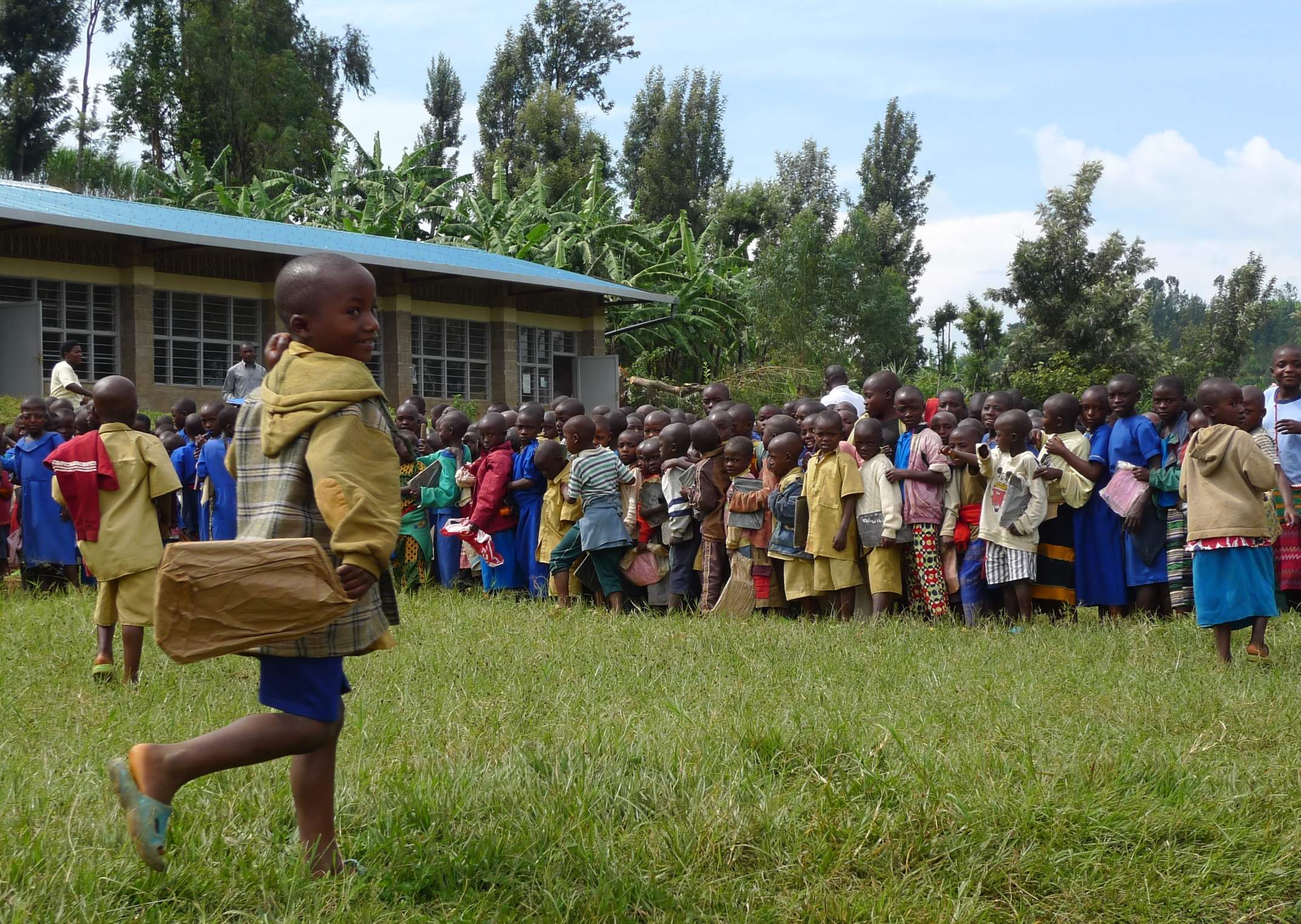
Often overlooked in national environmental conservation initiatives, learning institutions hold an important key in environmental conservation efforts and are centrally placed to play a crucial role in environmental sustainability initiatives aimed at enhancing the quality of existing ecosystems and building new ones for future generations.


This can be done either by purposefully embedding environmental conservation within the coursework or curricular, or by implementing conservation initiatives within the school for learners to experience them firsthand and accrue the benefits. A good example is the use of modern energy-saving appliances as a substitute for wood fuel.
In an article that appeared on the Daily Nation on 26th April 2026, the writer, Sammy Waweru, explains how two schools in Kiambu and Kajiado County saved nearly half a million monthly bill that was previously being spent on firewood by transitioning to use of clean cooking appliances and electric cooking stoves. He writes that PCEA Mama Ngina Primary School in Kiambu County used to spent about Ksh300,000 on firewood per month to prepare food for its 2500 learners.
He also says Al-Huda Muslim School in Kajiado County parted with about Ksh40,000 monthly to procure firewood that would go into preparing food for its 820 learners. The two schools installed electric cooking stoves and can now prepare quality meals for their students in record time, for a fraction of the budget.
That article is significant because the two schools paint a very clear picture of the sheer scale of what is required to prepare food in learning institutions. From the article, it is evident that the amount of resources set aside for firewood is quite significant. That is compounded by the fact that thousands of trees have to be felled daily for most of the more than 97,000 learning institutions across the country to prepare meals.
Environmental Conservation in Kenyan Schools
Many schools in Kenya cook with firewood and other forms of biomass because these are often more abundant than clean energy alternatives. Despite their ease of access and affordability, solid fuels have many adverse consequences besides commanding significant portions of institutional budgets. Their continued use results in near-irreversible depletion of forests even when the rate of planting new ones is equal to or higher than the rate of cutting down. Further, noxious gases and particles emitted during the combustion of solid fuels could adversely affect health, especially in schools where the kitchen is close to classrooms or the playground.
From an early age, learners need to see, interact with and be taught about environmental conservation techniques, especially as it relates to clean cooking and energy-saving.
Educational efforts, including maximizing environmental education as a manifested skill in maintaining environmental sustainability, will be key to growing communal economic prospects for future generations. Policymakers at national level should fully appreciate that a healthy environment is key to ensuring students acquire necessary skills and are able to grow responsibly.
Environmental education through school institutions can also be realized through joint programs aimed at sensitizing learners and school heads on environmental conservation. Informative sessions on tree planting and proper waste disposal, for example, will strengthen the knowledge and awareness of school residents through learning, habituation, participation, and the application of environmental sustainability principles which will go a long way in helping keep learning institutions safe and protect surrounding ecosystems.
It is important that school heads and surrounding communities are educated about the characteristics and benefits of using modern, high-quality cooking solutions instead of inefficient traditional technologies. Such an effort would require cooperation across various ministries, special-interest groups, local and international NGOs, academia, and the private sector. As has been demonstrated by PCEA Mama Ngina Primary School and AL-Huda Muslim Primary school through the close coordination between the government and private sector players, structured cooperation can make clean energy transition possible.
Achieving universal access to clean cooking solutions and cutting emissions in learning institutions will require action on several key fronts. These include the continued strengthening and expansion of the clean energy retail distribution network, well-targeted subsidies, continued expansion of modern energy cooking programs, and overcoming the institutional supply and demand-side barriers to creating a thriving clean energy market.
ALSO READ: Uhuru Park Leasing Plan Stopped By Court