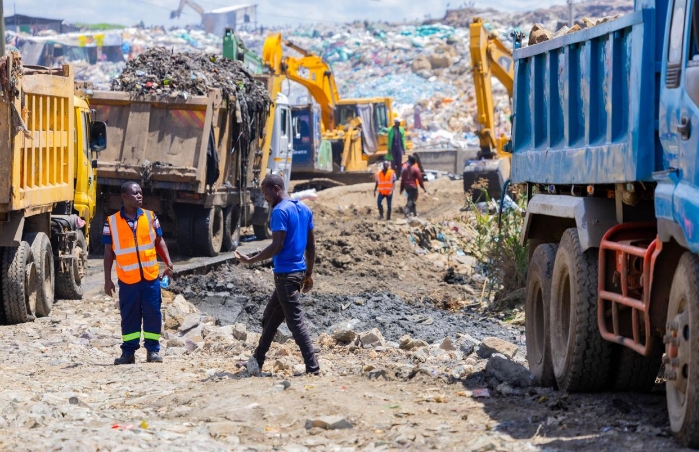
The Safisha KaNairo campaign is intensifying efforts to restore cleanliness across the city through expanded waste evacuation and sanitation interventions targeting residential estates, informal settlements, markets, and public spaces.
The initiative, spearheaded through coordinated efforts between Nairobi City County and sanitation stakeholders including Zoomlion Kenya, is part of a broader push to address the growing waste management crisis facing the capital. Authorities say the campaign is designed to restore environmental dignity, improve public health outcomes, and promote sustainable urban cleanliness across communities that have for years struggled with irregular garbage collection and illegal dumping.


County officials have emphasized that the current intervention is an urgent response to the increasing accumulation of waste in densely populated neighborhoods, markets, and known dumping hotspots that continue to pose both environmental and health risks to residents.
Under the ongoing operations, Zoomlion Kenya has deployed large-scale waste evacuation and environmental restoration activities in several parts of the city.
The targeted areas include Borabora and Kawangare-Gitanga in Dagoretti North; Morale Road and Kinyango in Kamukunji; the CBD Market in Starehe; Githwamba and St. Francis in Kasarani; and Vumilia in Embakasi East.
The clean-up exercise has also been extended to Othaya Market and Kamukunji Grounds in Kibra, as well as Area 1, Korogocho Market, and Ngomongo in Ruaraka. In Mathare, ongoing operations are focusing on Huruma Grounds, MauMau, and Huruma Flats, areas that have historically faced significant waste management challenges due to high population density and inadequate sanitation infrastructure.
Additional interventions are underway in Senior Citizen within Dagoretti South, English Press in Embakasi South, and several other waste-prone zones identified by county authorities.
Safisha KaNairo Helping Manage Tons Of Waste In Nairobi
The Safisha KaNairo initiative comes at a critical time when Nairobi continues to grapple with mounting waste generation fueled by rapid urbanization, population growth, and overstretched waste management systems.
According to estimates from the Nairobi City County government and environmental agencies, Nairobi generates more than 2,500 tonnes of solid waste daily, yet a significant percentage of it remains uncollected. Much of the garbage eventually finds its way into drainage systems, rivers, roadsides, and informal dumping sites, worsening flooding during rainy seasons and exposing residents to hazardous conditions.
The challenge has become particularly severe in informal settlements and low-income neighborhoods where limited infrastructure and poor waste disposal practices have contributed to persistent sanitation concerns. Illegal dumping along roads, rivers, and open spaces has also become increasingly common, creating breeding grounds for disease-causing pests and contaminating water sources.
Health experts warn that poor waste management is directly linked to the spread of preventable illnesses such as cholera, typhoid, respiratory infections, and other sanitation-related diseases. Accumulated garbage often attracts rodents and insects while blocked drainage systems contribute to stagnant water that increases the risk of mosquito-borne diseases.
Environmentalists have long argued that Nairobi’s garbage crisis cannot be solved solely through periodic clean-up exercises, but requires sustained investment in modern waste management systems, recycling infrastructure, public education, and enforcement against illegal dumping.
The reopening debate around the Dandora dumpsite has also continued to highlight the city’s broader waste management challenges. For decades, the dumpsite has operated beyond capacity, with surrounding communities repeatedly raising concerns about toxic emissions, environmental degradation, and associated health risks.
Urban planning experts note that initiatives such as Safisha KaNairo are important in restoring public confidence and improving immediate sanitation conditions, but stress that long-term success will depend on the county’s ability to institutionalize regular waste collection, strengthen public-private partnerships, and encourage community participation.
The campaign also reflects a growing recognition that environmental cleanliness is closely tied to economic productivity and the overall image of Nairobi as a regional business hub. Poor sanitation not only affects public health but can also discourage tourism, reduce investor confidence, and increase the cost of maintaining urban infrastructure.
Beyond immediate waste evacuation, the initiative seeks to cultivate a culture of environmental responsibility among residents by encouraging proper disposal practices and greater community involvement in maintaining clean neighborhoods.
As part of the digital awareness campaign, media houses, bloggers, influencers, and environmental advocates have been urged to amplify the initiative using the official hashtags #SafishaKanairo, #SafishaDandoraDumpingSite, and #CleanCities to promote broader public engagement.
Authorities are also calling on residents to support the initiative by avoiding illegal dumping and participating in local clean-up activities within their communities.
County governments across the country have equally been encouraged to adopt and scale similar sanitation models as urban centers continue to experience rising waste management pressures linked to population growth and expanding informal settlements.
Environmental groups and sustainability advocates are further pushing for long-term recycling and waste-to-value solutions that can help reduce the amount of garbage ending up in dumpsites while creating employment opportunities for young people.
Youth groups in particular are being encouraged to participate in structured environmental programs that not only improve neighborhood cleanliness but also create income-generating opportunities through recycling, waste sorting, and environmental conservation initiatives.
For many Nairobi residents, the success of Safisha KaNairo will ultimately be measured not just by short-term clean-up operations, but by whether the city can finally establish a reliable, sustainable, and accountable waste management system capable of keeping pace with the demands of one of Africa’s fastest-growing urban centers.
ALSO READ: Geoffrey Mosiria moved from Environment to Citizen Engagement In Latest Sakaja Reshuffle