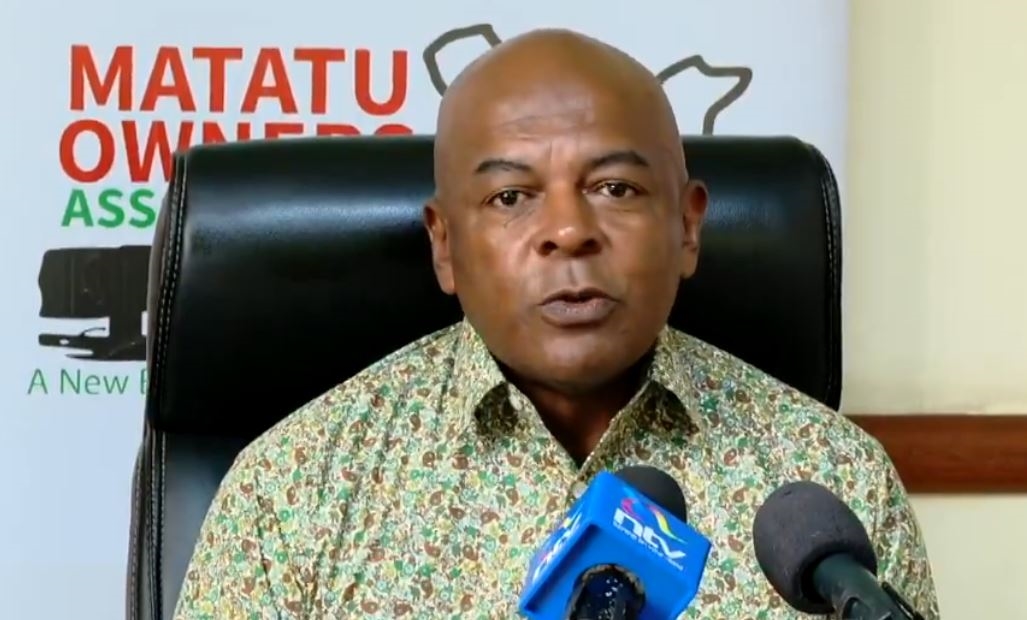
The Matatu Owners Association has advised its members to increase fares by 10% following the latest pump price review by the Energy and Petroleum Regulatory Authority (EPRA). Association President Albert Karagacha has expressed shock at fuel price hike, particularly because matatu operators had met President William Ruto at State House in May to discuss issues affecting the sector.
The transport sector continues to be a thorny issue for the Kenya Kwanza government. Despite constant stakeholder engagement, the difficulty of balancing the rising cost of operating public service vehicles with the financial limitations of passengers who depend on matatus for their daily commute remains a going concern.

The immediate concern is how the recommended increase will affect fares on regular commuter routes. Matatu owners are also wary of the knock-on effect of absorbing the rising fuel expenses without undermining the financial viability of their businesses.
Fuel prices rise as global pressures reach Kenyan commuters
The timing of the Matatu Owners Association’s directive is significant. Kenya’s latest fuel price review took effect on October 15, 2026, following an increase in international petroleum import costs associated with the conflict in the Middle East.
According to EPRA’s latest review, petrol prices increased by KSh12.93 per litre, diesel by KSh9.90 and kerosene by KSh28.49. In Nairobi, the maximum retail price of petrol rose to KSh226.96 per litre, while diesel increased to KSh227.76. The new prices apply until November 14, 2026.
The increase in diesel prices is particularly important for the matatu industry because diesel is a major fuel used by public service vehicles. Higher pump prices increase the cost of keeping vehicles on the road, especially for operators running several trips daily across busy urban routes.
The impact of a fuel price increase extends beyond the amount paid at the petrol station. Operators must also contend with vehicle maintenance, spare parts, insurance, loan repayments, licensing costs and other expenses associated with running a transport business.
For an industry operating on relatively tight margins, the latest adjustment could intensify pressure to raise fares. The central economic question is how much of that additional cost operators can reasonably absorb and how much they will seek to transfer to passengers.
Why the State House meeting in May matters
Albert Karagacha’s reported disappointment is rooted in the discussions between transport stakeholders and President William Ruto in May 2026, when rising fuel prices had already triggered tensions between the government and the transport industry.
On May 22, President Ruto met transport sector representatives at State House in Mombasa after protests and threats of a nationwide transport strike. The government subsequently announced measures intended to cushion consumers against high fuel costs, including a commitment to reduce diesel prices by KSh10 in the June–July pricing cycle.
The President also cited government interventions through the Petroleum Development Fund and a reduction in value-added tax on fuel from 16% to 8%. The government said it had committed substantial resources to stabilising prices during the April–May and May–June pricing cycles.
Against this background, the latest fuel price increase presents a fresh test for the relationship between the government and public transport operators.
For the association, the concern appears to be that engagement with the government and previous relief measures have not prevented another increase in operating costs. For the government, the challenge is that domestic fuel prices remain exposed to movements in international markets, even when tax relief and price stabilisation measures are used to soften the impact.
It is important, however, to distinguish between the government’s earlier commitments and the current pricing decision. The May agreement included a specific measure to reduce diesel prices during a particular pricing cycle. It does not automatically follow that the government promised to freeze fuel prices indefinitely.
The latest increase therefore raises questions about the adequacy and sustainability of the existing relief measures rather than, by itself, proving that every commitment made in May has been breached.
What a 10% matatu fare increase means for passengers
The proposed 10% fare increase could have a noticeable effect on commuters, particularly those who rely on matatus to travel to work, school and business appointments every day.
Consider a passenger who currently pays KSh100 for a one-way journey. A 10% increase would raise the fare to KSh110. The additional KSh10 may appear modest when considered in isolation, but a commuter making two journeys a day over 22 working days would pay an extra KSh440 a month.
For someone paying KSh150 per trip, the same percentage increase would raise the fare to KSh165. Making two journeys a day over 22 working days would add KSh660 to monthly transport expenditure.
These examples illustrate the potential effect of the recommendation rather than confirmed fares on any particular route. Actual fare changes will depend on the existing fare, the route, demand and whether individual operators implement the proposed increase.
For low-income households, the additional expenditure could force difficult adjustments. Commuters may have to reduce spending on food, postpone purchases, cut back on discretionary activities or seek cheaper transport alternatives.
The implications could also reach employers. Workers who spend more on commuting may seek higher wages or other benefits to offset rising transport costs. Businesses that depend on employees travelling to work could face additional pressure, while traders and service providers may encounter higher operating expenses.
Will all matatu operators increase fares by 10%?
The Matatu Owners Association’s recommendation should not automatically be interpreted as confirmation that fares have already increased nationwide.
An association’s advice to its members is not the same as evidence that every operator has adopted the same fares. Different routes have different operating conditions, passenger volumes, journey lengths and competitive pressures.
A matatu operating on a busy urban route with high passenger turnover may have a different cost structure from one serving a longer-distance route with fewer passengers. Vehicle capacity, fuel efficiency, traffic congestion and the number of daily trips can also influence the extent to which higher fuel costs affect profitability.
Furthermore, a 10% fare adjustment does not necessarily correspond directly to a 10% increase in operating costs. Fuel is only one component of a transport business’s total expenditure, and the effect of a pump price increase depends on how much fuel a particular vehicle consumes.
For passengers, the most important distinction is between the association’s recommendation and the fare actually charged on a particular route. Commuters should establish the applicable fare before travelling rather than assume that a uniform national increase has already taken effect.
The development also highlights the need for clearer communication between transport associations, operators and passengers whenever proposed fare adjustments are announced.
The wider economic consequences of higher transport costs
The implications of the proposed fare increase extend into the wider Kenyan economy because public transport is closely connected to the movement of workers, goods and services.
When commuting becomes more expensive, households have less disposable income available for other purchases. The consequences may be especially pronounced for workers whose wages remain unchanged while their daily expenses increase.
Higher transport costs can also affect businesses that rely on deliveries, field workers and regular movement between commercial centres. Some businesses may absorb the additional expenditure, while others may adjust their prices to preserve margins.
This creates a potential chain of cost increases: higher fuel prices raise transport expenses, higher transport expenses increase the cost of doing business, and some of those costs may eventually be reflected in the prices paid by consumers.
The extent of this effect will depend on how long fuel prices remain elevated, the scale of fare adjustments and the ability of businesses to absorb additional costs.
It would be premature to conclude that the latest fuel review will automatically trigger a broad inflationary surge. Nevertheless, sustained increases in energy and transport costs can complicate efforts to protect household purchasing power.
There is also a distributional concern. Households with lower incomes generally have less room to absorb unexpected increases in essential expenditure. A fare adjustment that appears manageable to a higher-income commuter can represent a substantial proportion of the disposable income available to a lower-income worker.
Can the government cushion commuters without undermining operators?
The latest dispute places the government in a difficult position. Keeping transport affordable matters for millions of commuters, but requiring operators to absorb every increase in fuel prices could threaten the financial sustainability of their businesses.
One possible response is to use targeted relief measures rather than rely exclusively on broad fuel subsidies. Such interventions could be designed to support essential transport services while limiting the fiscal cost to taxpayers.
However, subsidies are not free. They require public resources that could otherwise finance healthcare, education, infrastructure or other government priorities. Prolonged support can also expose public finances to volatility in international oil prices.
Tax reductions present a similar trade-off. Lower fuel taxes can reduce the price paid at the pump, but they also reduce government revenue unless the lost income is offset elsewhere.
The government must therefore balance immediate relief against fiscal sustainability. It also needs to communicate clearly which measures are temporary, how long they will last and what circumstances might trigger changes.
The October review demonstrates why that communication matters. Even where the government has previously offered relief, operators and commuters need to understand whether those interventions are still in place, what they cover and how changes in global oil markets affect the final retail price.
The need for a transparent approach to fare adjustments
The Matatu Owners Association’s proposed 10% increase also raises a broader question about how fares should respond to changing operating costs.
In a market where passengers often have limited alternatives, sudden fare increases can create uncertainty and disputes, particularly when commuters have to negotiate prices during peak travel periods.
Greater transparency could help reduce these tensions. Transport associations could explain the principal cost pressures behind proposed adjustments, while operators could communicate route-specific fares clearly to passengers.
A more systematic approach would also help distinguish between temporary fuel price shocks and persistent increases in operating costs. If prices rise sharply for a short period and subsequently fall, fare-setting arrangements should ideally allow for that change to be reflected in a timely and transparent manner.
Such an approach would not eliminate disagreements between passengers and operators. It could, however, improve accountability by making the reasoning behind fare changes easier to understand.
The government, meanwhile, could strengthen engagement with transport stakeholders by providing timely information about fuel pricing, tax measures and any relief programmes intended to protect public transport services.
The objective should be to avoid a situation in which every fuel price review triggers another round of uncertainty over fares, strikes and the affordability of commuting.
What happens next for Kenya’s public transport sector After Albert Karagacha?
The immediate question is whether matatu operators will implement the recommended 10% fare increase across their routes and how passengers will respond.
If operators proceed, commuters will have to contend with higher transport expenses at a time when fuel costs are also affecting other parts of the economy. If some operators resist the increase, they may instead attempt to absorb the additional expenditure, reduce costs elsewhere or adjust their operations.
The government’s response will be equally important. Further relief measures could ease pressure on operators and passengers, but their effectiveness will depend on the scale of the intervention and the direction of international petroleum prices.
The latest dispute also demonstrates that the challenges facing public transport cannot be resolved through fare adjustments alone. Long-term improvements in vehicle efficiency, public transport planning, operational management and the predictability of fuel pricing could help reduce the sector’s vulnerability to external shocks.
The Matatu Owners Association’s directive is about more than a 10% adjustment. It reflects the competing pressures facing an essential industry whose operating costs are exposed to global markets while its customers must pay fares from largely domestic incomes.
ALSO READ: George Ruto’s Flamboyant KICC Matatu Launch Exposes Cracks In Youth Unity