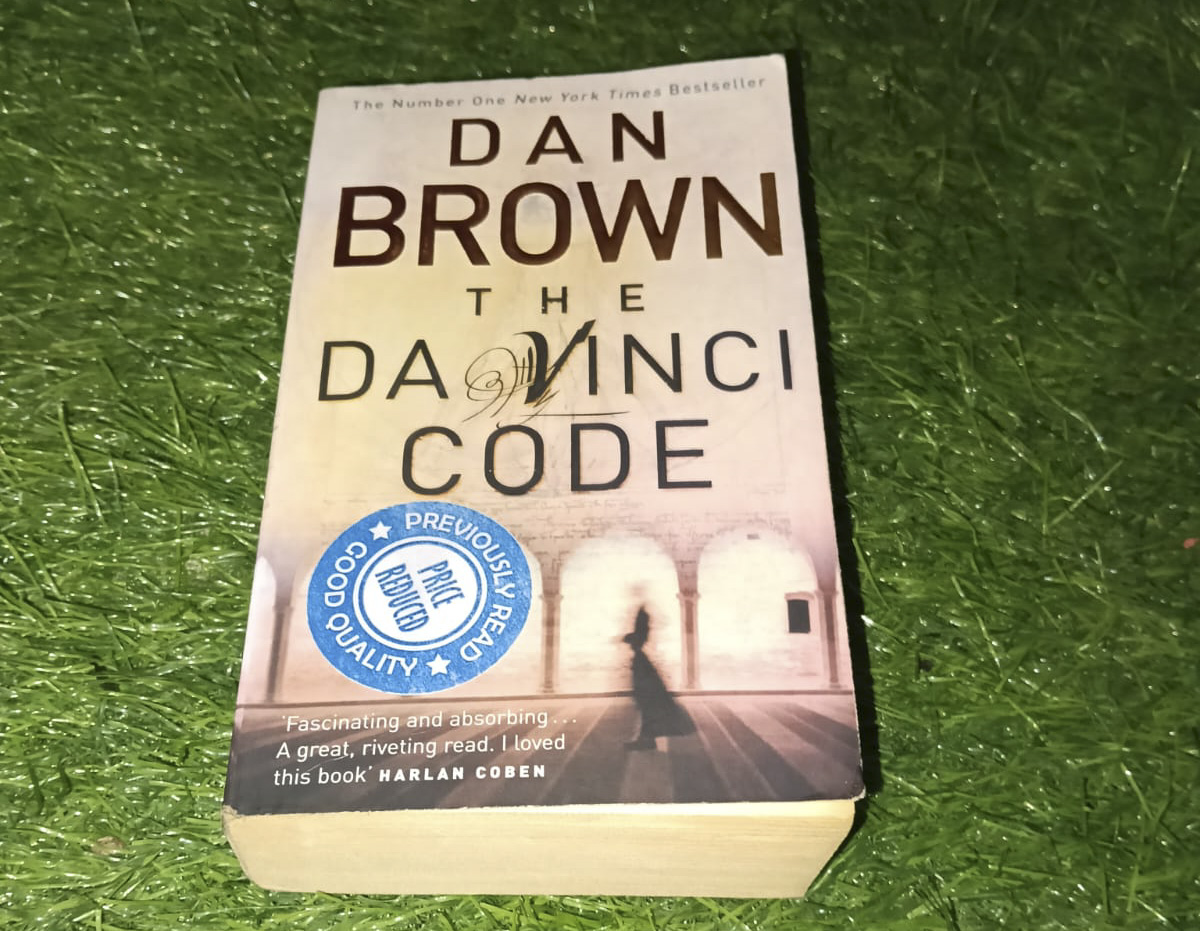
Few modern novels have generated as much discussion, controversy and curiosity as Dan Brown’s The Da Vinci Code. Since its publication in 2003, the bestselling thriller has captivated readers with a fast-moving plot built around secret societies, religious mysteries, coded messages and the possibility that some of history’s most familiar stories conceal a very different truth.
At its heart, The Da Vinci Code is a story about the search for knowledge and the dangers of accepting established narratives without questioning them. It combines art history, religious symbolism, historical speculation and murder into an adventure that challenges readers to distinguish between what they have been taught, what they believe and what they can prove.


Whether you approach it as an entertaining mystery, a commentary on institutional power or a work of controversial historical fiction, the novel offers plenty to discuss. Its greatest achievement is arguably its ability to make readers curious about the hidden meanings of familiar paintings, ancient traditions and historical personalities.
But does the novel live up to its enormous reputation? And how much of its intriguing historical material should readers take seriously?
The Da Vinci Code Plot
The story begins in Paris, where Jacques Saunière, the curator of the Louvre Museum, is found murdered inside the museum. Before his death, Saunière leaves behind a series of cryptic clues that point towards a mystery far greater than the circumstances of his killing.
Robert Langdon, a Harvard professor of symbology, becomes entangled in the investigation. Alongside Sophie Neveu, a French cryptologist and granddaughter of the murdered curator, Langdon attempts to interpret the clues and uncover the meaning behind the symbols left at the crime scene.
Their investigation takes them through famous works of art, religious traditions, secret organisations and centuries-old historical claims. As the pair move from one clue to another, they discover that the murder may be connected to a secret whose revelation could challenge established beliefs about Christianity and the historical figure of Jesus Christ.
The novel’s central mystery revolves around the possibility that a hidden truth has been protected for centuries by powerful institutions and secretive groups. The deeper Langdon and Sophie dig, the more dangerous their investigation becomes.
Brown structures the narrative around short chapters, frequent revelations and dramatic cliffhangers. Each discovery opens the door to another question, encouraging readers to continue turning the pages in search of answers.
The Fast, Accessible and Addictive Style Employed by Dan Brown
One of the strongest features of The Da Vinci Code is its readability. Dan Brown does not require readers to possess advanced knowledge of theology, art history or cryptography to follow the story. Instead, he introduces unfamiliar concepts through dialogue, explanations and the gradual interpretation of clues.
His writing is direct, and the chapters are often short enough to create a sense of constant movement. Scenes frequently end with a revelation, a new threat or an unanswered question, making the novel particularly effective for readers who enjoy suspense.
Brown also understands the appeal of combining intellectual discovery with physical danger. Langdon and Sophie are not simply trying to solve an abstract puzzle; they are navigating a world in which the wrong answer, or the wrong person learning the truth, could have fatal consequences.
However, this approach has limitations. Some explanations can feel overly convenient, and characters occasionally serve more as vehicles for delivering historical information than as fully developed personalities. The relentless succession of revelations can also make certain twists feel engineered to sustain suspense rather than emerge naturally from the characters.
Nevertheless, the writing style serves its principal purpose. The Da Vinci Code is designed to keep readers engaged, and Brown demonstrates considerable skill in building momentum.
Faith, Religion and the Question of Truth In The Da Vinci Code
Religion is the novel’s most provocative subject. Brown constructs a fictional mystery around the relationship between Christianity, historical interpretation and the possibility that important information has been concealed from the public.
The story invites readers to consider how religious traditions develop, how institutions protect their authority and how interpretations of the past can shape present-day beliefs.
One of the book’s enduring questions is whether people believe something because they have independently examined the evidence or because the belief has been handed down through generations.
Importantly, the novel should be understood as fiction rather than a reliable account of Christian history. Its controversial claims are part of Brown’s storytelling and should not automatically be treated as established historical facts.
Even so, the themes create an opportunity for readers to think critically about the relationship between faith, evidence, tradition and institutional power.
The Power of Institutions and Hidden Knowledge
Another major theme is the struggle over who controls knowledge.
Throughout the novel, secretive organisations and powerful institutions are presented as forces capable of protecting information, manipulating public understanding and determining which versions of history survive.
This theme extends beyond religion. Governments, corporations, political movements and other institutions can all influence how information is produced, distributed and interpreted.
Brown’s fictional world suggests that the pursuit of truth can become dangerous when those who possess power have a vested interest in maintaining a particular narrative.
The book is most interesting when it encourages readers to question authority without automatically assuming that every official account is false. Healthy scepticism requires evidence, not simply suspicion.
Symbols, Art and the Interpretation of History
The novel’s use of symbols is central to its appeal. Paintings, architecture, religious imagery and coded messages become clues in an elaborate historical puzzle.
Leonardo da Vinci’s artwork occupies a particularly important place in the story, with famous paintings presented as possible sources of hidden meanings.
Brown uses these works to demonstrate how art can be interpreted in multiple ways depending on the viewer’s knowledge, assumptions and historical context.
The result is an entertaining reminder that art is not merely decorative. It can communicate ideas, reflect the values of its time and invite debate about meaning.
At the same time, the distinction between an imaginative interpretation and a historically supported conclusion remains essential. A symbol may inspire a compelling theory without proving that the theory is true.
The Search for Identity and Belonging
Beyond the religious conspiracy, The Da Vinci Code explores the personal consequences of uncovering hidden truths. Sophie’s connection to the mystery gives the investigation an emotional dimension, transforming the search from a purely intellectual exercise into a journey involving family, identity and belonging.
The novel suggests that discovering the past can change how people understand themselves and their place in the world.
This theme gives the story a more personal foundation beneath its elaborate historical puzzles.
What Makes The Da Vinci Code Such a Compelling Thriller?
The novel’s greatest strength is its ability to make complex ideas feel accessible and exciting. Brown takes subjects that might otherwise appear specialised or intimidating and incorporates them into a murder mystery that readers can follow without extensive background knowledge.
The settings also contribute to the atmosphere. Museums, historic buildings, religious landmarks and works of art provide a sense of scale and cultural richness. The reader is taken on a journey through spaces associated with centuries of history, where ordinary objects can become potential sources of extraordinary revelations.
Another strength is the novel’s pacing. Brown continually raises the stakes, introduces new information and shifts the reader’s understanding of earlier events. Even when a particular explanation is debatable, the process of uncovering it remains entertaining.
The book also encourages curiosity. Readers may finish a chapter wanting to learn more about Leonardo da Vinci, the Louvre, religious symbolism or the historical development of Christianity.
That curiosity is one of the novel’s most valuable qualities. Popular fiction does not have to function as a textbook to encourage people to explore history and art more deeply.
The Weaknesses of The Da Vinci Code
Despite its strengths, The Da Vinci Code is not without flaws.
The most significant criticism concerns its treatment of history. The novel presents disputed or speculative interpretations with considerable confidence, sometimes blurring the line between documented evidence and dramatic invention. Readers unfamiliar with the subjects involved may find it difficult to distinguish the two.
Its characterisation is another weakness. Although Langdon and Sophie are effective guides through the mystery, some supporting characters are more memorable for their roles in the conspiracy than for their psychological complexity.
The plot can also rely heavily on coincidences, convenient discoveries and dramatic reversals. Readers who prefer realistic investigations or carefully restrained storytelling may find the narrative exaggerated.
Some of the dialogue and explanations are designed to make complicated ideas understandable, but they can occasionally feel like lectures inserted into the action.
These shortcomings do not necessarily undermine the book as entertainment. They do, however, explain why its reputation as a thriller is stronger than its standing as a dependable source of historical information.
The Historical Controversies In The Da Vinci Code
A review of The Da Vinci Code would be incomplete without addressing the controversy surrounding its portrayal of Christian history and its use of real historical figures.
Brown weaves factual locations, historical personalities and religious traditions into a fictional conspiracy. The combination gives the story an air of authenticity, but the presence of real details does not make the central conspiracy historically established.
The novel’s claims concerning Jesus, Mary Magdalene, secret societies and the preservation of religious knowledge have been widely debated. Several of its central historical propositions are disputed by scholars, and the book should not be used as a substitute for academic research into Christianity or medieval history.
This distinction is particularly important because the novel’s confident tone can make speculation sound like documented fact.
Readers can enjoy the mystery while recognising that historical claims require independent verification. Consulting reputable historians, primary sources and scholarly works can help separate the novel’s imaginative construction from what the available evidence supports.
The controversy is part of the book’s cultural significance. It demonstrates how fiction can influence public discussion about religion, history and the institutions that shape collective memory.
The Da Vinci Code and Its Impact on Popular Culture
The success of The Da Vinci Code helped reinforce the popularity of thrillers that combine historical puzzles, religious mysteries and international conspiracies.
Its influence can be seen in the broader appeal of stories in which protagonists uncover hidden connections between ancient symbols, secret organisations and present-day events.
The novel also reached audiences beyond regular thriller readers. Its accessible prose and controversial subject matter made it a frequent topic of discussion among readers interested in religion, history, art and popular culture.
Its 2006 film adaptation, starring Tom Hanks as Robert Langdon, further expanded the story’s reach. The film brought the novel’s locations and central mystery to a wider audience, although readers and viewers may differ in how they respond to the two versions.
The book’s lasting cultural relevance comes partly from its central tension; the possibility that what people believe about the past may be more complicated than they realise.
That idea is compelling even when the particular conspiracy presented in the story is fictional.
Who Should Read The Da Vinci Code?
The Da Vinci Code is an excellent choice for readers who enjoy fast-paced mysteries, historical thrillers, secret societies, cryptography and stories built around puzzles.
It will particularly appeal to readers who like novels that combine action with intellectual challenges. Those interested in famous works of art, European history and religious symbolism may also find the story engaging.
Readers who prefer deeply nuanced character development, literary prose or rigorous historical realism may be less enthusiastic. The novel prioritises momentum and suspense over psychological subtlety and scholarly precision.
It is also worth approaching the book with an open but critical mind. Readers do not have to accept its claims as fact to appreciate its narrative ingenuity.
For anyone looking for an entertaining introduction to the historical-thriller genre, it remains a strong option.
The Da Vinci Code Is A Worthy Reading Adventure
The Da Vinci Code remains a highly entertaining thriller that succeeds through its suspenseful plotting, accessible writing and intriguing combination of art, religion and historical mystery.
Its greatest strength is not its ability to establish a hidden version of history, but its ability to turn questions about history into an absorbing adventure. Brown creates a world in which paintings become clues, symbols become puzzles and the search for knowledge carries real consequences.
The novel’s weaknesses are equally important to acknowledge. Its characters can be functional rather than deeply developed, its twists can strain credibility, and its treatment of historical and religious claims requires a critical reading.
Yet these shortcomings do not erase its achievements as popular fiction. The book entertains, provokes discussion and encourages curiosity about subjects many readers might not otherwise explore.
For readers who value suspense, historical puzzles and controversial ideas, The Da Vinci Code is well worth the time. Read it as a thriller, question its historical assertions and allow its mysteries to spark further investigation.
ALSO READ: What Kenya Can Learn from Adam Smith’s ‘The Wealth of Nations’