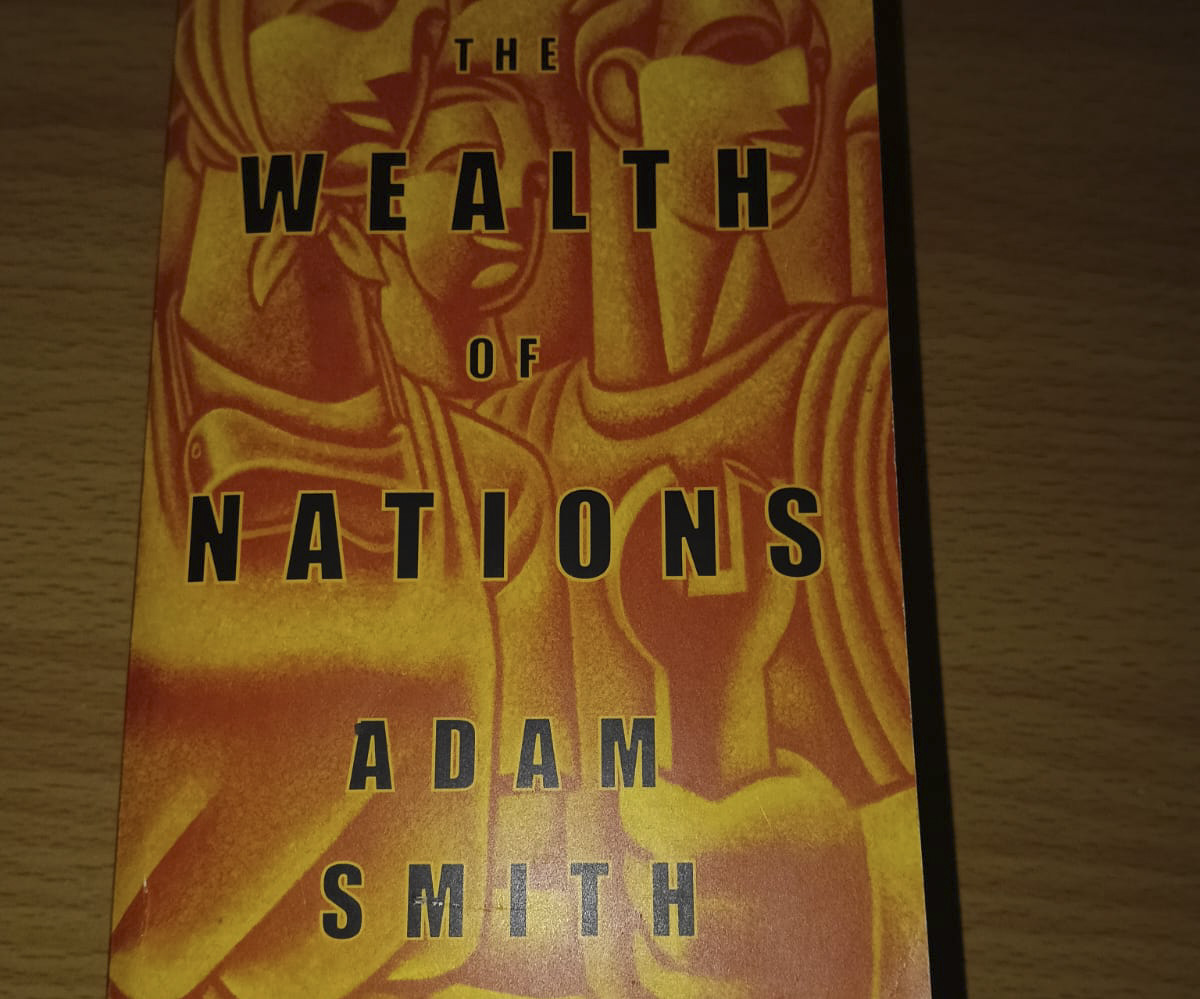
More than two centuries after its publication, Adam Smith’s The Wealth of Nations remains one of the most influential works in economic thought. Published in 1776, the book challenged conventional ideas about wealth, production, trade and the role of government, offering a framework for understanding how nations generate prosperity and why some economies advance faster than others.
For Kenya, where economic policy debates frequently revolve around taxation, public debt, unemployment, the cost of living, industrialisation and the growth of small businesses, Smith’s ideas offer valuable lessons. His central concern was not simply how governments could accumulate money, but how a country could increase the productivity of its people, expand economic opportunity and improve the material conditions of society.


Since the turn of the century, Kenya has continued to record economic growth, yet the challenge of translating that growth into better-paying jobs, rising household incomes and widespread improvements in living standards remains significant. The World Bank has highlighted weak productivity growth, limited formal employment opportunities and barriers to competition as important constraints on the country’s economic potential.
Smith’s work does not provide a ready-made blueprint for a modern developing economy. Kenya operates in a world of advanced technology, complex financial markets, global supply chains and social protection systems that differ considerably from the economy Smith examined. Nevertheless, five important lessons from his book can help Kenyan economists, policymakers and business leaders rethink the foundations of sustainable prosperity.
Productivity, Not Just Economic Growth, Creates National Wealth
One of the most important lessons from The Wealth of Nations is that a country becomes wealthier when it improves the productive capacity of its people. Smith placed considerable emphasis on the division of labour, explaining how workers who specialise in particular tasks can produce more efficiently than those attempting to perform every stage of production themselves.
Specialisation allows workers to develop expertise, reduces time wasted switching between tasks and encourages the development of better tools and production methods. When these improvements spread across an economy, the country can produce more goods and services using its available resources.
For Kenya, this lesson raises an important question; is the economy producing enough value from the labour, capital and natural resources available to it?
A large proportion of Kenya’s workforce operates in small-scale agriculture, informal retail, transport, construction and other activities where productivity can be constrained by limited capital, inadequate technology, poor infrastructure and restricted access to larger markets. Many people work long hours without generating sufficient income to build savings, expand businesses or improve their living standards.
The answer is not simply to encourage more people to work. It is to help workers and businesses produce more value from every hour worked.
In agriculture, this could mean expanding irrigation, improving access to quality seeds, investing in storage facilities and developing processing industries that allow farmers to sell higher-value products. Instead of exporting raw agricultural commodities wherever viable processing opportunities exist locally, Kenya could strengthen value addition in products such as coffee, tea, dairy, fruits and vegetables.
In manufacturing, improving access to reliable electricity, modern machinery, technical training and affordable financing could help firms increase output and compete with imported products. In the digital economy, investment in skills and technology could enable Kenyan businesses to serve customers beyond their immediate geographical markets.
Economists should therefore look beyond headline GDP growth and examine whether productivity is improving across sectors, whether workers are earning more and whether businesses are moving into higher-value activities.
The lesson from Smith is that sustainable prosperity depends on expanding the economy’s capacity to produce, innovate and create value, rather than merely increasing the number of transactions taking place.
Adam Smith’s The Wealth of Nations Lessons on Fair Competition Is Essential for Lower Prices and Better Jobs
Smith recognised that competition could encourage businesses to improve efficiency, respond to consumer needs and offer better prices. When firms compete for customers, they have an incentive to improve the quality of their products, control costs and develop new ways of operating.
However, Smith was also deeply sceptical of monopolies and the tendency of businesses to seek privileges that protect them from competition. His work should not be reduced to the simplistic belief that every private enterprise automatically serves the public interest. The benefits of markets depend partly on whether businesses face meaningful competitive pressure.
This is an important lesson for Kenya, where the structure of markets, regulatory barriers, access to essential inputs and the relationship between public policy and private enterprise can influence business performance.
When electricity, transport, credit or other essential inputs are expensive, businesses face higher production costs. These costs can eventually be passed on to consumers through higher prices. Smaller firms are often especially vulnerable because they lack the purchasing power, financing and market access available to larger competitors.
The World Bank’s November 2025 assessment of Kenya’s economy identified procompetitive reforms as a potential source of stronger productivity, business expansion and job creation. It highlighted the importance of reducing barriers to competition in sectors such as electricity, telecommunications and fertiliser, alongside addressing unequal advantages between state-owned and private enterprises.
For Kenyan economists, the lesson is that competition policy should be considered an important part of economic development. Regulators need to examine whether markets are open to new entrants, whether licensing requirements are proportionate, whether public procurement encourages genuine competition and whether dominant firms can prevent smaller businesses from accessing customers.
This does not mean removing every regulation or assuming that markets will always produce fair outcomes. Competition requires effective rules against collusion, consumer exploitation and abuse of market power.
A competitive business environment can encourage investment, innovation and more efficient production. It can also help reduce prices and create opportunities for firms that might otherwise be excluded by entrenched commercial interests.
For Kenya, the objective should be to build markets where businesses succeed because they offer better products and services, not because they enjoy unnecessary protection from competitors.
Taxation Should Raise Revenue Without Undermining Productive Activity
Taxation is one of the most consequential areas in which Smith’s ideas remain relevant. In The Wealth of Nations, he outlined principles of taxation that emphasised fairness, predictability, convenience and efficiency. His argument was that a tax system should help finance the needs of the state without imposing unnecessary costs or uncertainty on those who pay it.
For Kenya, the challenge is to raise sufficient revenue to finance public services and infrastructure while preserving the capacity of households and businesses to consume, invest, employ workers and expand production.
The government needs revenue to finance education, healthcare, security, roads, water systems and other essential public services. Without adequate domestic revenue, the country risks relying excessively on borrowing, which can increase debt-servicing costs and reduce the resources available for development.
However, tax policy also influences economic behaviour. When businesses face unpredictable tax changes, complicated compliance procedures or substantial costs relative to their earnings, they may postpone investment, reduce employment or remain informal. Households facing higher taxes on essential goods and services may have less money available for food, education, transport and savings.
The World Bank reported in May 2025 that interest payments absorbed about a third of Kenya’s tax revenue, underscoring the pressure that public debt places on the national budget. Its recommendations included broadening the tax base, improving compliance, reviewing exemptions and making public spending more efficient.
Smith’s principles suggest that Kenya should pursue a tax system that is predictable, transparent and reasonably straightforward to administer. Revenue mobilisation should not depend solely on repeatedly increasing tax rates on businesses and individuals who are already within the formal system.
Instead, policymakers could improve compliance, reduce unnecessary exemptions, strengthen tax administration and encourage more businesses to formalise by making registration and compliance practical and affordable. A broader, more productive economy can provide a more sustainable revenue base than one that depends heavily on a narrow group of taxpayers.
Fairness also matters. The distribution of the tax burden should reflect the capacity to pay, while the overall system should avoid placing disproportionate pressure on low-income households.
The broader lesson is that taxation and economic growth should not be treated as opposing objectives. A well-designed tax system can support both by generating reliable public revenue while allowing productive businesses and households to plan for the future.
International Trade Can Expand Kenya’s Economic Opportunities
Another major lesson from The Wealth of Nations is the importance of trade in expanding economic prosperity. Smith argued that specialisation becomes more productive when businesses can access larger markets. A firm that serves more customers has greater opportunities to increase production, improve efficiency and justify investments in better equipment and skills.
For Kenya, this principle is particularly relevant because the domestic market alone may not be large enough to support the growth ambitions of many manufacturers, agricultural processors and technology businesses.
International trade enables Kenyan producers to reach consumers across East Africa, the wider African continent and global markets. It can also provide access to machinery, industrial inputs, technology and specialised products that would be expensive or impractical to manufacture locally.
Kenya has opportunities to expand exports in agricultural products, processed foods, textiles, pharmaceuticals, manufactured goods, business services and digital services. However, taking advantage of these opportunities requires more than signing trade agreements. Exporters need reliable transport networks, competitive energy costs, predictable customs procedures, access to trade finance and consistent product standards.
Smith’s argument also challenges the assumption that protecting domestic producers from foreign competition is always the best way to develop local industries. Excessive protection can allow inefficient firms to survive without investing in better technology or improving their products. Consumers may then pay higher prices, while businesses that depend on imported inputs face increased costs.
At the same time, free trade should not be interpreted as an instruction to abandon every strategic industry to international competition. Developing countries may need carefully designed measures to address infrastructure gaps, financing constraints, technological disadvantages and other barriers that prevent promising industries from becoming competitive. Such interventions should have clear objectives, measurable results and safeguards against permanent protection of inefficient firms.
For Kenyan economists, the priority should be to distinguish between policies that build genuine productive capacity and those that simply shield businesses from competition.
Regional integration through the East African Community and wider African trade arrangements can help Kenyan firms develop economies of scale. If businesses can serve a larger market, they have stronger incentives to invest in production facilities, hire skilled workers and develop competitive products.
The lesson is that Kenya should not view international trade merely as an exchange of imports and exports. It should view access to larger markets as an opportunity to expand domestic production, create employment and raise the value of Kenyan goods and services.
Public Spending Must Strengthen the Productive Capacity of the Economy
Adam Smith recognised that government has important responsibilities in creating the conditions under which economic activity can flourish. He identified functions such as national defence, the administration of justice and public works that private individuals might not be able to provide adequately on their own.
His work therefore does not support the idea that government should simply withdraw from the economy. Rather, it provides a framework for considering which public functions are necessary, how they should be financed and whether public resources are being used effectively.
This lesson is particularly relevant to Kenya amid concerns about public debt, interest payments, infrastructure financing and the competing demands placed on the national budget.
Government spending can support long-term economic growth when it improves education, healthcare, transport, electricity, water supply, research and other foundations of productive activity. A healthier and better-educated population is more capable of working productively, developing new businesses and adopting modern technologies. Reliable infrastructure reduces operating costs and makes it easier for firms to reach suppliers and customers.
However, public expenditure does not automatically generate these benefits. Poorly selected projects, inflated procurement costs, delayed payments to contractors, waste and weak oversight can divert resources away from activities that improve living standards or strengthen the economy.
Kenya’s debt challenge makes this distinction especially important. When a substantial share of government revenue goes towards interest payments, fewer resources remain available for development spending and essential public services. Borrowing may be justified where it finances investments with lasting economic and social benefits, but debt-financed expenditure needs credible evaluation, transparent procurement and effective implementation.
Economists should therefore assess public projects not only by their announced budgets or physical size but also by their expected returns to society. Will a road reduce transport costs for farmers and manufacturers? Will a water project improve agricultural productivity and public health? Will spending on technical education help workers acquire skills demanded by employers?
These questions connect public finance to the broader goal of national productivity.
Smith’s insights also encourage scrutiny of privileges and special interests that can distort public spending. Government contracts, subsidies and tax exemptions should be assessed according to their public purpose and measurable benefits rather than the influence of their recipients.
The lesson for Kenya is that responsible fiscal management involves more than reducing expenditure or raising taxes. It requires directing scarce public resources towards priorities that strengthen productive capacity, improve public welfare and support sustainable economic growth.
The enduring value of The Wealth of Nations lies in its insistence that national prosperity must be understood through the productive activities of society. A country does not become sustainably wealthy simply because its government collects more taxes, its economy records a higher GDP figure or its businesses generate larger revenues. Lasting prosperity requires people to produce more value, businesses to innovate, markets to function fairly, trade to create new opportunities and public institutions to use resources responsibly.
ALSO READ: 7 Must-Have Books On Wealth Creation And Financial Freedom