


Reported malaria cases among pregnant women fell from 667 to 327 across 18 supported health facilities in Alego-Usonga and Gem sub-counties, Siaya County, during a year-long malaria prevention pilot project run by Haleon and Amref. The percentage decline at these facilities was nearly double that recorded across other facilities in the County over the same period.
Haleon supported the project, implemented by Amref Health Africa in Kenya from October 2025 to September 2026 in collaboration with the Siaya County Department of Health and the National Malaria Control Programme. The partners worked with Community Health Promoters and frontline health facilities to strengthen referrals to antenatal care and to bring malaria prevention, testing and treatment closer to families.
The project trained 201 Community Health Promoters, 30 Community Health Assistants, and 79 health workers in malaria case-management services, and 20 laboratory officers on proper malaria diagnosis, reaching over 20,000 households.
Malaria testing coverage reached 97.6%, and all confirmed cases reported through community services received treatment. The proportion of malaria tests that were positive fell from 81% to 68% in community settings and from 65% to 52% at supported health facilities. Uptake of intermittent preventive treatment in pregnancy (IPTp) increased, and the number of children receiving the first dose of the malaria vaccine rose from 850 to 1,568.
Haleon and Amref Intervention To Stop Malaria In Siaya
Himanshu Raj, General Manager for Haleon SSA, lauded the partnership with Amref saying the combined partnership would create better heathcare for communities.
” Our partnership with Amref Health Kenya demonstrates the impact we can create when we combine trusted local partnerships with a shared commitment to better health. By strengthening malaria prevention, health literacy and community capacity, we are helping address barriers to health, advancing Haleon’s ambition to make everyday health more inclusive & accessible,and deliver better everyday health with humanity”
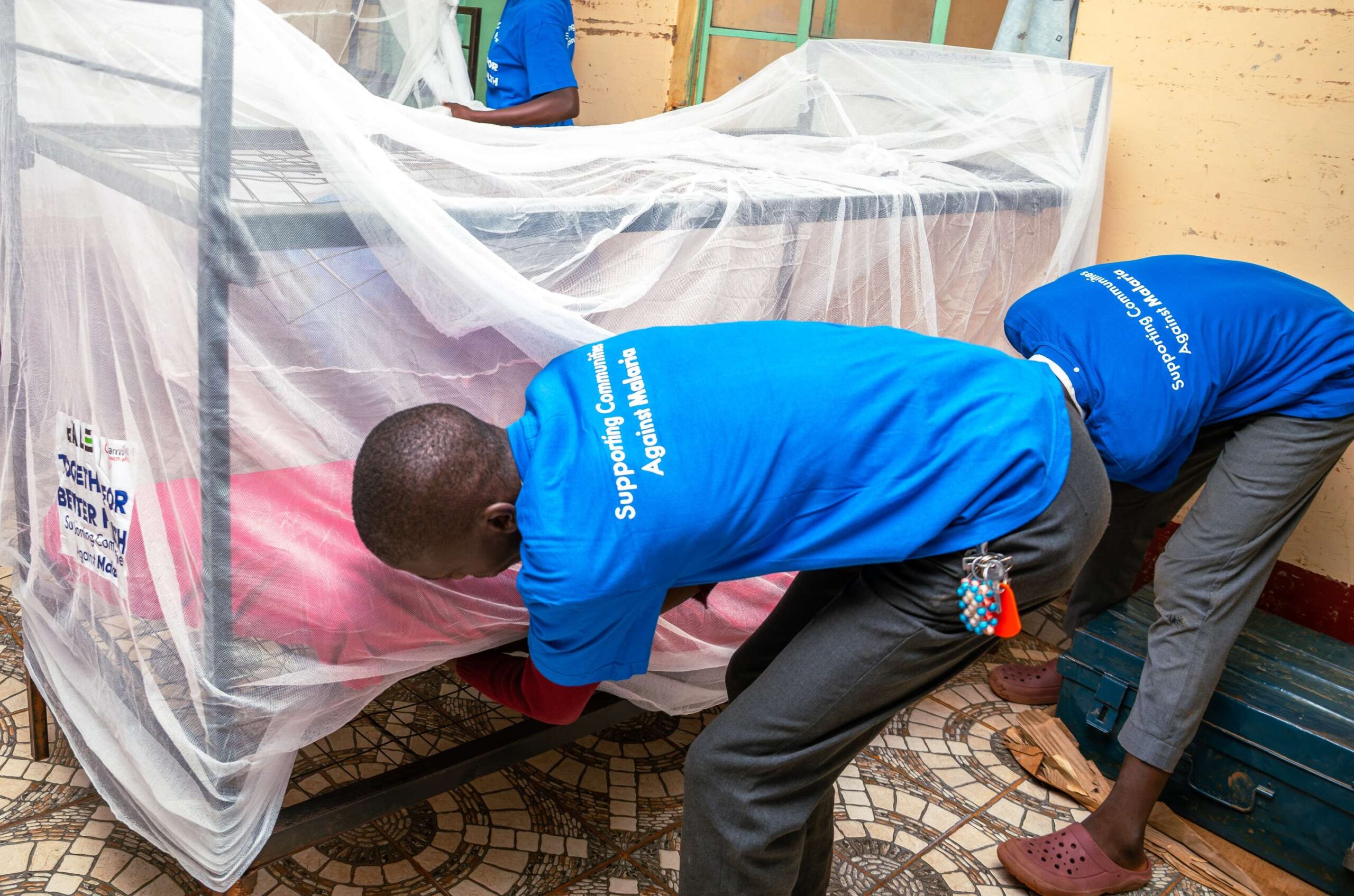
Schools also helped extend malaria prevention beyond health facilities. The project trained 181 teachers across 38 primary schools to share malaria prevention messages. By the interim reporting stage, those teachers had reached 41,800 learners. In addition, the project also supplied over 1000 mosquito nets to children’s homes and orphanages, a vulnerable population that is usually left out during mass distribution of mosquito nets.
Dr Meshack Ndirangu, Amref Health Africa in Kenya Country Director noted that the results achieved in Siaya County will provide a valuable foundation for extended adoption of the approach across counties.
“Behind every number in this pilot project is a mother, a child, and a family protected because primary health care worked. Community health workers, trained teachers, and well-equipped health facilities helped translate knowledge into prevention and better health outcomes. The results achieved in Siaya provide a valuable foundation for adapting and extending this approach to other high-burden counties. Siaya demonstrates that people-centred primary health care can deliver measurable impact when communities and health systems work together.”
With the pilot concluded, the partners will use its findings to inform future interventions, including opportunities to replicate the approach in other high-burden counties such as Busia.
The results underscore the importance of sustained collaboration between the private sector, government and community health organisations in advancing malaria prevention and strengthening Kenya’s primary healthcare system.
Siaya County sits in Kenya’s Lake-endemic zone, one of the country’s highest-burden areas for malaria. Proximity to Lake Victoria, warm temperatures and standing water create ideal breeding conditions for Anopheles mosquitoes. Prevalence has historically hovered near 29 percent—far above the national average of roughly 6 percent—with incidence rates in recent years reported well above 500 cases per 1,000 population in some assessments. Pregnant women and young children remain especially vulnerable: malaria in pregnancy contributes to anaemia, low birth weight, stillbirth and maternal morbidity, while children under five account for a disproportionate share of severe disease and deaths.
Against this backdrop, a 51 percent reduction in reported cases among pregnant women at the 18 supported facilities (667 down to 327) is significant. The fact that the decline was nearly double the rate seen at other facilities in the same county over the same period strengthens the case that the intervention package itself—not merely broader seasonal or national trends—drove the difference. High testing coverage of 97.6 percent, combined with 100 percent treatment of confirmed community-reported cases, indicates that the programme did not simply suppress reporting; it improved detection and prompt management.
The central role of Community Health Promoters
The training of 201 Community Health Promoters (CHPs), supported by 30 Community Health Assistants, was a core investment. In Kenya’s community health strategy, CHPs serve as the primary interface between households and the formal health system. They conduct home visits, identify pregnant women early, encourage antenatal care attendance, promote intermittent preventive treatment in pregnancy (IPTp), distribute or reinforce use of insecticide-treated nets, perform rapid diagnostic tests for uncomplicated malaria, treat simple cases, and refer severe or high-risk patients.
Evidence from other parts of Kenya, including Busia and Kilifi, shows that well-supported CHPs can substantially raise testing rates, improve same-day treatment, and reduce the volume of uncomplicated cases reaching facilities. In this pilot, the fall in test positivity rates (from 81 percent to 68 percent in community settings and from 65 percent to 52 percent at facilities) is consistent with both reduced transmission and more appropriate testing practices. Laboratory officers (20 trained) further strengthened the quality of diagnosis at facility level, reducing the risk of over- or under-treatment.
The increase in first-dose malaria vaccine uptake—from 850 to 1,568 children—also points to improved community engagement. Kenya has been rolling out the RTS,S vaccine in lake-endemic counties since the pilot phase. Completing the multi-dose schedule remains a challenge nationally; community-level education and follow-up by trusted local promoters can improve initiation and retention. Linking vaccine messages to existing antenatal and child-health contacts multiplies the effect of each contact.
Schools and vulnerable populations
Extending messaging through 181 trained teachers in 38 primary schools, reaching 41,800 learners by the interim stage, illustrates a practical multi-sector approach. Children are both high-risk and effective messengers: they carry prevention information home and can influence household net use and care-seeking. In settings where adult literacy or health-facility access is uneven, school-based channels fill gaps.
The distribution of more than 1,000 mosquito nets specifically to children’s homes and orphanages addresses a well-recognised equity gap. Mass campaigns often miss institutional care settings and highly mobile or low-income households. Targeted distribution, paired with education on consistent use, protects groups that standard metrics can overlook.
Broader implications for primary healthcare and scale-up
The pilot’s design aligns with Kenya’s emphasis on primary health care and community case management. It also supports Amref’s longer-term ambition to sharply reduce malaria burden through climate-resilient, community-centred strategies. Private-sector partnership (Haleon) supplied resources and visibility while local implementers and government structures retained operational leadership, an arrangement that can improve sustainability when roles are clear.
The results provide a concrete reference for replication in other high-burden counties such as Busia. Key transferable elements include: structured training and supervision of CHPs and Community Health Assistants; integration of malaria messaging into school health activities; deliberate inclusion of orphanages and children’s homes; strong laboratory support; and routine monitoring of both coverage indicators (testing, IPTp, vaccine initiation) and outcome indicators (case numbers, positivity rates).
Sustained impact will depend on continued commodity availability (nets, diagnostics, drugs, vaccine doses), supportive supervision, and integration into existing county health budgets rather than perpetual project funding. Climate variability, insecticide and drug resistance, and competing health priorities remain real constraints across the Lake zone. Nonetheless, the Siaya experience demonstrates that measurable reductions are achievable within a single year when prevention, testing, treatment and education are brought closer to families through trusted local actors.
51 percent fewer reported cases among pregnant women point to how strengthening the primary healthcare system at community and facility levels can produce tangible protection for the people most at risk.
ALSO READ: Kenya intensifies Malaria fight as funding gap hits Sh25B