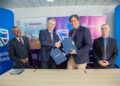


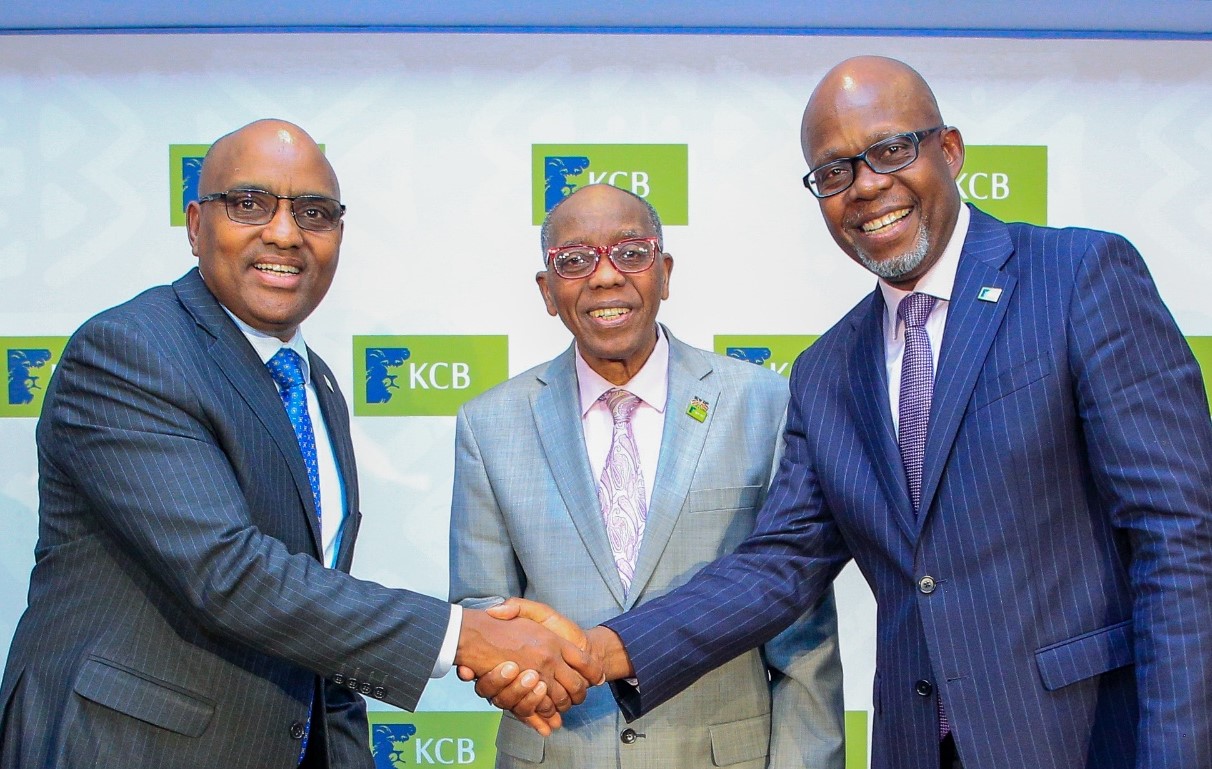
KCB Group CEO Paul Russo says the Group’s Q3 results demonstrate the business resilience and progress being made in building a stronger and more diversified financial services institution.
Speaking during the release of Q3 financial results, Russo pointed to the Group’s solid gains after netting KShs. 58.6 billion profit after tax. The Group’s earnings per share also increased by 24.3% to KShs 17.8, reflecting resilient earnings growth.


“The results demonstrate the resilience of our business and the progress we continue to make in building a stronger and more diversified financial services institution. Ou investments in technology, customer experience and regional business capabilities continue to translate into stronger performance, positioning the Bank for sustained growth. We are looking to leverage our scale and extensive distribution network to support our customers and make a meaningful contribution to the East Africa economy and beyond. We continued to pay specific attention to the MSMEs sector as a sustainable economic growth driver,” said Russo.
Profit after tax from subsidiaries outside KCB Kenya grew by 24.3% to KShs. 19.6 billion, driven by strong performances in KCB Bank Burundi, KCB Bank South Sudan, KCB Bank Uganda, KCB Investment Bank and KCB Corporate Trustee Services. These entities contributed 33.4% of the Group’s net profit and 33.0% of the total balance sheet, further underlining the Group’s diversification push.
Paul Russo Upbeat On Diversified Group Growth
KCB Bank Kenya itself sustained its market leadership position, with profit after tax rising 20.7% to KShs. 40.8 billion and its balance sheet growing 13.0% to KShs. 1.6 trillion, anchored by strong deposit and loan growth.
Total income increased 12.3% to KShs. 167.8 billion, supported by a 21.8% rise in non-funded income to KShs. 54.9 billion and an 8.2% increase in funded income to KShs. 112.9 billion. Customer deposits grew 15.0% to KShs. 1.8 trillion, while gross loans rose 11.0% to KShs. 1.4 trillion. The cost-to-income ratio improved to 43.7% from 46.2%, and asset quality strengthened, with the NPL ratio falling to 13.3% from 17.8% as the stock of gross NPLs declined 17.1%.
Return on equity stood at 22.1%, while total equity attributable to KCB Group shareholders increased 17.3% to KShs. 362.0 billion. All businesses remain well capitalised, with core capital and total capital ratios at 18.0% and 21.1% respectively, comfortably above regulatory minima.
In September, KCB Group increased its shareholding in Trust Merchant Bank in the Democratic Republic of Congo from 85% to 98%, further reinforcing its regional footprint in one of the continent’s largest and fastest-growing banking markets.
KCB Group continues to use its scale, technology investments and regional diversification to deliver growth while deepening support for MSMEs and the wider East African economy.
Notably, the three main non-banking subsidiaries recorded a combined profit before tax of KShs. 1.9 billion making up 2.4% of the Group PBT. KCB Investment Bank earnings surged by 393.9% to KShs. 1.1 billion, KCB Corporate Trustee Services posted a 118.6% increase to KShs. 258.0 million and KCB Bancassurance Intermediary recorded a profit before tax of KShs. 471.0 million.
The Group also continues to align its practices to address and tap into climate-related risks and opportunities, disbursing KShs 20.8 billion green loans in Q3 2026 across corporate and retail segments. The Group screened loans worth KShs. 451.0 billion under Environmental & Social Due Diligence frameworks ESDD in first nine months of 2026, aimed at categorizing and identifying environmental & social risks associated with the projects financed by the Bank.
Non-funded income grew by 21.8% to KShs. 54.9 billion from KShs. 45.1 billion. Mobile loans disbursement grew by 26.0% to KShs.492.0 billion in Q3 2026, equivalent to KShs. 1.8 billion per day. NFI also benefited from a 65.1% growth in foreign exchange income driven by increased volumes primarily from TMB and additional solutions introduced in the unified mobile app including money market funds, Pesalink and pay to paybills.
All businesses under the KCB Group umbrella are well capitalized to power growth of risk weighted assets, with regulatory capital ratios comfortably above the minimum requirements and internal limits. The Group’s Core Capital to Total Risk-Weighted Assets Ratio stood at 18.0%, comfortably above the statutory minimum of 10.5%. The Total Capital to Total Risk-Weighted Assets Ratio stood at 21.1%, significantly exceeding the regulatory threshold of 14.5%. Kenya & Uganda ratios were enhanced by tier II funding to support lending to priority segments in climate and MSMEs.
ALSO READ: KCB Pushes Clean Energy Financing for Kenyan Schools at COP31