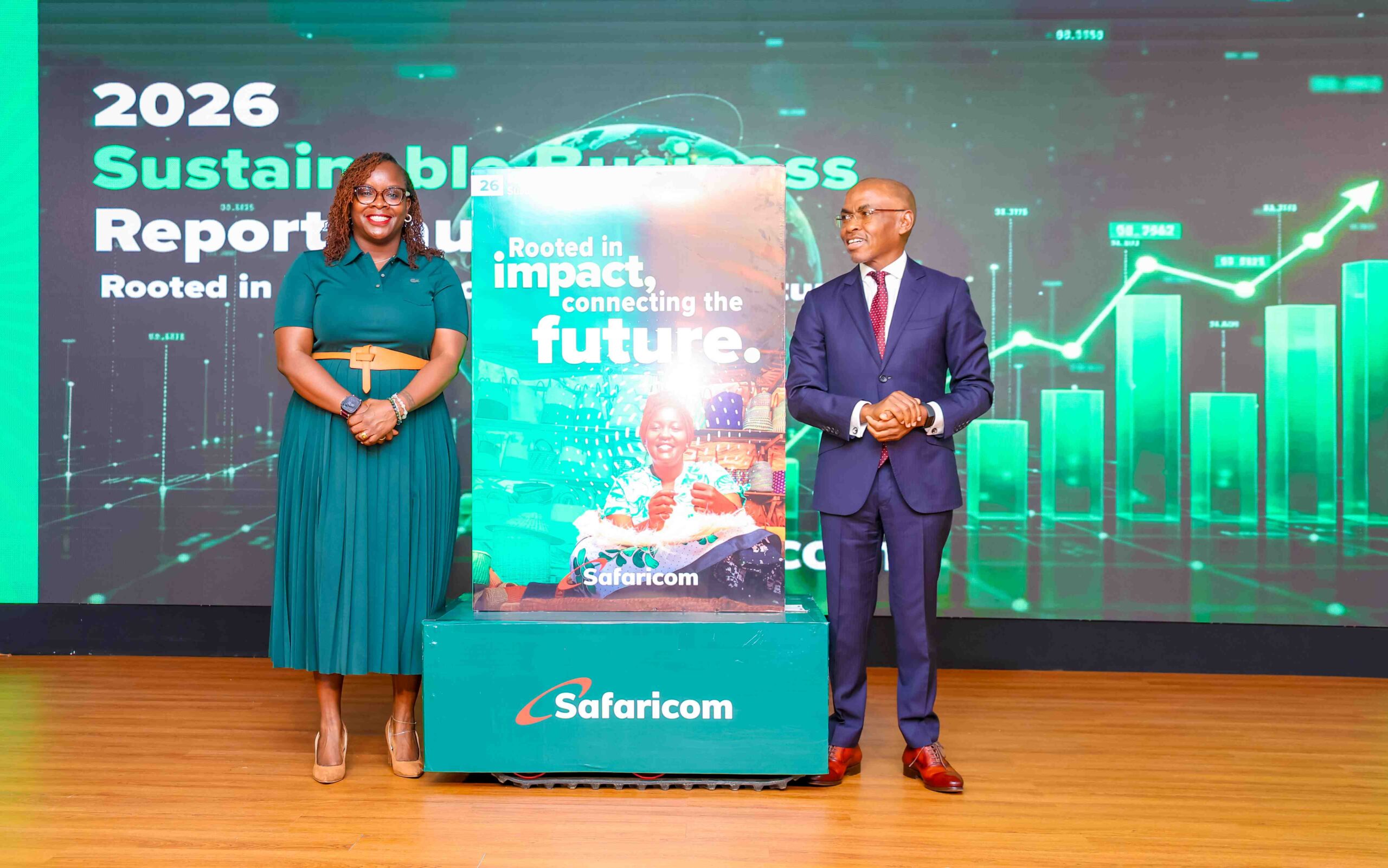
Safaricom continues to create value through its sustainability initiatives that have become a core part of Kenya’s developing economy. As per the Safaricom 2026 Sustainability Report, KES 1.25 trillion in value was created for Kenyan society, an increase of 10% from the previous year.
This year’s sustainability report is Safaricom’s 15th report since it became the first telecommunications company to publish a sustainability report in March 2012. The value generated through sustainability initiatives reflects Safaricom’s wider contribution to the economy and society through its operations, digital and financial services, infrastructure investment, employment and livelihoods supported across its ecosystem.


Safaricom’s sustainable growth over the years offers a powerful growth blueprint for businesses aiming to emulate its journey across multiple business touchpoints.
Here are 7 powerful lessons that businesses can learn from Safaricom’s 2026 Sustainability Report
-
Businesses Should Be Driven By Purpose
Safaricom’s core business strategy is anchored on a determination to deliver what customers need and empower them to transform their lives through technology. Safaricom aims to be known for delivering personalised, value-adding digital services enabled by data and artificial intelligence by 2030. Its every business decision is geared towards realizing that goal. As a business, Safaricom is now organizing its operations around two core pillars that have helped define its approach to serving customers and growing its footprint in the region. Its pillars are ‘People’ and ‘the Planet.’ This means that as the company works to deliver personalized and impactful services to people, it also remains highly conscious of the environmental impact of its operations.
This approach has made Safaricom one of the most trusted brands on the continent. Similarly, businesses can draw from this by ensuring that they identify their purpose and remain true to it. This will mean embedding core values within the business engine and working to ensure that sustainability is achieved at all key growth points of the business.
-
Businesses Should Be Ruthless In Prioritizing Key Growth Functions
One of the key highlights from the Safaricom 2026 Sustainability Report is the company’s deliberate decision to undertake its first dedicated Double Materiality Assessment (DMA) to identify key focus areas for its sustainability strategy and disclosures. The assessment provided a structured and evidence-based approach to identifying and evaluating the sustainability matters that are most significant to the company and its stakeholders. It also strengthened the company’s understanding of the impact of its operations across its value chain within the economy.
This approach helped Safaricom better understand how its operations affect people, society, the environment and the inherent risks and opportunities that could impact its value within the host economy. The approach helped it map out material topics that would be key to the creation of higher impact value.
For businesses aspiring to reach higher heights and create maximum value, this matters because while creating value in society is important, it is always important to consolidate your efforts in a mapped out area so that the impact flows in multiple directions from one focus point. For example, a company can invest in a school, and then work with the school to plant trees, clean the surrounding environment, drill wells for the community close to the school and sponsor the school’s sports team. That would account for more than 5 major investments flowing from one umbrella.
-
Businesses should measure impact beyond their Core Business Function
Safaricom created KES 1.25 trillion in value for Kenyan society. Its ecosystem sustained more than 1.4 million jobs, including livelihoods supported through its network of M-PESA agents, dealers, suppliers and other partners. The company’s M-PESA service continued to expand access to financial services, enabling customers to transact, save, invest and access credit. The social value created by M-PESA was estimated at KES 478.1 billion in the 2026 Financial Year. Beyond financial inclusion, Safaricom continued to invest in connectivity to bring more Kenyans into the digital economy including democratizing Fixed data business by launching more affordable customer propositions.
Safaricom also uses the Alexforbes Paragon SDG Impact Assessment to asses and grade its contribution and journey towards achieving the United Nation’s Sustainable Development Goals.
This is significant because it enables Safaricom to track both positive and negative impacts of its operations. Similarly, businesses should be intentional not only in identifying their core functions but also in being accountable and courageous enough to asses how their operations affect people and the planet. This is what has put Safaricom on a progressive sustainability journey.
Safaricom CEO Peter Ndegwa says helping Kenyans transact affordably is where the company’s true impact lies.
“Our impact is measured not only by what we earn, but by the value we create for society. More than half of M-PESA transaction volumes attracted no customer charge, helping millions of Kenyans transact affordably and participate in an increasingly digital economy,” said Ndegwa.
-
Scale Impact Through Partnerships and Healthy Ecosystems
Since its founding, Safaricom has invested a lot of effort in defining and redefining its engagement with key stakeholders. This has been done for the purpose of earning the trust of its customers, maintaining constructive relationships with regulators and governments and ensuring that its growth creates value for the societies in which Safaricom operates in. To Safaricom, scaling means having everyone on board and ensuring your mission and vision is clear to key stakeholders and partners.
Through its ‘Citizens of the Future,’ for instance, Safaricom is seeking to take the impact of its education investment to greater scale. Over the next five years, Safaricom has committed to building 500 schools, with seven facilities already completed and 65 under construction. The company also aims to award 10,000 scholarships and upskill 56,000 teachers. This is how Safaricom is building its value-based ecosystem beyond its core function in the economy.
In today’s changing world, it is always important for businesses to leverage progressive and meaningful partnerships in their areas of operation to give themselves as much room as possible to expand and move beyond their service and product portfolio.
-
Businesses Should Embed Ethics, Transparency and Accountability In their Governance Approach
Strong governance, clear accountability and responsible business conduct are fundamental to sustainable long-term value creation.
These are the pillars that have been central to Safaricom’s ability to maintain stakeholder confidence and make decisions that reflect the company’s responsibilities to its business, people, society and the environment. Safaricom seeks to reinforce accountability through its effective risk management, transparent reporting and strong governance and control processes. Together, these pillars have been crucial to helping Safaricom manage impacts, risks and opportunities, uphold the standards expected of it and maintain the trust on which long-term success depends.
Similarly, businesses should be deliberate in employing a clear and concise leadership structure that is attuned to their core business functions and vision within their areas of operation.
ALSO READ: Stanbic Targets Scalable Green Financing As It Unveils 2025 Sustainability Report