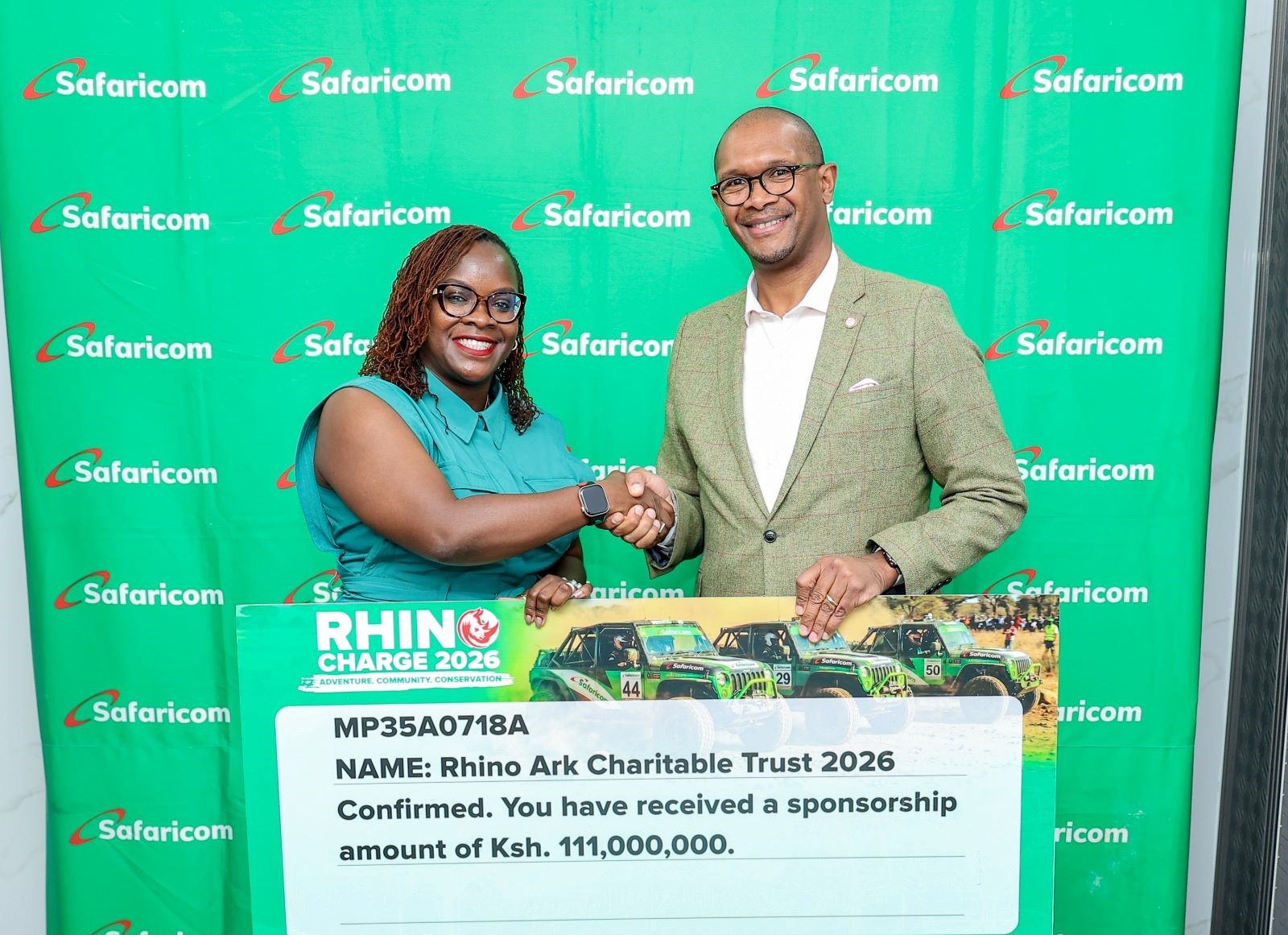
The 37th edition of the Rhino Charge Challenge has received a major financial boost after Safaricom PLC and the M-PESA Foundation committed KES 114 million toward conservation efforts and support for this year’s off-road motorsport event set for May 30 in Samburu. The funding is expected to strengthen environmental conservation initiatives spearheaded by Rhino Ark Kenya Charitable Trust while also enhancing the experience of participants and spectators during the annual challenge.
Out of the total amount, the M-PESA Foundation has allocated KES 94 million toward conservation projects, including the fencing and protection of the Mount Elgon Forest’s Suam Block and the restoration of the Mau Forest Complex across Narok, Kericho, and Bomet counties. The support will also extend to the rehabilitation and protection of the Mount Kenya Forest ecosystem in Tharaka Nithi County.


The latest investment comes at a time when conservation experts continue to warn about mounting pressure on Kenya’s critical water towers due to deforestation, illegal logging, encroachment, and climate change. According to the Kenya Forest Service, the country’s five main water towers — Mau Forest, Mt Kenya, Aberdares, Cherangany, and Mt Elgon — provide water that supports more than 75 percent of Kenya’s renewable surface water resources and directly sustains agriculture, hydropower generation, tourism, and biodiversity. Conservation-linked initiatives under the broader Rhino Charge Conservation programme have increasingly focused on protecting these ecosystems because of their importance to both livelihoods and national economic stability.
Safaricom PLC separately committed KES 20 million to sponsor participating teams and provide communication infrastructure during the competition. Part of the funds will support Car No. 44 led by Adil Khawaja, the EV Explorers team headed by Richard Kiplagat, and the all-women Zambarau Heels on the Wheel team led by Agnes Mwangi.
Speaking during the cheque handover ceremony at Safaricom headquarters in Nairobi, Peter Ndegwa said the company remains committed to sustainability and environmental protection.
“This year, we are proud to commit KES 114 million through the M-PESA Foundation and Safaricom. Our support for Rhino Charge reflects our commitment to practical conservation efforts that protect Kenya’s natural heritage while driving innovation and resilience,” he said.
The telco giant will also deploy 5G connectivity at the event to improve communication, live engagement, and overall connectivity in the remote competition area.
Under the sponsorship arrangement, Car No. 44 will receive KES 15 million, while EV Explorers and Zambarau Heels on the Wheel will each receive KES 1 million to support their participation in the gruelling off-road competition.
The 2026 Rhino Charge is expected to attract at least 55 entries, including defending champions Team Huzi and the all-ladies Team Zambarau.
Rhino Charge Conservation One Of Most Recognizable Private Sector Fundraising Models
Beyond the competition itself, Rhino Charge Conservation efforts have over the years become one of Kenya’s most recognised private-sector-backed environmental fundraising models. Data from Rhino Ark indicates that proceeds from the annual event have financed more than 780 kilometres of electric fencing around vulnerable forest ecosystems in Kenya. These fencing projects have helped reduce human-wildlife conflict in communities neighbouring protected forests while also curbing illegal encroachment and charcoal burning activities.
Conservation analysts say such interventions are becoming increasingly important as Kenya targets a minimum national tree cover of 30 percent by 2032 under ongoing climate resilience and restoration programmes. Official government data shows Kenya’s forest and tree cover stood at slightly above 12 percent in recent assessments, marking gradual progress from previous years but still below long-term environmental targets needed to stabilise degraded ecosystems and river catchment areas.
Elizabeth Wanjiku from the Zambarau Heels on the Wheel team welcomed the sponsorship, saying it would empower the women-led team to compete effectively while championing environmental conservation.
Meanwhile, EV Explorers team leader Richard Kiplagat said the support would help the electric vehicle team improve on last year’s performance while promoting sustainable mobility and conservation awareness.
The growing inclusion of electric vehicle teams in the Rhino Charge Conservation event also reflects broader conversations around sustainable mobility and carbon reduction. Kenya currently ranks among Africa’s leading producers of renewable electricity, with more than 80 percent of grid power generated from renewable sources including geothermal, hydro, wind, and solar energy. Environmental experts argue that this creates favourable conditions for cleaner transport technologies that align with conservation and climate mitigation goals.
Last year’s event held in Saimo Soi, raised KES 269.5 million toward the protection of Kenya’s water towers, with Adil Khawaja emerging as the top fundraiser after collecting KES 139.8 million.
Safaricom has supported Rhino Charge for more than a decade, helping raise over KES 2.6 billion for conservation projects across Kenya. The funds have facilitated electric fencing around key forests including Mount Kenya, the Aberdare Range, and Kakamega Forest, protecting both ecosystems and communities from human-wildlife conflict.
According to Christian Lambrechts, this year’s event is expected to attract up to 65 entries as preparations intensify ahead of the highly anticipated conservation fundraiser.
Environmental researchers have previously noted that degradation of Kenya’s water towers has direct economic consequences. The Mau Forest Complex alone is estimated to support key river systems feeding Lake Victoria, Lake Turkana and the Maasai Mara ecosystem, while also sustaining agriculture and hydroelectric dams that contribute significantly to the national economy. Conservation groups therefore view Rhino Charge Conservation initiatives as part of wider ecosystem restoration efforts aimed at safeguarding water security, biodiversity, tourism, and climate resilience for future generations.
The Rhino Charge is an annual extreme 4×4 competition that raises money for the conservation and protection of Kenya’s mountain ecosystems and water towers through the Rhino Ark Kenya Charitable Trust.
ALSO READ: How Safisha KaNairo is Transforming Waste Management In Nairobi