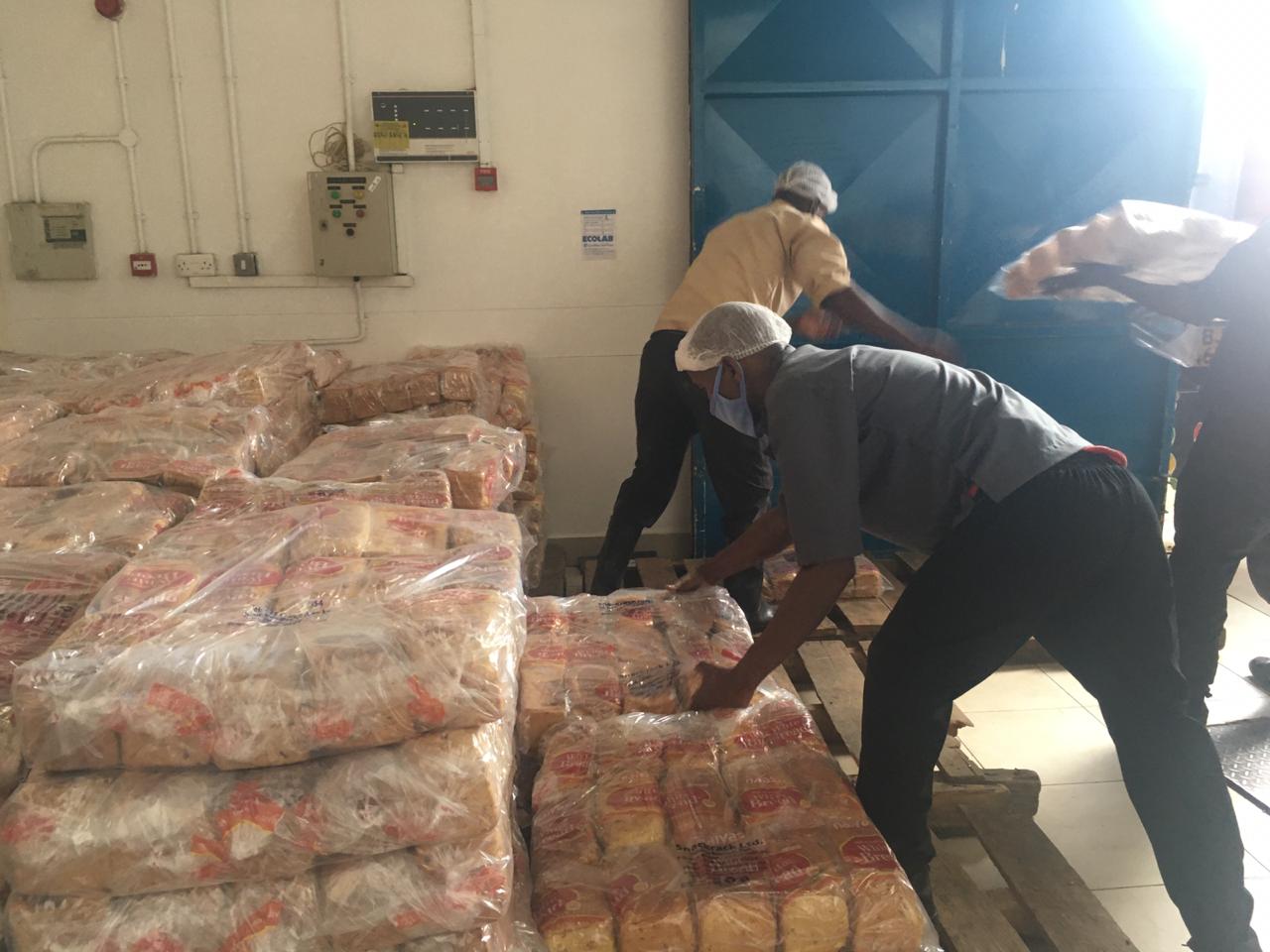
Unga Group profit has jumped 82% to Sh405 million for the financial year ended June 2026, as rising revenue signal renewed momentum. The food processing company is behind popular brands such as Jogoo, Hostess, EXE and Famila.
The company’s revenue increased by 17% to Sh30.4 billion, reflecting stronger sales across its business. However, the decision not to declare a dividend means shareholders will not receive a direct cash reward from the improved annual earnings.

The latest results represent another important step in Unga Group’s recovery following a difficult period marked by losses, elevated operating costs and pressure on its margins. The company returned to profitability in the financial year ended June 2025, posting a net profit of approximately Sh222 million after recording a loss of about Sh670 million in the previous year.
The increase in Unga Group Profit therefore points to more than a single year of improved performance. It raises a broader question about whether the miller can sustain its recovery in a sector where profitability depends heavily on commodity prices, foreign exchange movements, consumer purchasing power and the cost of production.
Unga Group revenue growth signals stronger demand and execution
Unga Group’s 17% revenue growth to Sh30.4 billion is a significant indicator of the scale of its business and the commercial momentum behind its recovery. The increase suggests that the company has strengthened its ability to generate sales in a market where households and businesses depend on essential food products.
Revenue growth alone does not establish whether consumers bought more products, whether prices increased, or whether the company benefited from a shift towards higher-value products. Those distinctions matter because they determine how sustainable the growth will be if household purchasing power remains under pressure.
Unga Group operates across human nutrition and animal nutrition and health through Unga Limited and Unga Farm Care (EA) Limited. Its activities span maize and wheat milling, animal feeds and related products, giving it exposure to both household food consumption and agricultural production.
This diversified business model provides a degree of resilience. While household demand for flour and other staple foods tends to persist even during difficult economic periods, the animal nutrition business is influenced by the financial health of livestock farmers, poultry producers and other agricultural enterprises.
The combination creates opportunities for Unga to grow beyond the retail flour market. Yet it also means the group must manage different cost structures, customers and competitive pressures across its businesses.
Unga Group Profit reflects a recovery from previous losses
The latest increase in Unga Group Profit becomes more meaningful when viewed against the company’s recent financial history.
Unga reported a net loss of approximately Sh670 million in the financial year ended June 2024 before returning to profitability with earnings of about Sh222 million in FY2025. The FY2026 profit of Sh405 million represents a further improvement in that recovery.
The critical point is that Unga is not merely increasing sales; it is converting a larger portion of those sales into profit. This could indicate better cost management, lower financing expenses, improved production efficiency or a more favourable combination of product prices and input costs.
The company’s half-year results for the six months ended December 2025 offered evidence of this operating improvement. Interim net profit increased to Sh523.1 million from Sh82.1 million a year earlier, supported by higher revenue, lower operating expenses and reduced financing costs. The report also noted that the company had installed a biomass plant at its Nairobi feed facility to help reduce energy costs.
These developments suggest that cost discipline and operational investment have played an important role in the recovery. Nevertheless, a full-year assessment should distinguish recurring operating improvements from temporary benefits, particularly because commodity prices and financing conditions can change significantly between reporting periods.
Profit margins remain a key test of the recovery
One of the most useful ways to assess Unga Group’s performance is to compare its profit growth with its revenue growth.
Using the reported FY2026 figures, the company’s net profit margin was approximately 1.33%, calculated by dividing Sh405 million in profit by Sh30.4 billion in revenue. In simple terms, the company retained about Sh1.33 in net profit for every Sh100 in sales.
That is an improvement in absolute earnings, but it also highlights the narrow margins associated with large-scale food processing.
For comparison, the FY2025 figures of approximately Sh222 million in net profit and Sh26.1 billion in revenue imply a net profit margin of about 0.85%. On these rounded figures, Unga’s net margin improved by roughly 0.48 percentage points in FY2026.
The implication is important: even modest changes in procurement costs, energy expenses, distribution costs or borrowing charges can have a disproportionate effect on the bottom line.
A miller can process and sell billions of shillings worth of products while retaining only a small percentage of the sales value as profit. This makes cost management, production efficiency and pricing discipline central to long-term performance.
For investors, the next question is whether Unga can continue expanding its margins without pricing its products beyond what households and business customers can afford.
The wider challenge facing Kenya’s milling industry
Unga Group’s performance must also be understood within the broader structure of Kenya’s food supply chain.
Maize and wheat milling businesses are exposed to both domestic agricultural conditions and international commodity markets. Domestic maize availability is influenced by rainfall, yields, farmer incentives, storage and distribution, while wheat processors depend substantially on imported grain.
Kenya National Bureau of Statistics data in the Economic Survey 2026 show that the country imported approximately 2.24 million tonnes of unmilled wheat in 2025, compared with about 2.31 million tonnes in 2024. Maize imports, meanwhile, increased from approximately 309,000 tonnes to 468,000 tonnes over the same period.
These figures illustrate the scale of Kenya’s reliance on external grain supplies, particularly for wheat. For millers, that dependence introduces risks linked to international prices, shipping expenses, exchange rates and the availability of supplies in exporting countries.
A relatively stable shilling can ease the local-currency cost of imported wheat, while currency depreciation can quickly increase procurement expenses. Changes in international grain prices may offer relief, but the benefit can be reduced by higher freight, insurance or energy costs.
The challenge is that millers cannot always pass higher costs to consumers immediately. Flour is a household staple, and significant price increases can encourage consumers to switch brands, change purchasing quantities or seek cheaper alternatives.
This creates a delicate balancing act between protecting margins and retaining market share. Unga’s revenue growth suggests that its brands continue to generate substantial business, but maintaining that position requires consistent quality, efficient distribution and competitive pricing.
Consumer purchasing power will influence future growth
Demand for essential food products can provide a relatively stable foundation for Unga Group, but that does not make the business immune to economic pressure.
When household budgets tighten, consumers often become more price-sensitive. They may shift to lower-priced products, buy smaller quantities or reduce expenditure on products perceived as less essential. Retailers and distributors can also become more cautious about inventory when working capital is expensive.
For a business with established brands such as Jogoo, Hostess, EXE and Famila, brand recognition can support customer loyalty. However, brand strength must translate into repeat purchases and sustainable margins rather than sales growth achieved at the expense of profitability.
Unga’s animal nutrition business faces a related challenge. Farmers need quality feeds to sustain productivity, but feed costs influence their profitability and decisions about production levels. If poultry, dairy and livestock producers face weak farm-gate prices or expensive inputs, their ability to absorb feed price increases may be limited.
The group’s long-term opportunity therefore lies in serving both consumers and agricultural producers efficiently. Improvements in product quality, formulation, supply-chain management and distribution could help Unga compete on value rather than price alone.
Why Unga Group is not declaring a dividend
Despite the 82% increase in Unga Group Profit, the company has not declared a dividend for FY2026.
For income-seeking shareholders, this is a significant consideration. Investors who buy listed shares partly for regular cash distributions will not receive a dividend from these annual earnings.
However, the decision should be assessed against the company’s recent recovery rather than viewed in isolation. During the six months ended December 2025, Unga explicitly linked its decision not to recommend a dividend to the need to conserve cash and rebuild working capital eroded by losses in previous years.
Working capital is essential for a food processor. The company needs sufficient cash to purchase grain and other inputs, finance inventories, meet supplier obligations and support distribution before it collects payment from customers.
Retaining profits can therefore strengthen the business’s ability to withstand commodity-price volatility and fund day-to-day operations without excessive borrowing. It may also give management greater flexibility to invest in efficiency improvements and capacity.
The trade-off is that shareholders must wait for a potential future dividend or benefit through other forms of value creation, such as sustainable earnings growth and a stronger balance sheet. A dividend is not guaranteed simply because profits rise.
For investors, the more important question is whether the retained earnings generate a measurable improvement in financial resilience and future returns. Continued dividend suspensions would be harder to justify if cash accumulation did not translate into stronger operations, reduced financial risk or productive investment.
What Unga Group Profit mean for Unga Group investors
Unga Group’s FY2026 performance offers encouraging evidence of a business recovering from previous losses. Revenue growth of 17% and profit growth of 82% indicate that the company has improved both the scale of its operations and its reported earnings.
However, strong annual growth should not automatically be interpreted as proof that the company is now a consistently high-return investment.
Investors should examine future financial statements for evidence of sustained operating margins, operating cash flow, debt levels, financing costs and working-capital improvements. They should also consider whether capital expenditure is generating measurable savings or additional revenue.
The absence of a dividend makes these questions particularly important. Investors must rely more heavily on the prospect of future earnings growth and the market’s assessment of the company’s value, rather than immediate cash income.
Valuation also matters. A company can report improving profits and still be an unattractive investment if its share price already reflects overly optimistic expectations. Conversely, a business with a credible recovery strategy may offer long-term potential if its valuation appropriately accounts for the risks.
Unga’s position in essential food processing and animal nutrition gives it exposure to enduring market needs. Yet its ability to turn that position into durable shareholder returns will depend on how effectively it manages costs, invests retained earnings and navigates volatile agricultural markets.
Can Unga Group sustain its profit growth?
The FY2026 results put Unga Group in a stronger position than it occupied during its loss-making period. The company has demonstrated that improved sales and cost management can support a meaningful recovery in earnings.
The next stage, however, is more demanding. Sustaining growth will require the company to manage imported grain costs, maintain competitive prices, improve operational efficiency and protect its working capital. Its investments in energy efficiency may help reduce exposure to some operating costs, but their long-term financial contribution will need to be reflected in future results.
Kenya’s milling industry also remains exposed to agricultural volatility and the broader economic environment. Strong harvests can improve domestic grain availability, while supply disruptions or unfavourable global market conditions can put pressure on procurement costs.
ALSO READ: Cereal Millers Association Pledges to Clean Up Kenya’s Flour Industry