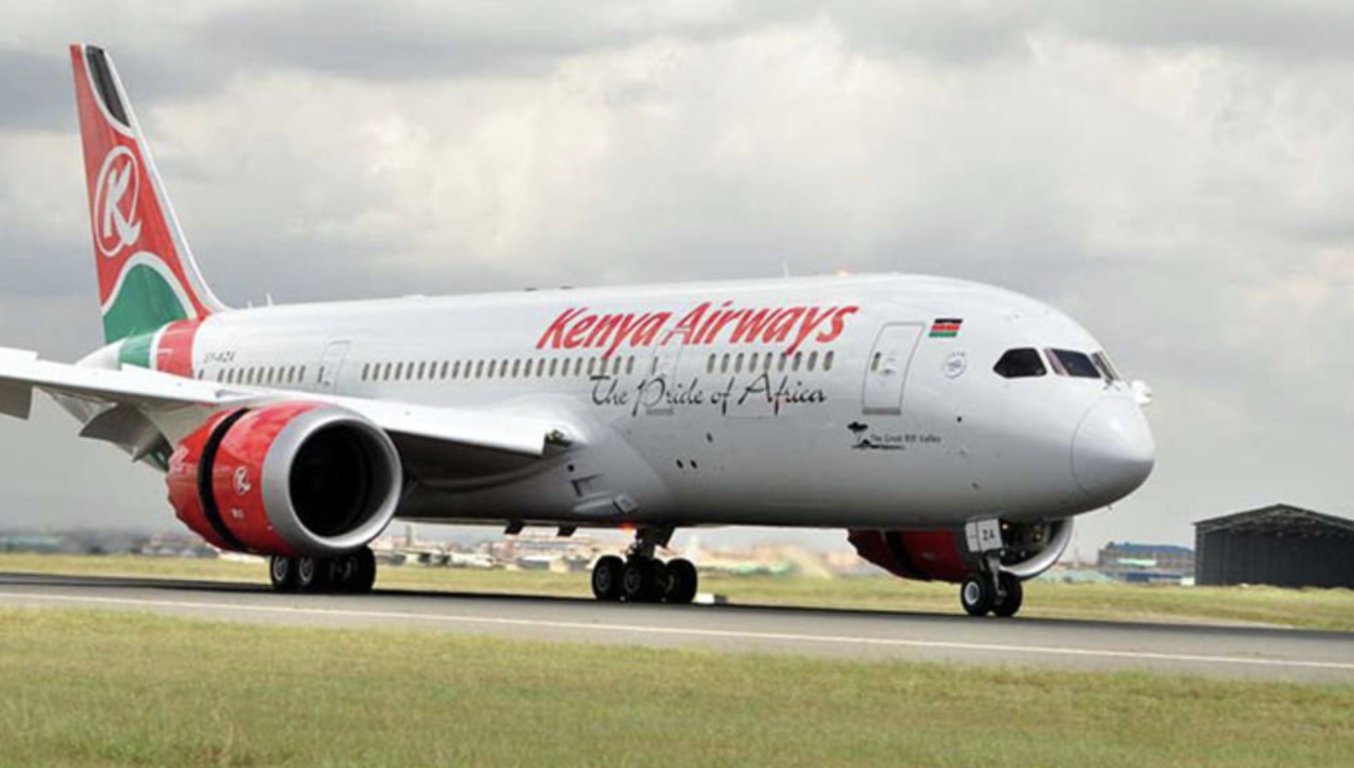
Kenya’s Cabinet has approved $350 million, about Sh45.4 billion, in shareholder funds for Kenya Airways financing, a cash injection aimed at urgent bills, aircraft maintenance and the return of grounded planes to service.
In the statement that followed the cabinet meeting of 9th October 2026, the government said the money would support the national carrier’s recovery and strengthen its financial position while a longer turnaround plan continues. The funds will be released in tranches under National Treasury oversight, with a repayment period of up to 10 years. The same arrangement allows the financing to be converted into equity, subject to the necessary approvals.


Cabinet paired the new money with a balance-sheet measure it first floated when Kenya Airways published its 2025 results in March. It endorsed a proposal to convert Sh122 billion in existing government loans, together with accrued interest, into an equity-qualifying tradable instrument. The stated aim is to clean the airline’s books enough to support future capital raising. Implementation still needs corporate, shareholder and regulatory approval.
The operational case for the cash is straightforward. A grounded jet earns nothing and still incurs lease, insurance and finance costs. As of last month, three Kenya Airways aircraft were in major maintenance after reaching 12 years in service. Earlier in 2025 the airline’s long-haul schedule was hit when Boeing 787-8 Dreamliners were parked for engine overhauls that ran well past the usual shop time, a delay the carrier blamed on a global parts bottleneck.
By mid-2026, several aircraft were still out of service and available seat capacity was down by a double-digit share. The Sh45.4 billion is meant to pay the invoices that get those aircraft back in the air, not to fund a new fleet.
What You Need To Know About Kenya Airways Financing
The state is already the airline’s largest owner and its largest creditor. The government holds 48.9 percent of Kenya Airways. Treasury has told Parliament it wants a strategic investor in place by December 2026, earlier than the first-quarter 2027 window the airline had previously indicated.
The carrier has been seeking $1.5 billion to $2 billion through an international process, with four potential investors under review and structures that could mix equity, debt and aircraft-backed finance. Finance Minister John Mbadi has told the International Monetary Fund that direct cash injections are meant to stop once a new investor is secured. Friday’s approval is the bridge, not the exit.
The books explain why a bridge is still required. Company figures cited in industry reporting put total liabilities at about KES 315.2 billion against assets of about KES 183.2 billion. Negative equity has been estimated near Sh131 billion. Debt of roughly Sh146 billion is overwhelmingly owed to, or guaranteed by, the state. Finance costs alone were about Sh12.3 billion in 2025 and a further Sh5.2 billion in the first half of 2026. Auditors have raised a going-concern flag.
On the Nairobi Securities Exchange the share closed at KES 5.76 on 8 October, little changed on the week but up about 63 percent since the start of the year, a market that has been pricing a rescue more than a clean profit.
The government defended the intervention with a wider number. It said the airline contributes more than $1.3 billion a year to gross domestic product through tourism, trade and regional connectivity. Kenya Airways is the main long-haul operator at Jomo Kenyatta International Airport, and a thinner schedule hits hotels, exporters and connecting traffic through Nairobi as well as the airline’s own revenue. That is the political argument for another public cheque. It is also the argument critics have heard before.
Parliament’s Public Accounts Committee has already questioned earlier Treasury support. An audit of the year to June 2024 recorded KES 10 billion on-lent in 2022/23, taking disbursements between 2019 and 2022 to KES 41.27 billion, with interest and penalties pushing one loan balance to about KES 43 billion by December 2022. The Auditor-General said the recoverability of about KES 55.37 billion owed by the airline could not be confirmed. Converting Sh122 billion of loans into a tradable equity instrument would remove a repayment obligation from the airline. It would not remove the taxpayer’s exposure. It would change its form.
ALSO READ: State Clears 50% Of Kenya Airways Debt