



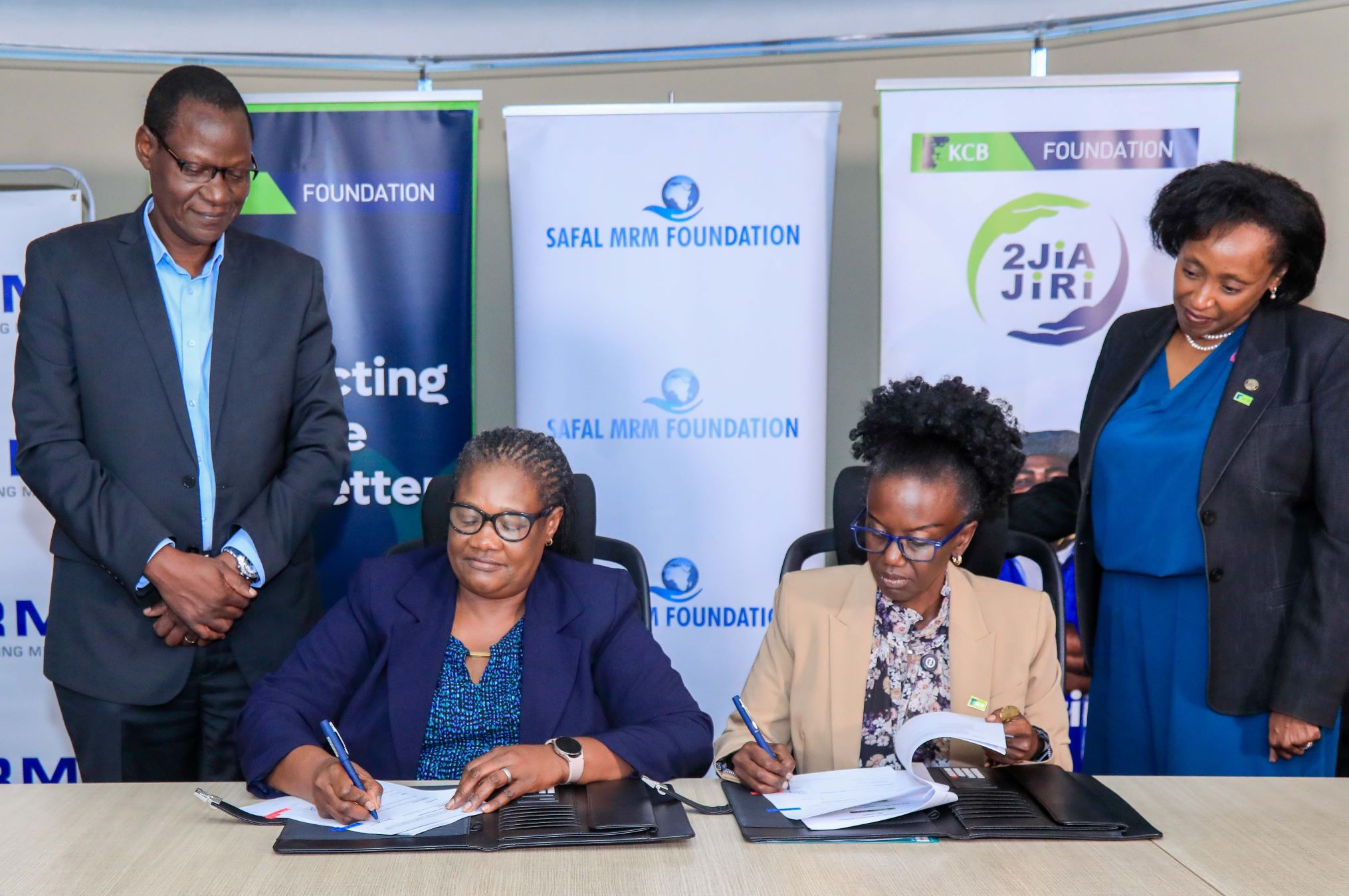
Mabati Rolling Mills (MRM), through its social arm, Safal MRM Foundation, has partnered with KCB Foundation to equip 200 young Kenyans with specialised technical skills in steel prefabricated installation, creating opportunities for employment and entrepreneurship in building and filling gaps in Kenya’s construction sector.
The partnership, formalised through a Memorandum of Understanding (MoU) signed at MRM’s offices in Nairobi, will see KCB Foundation sponsor the training at a cost of Ksh. 3,000.000 with the aim of equipping the beneficiaries with practical, industry-relevant competencies in steel building and roofing solutions, while addressing the demand for skilled technical personnel within Kenya’s construction sector.


Speaking at the signing ceremony, Siprosa Rabach, Head of Safal MRM Foundation, said, “This partnership marks an important step towards bridging the gap between technical skills development and meaningful economic opportunities for young people. At Safal MRM Foundation, we recognise that addressing youth unemployment requires providing technical training. This partnership brings together complementary expertise, resources, and industry networks to equip young people with practical competencies that meet market needs. We are not just investing in the 200 beneficiaries but also in the development of a skilled workforce that will contribute to the future of Kenya’s construction industry,” said Rabach.
Under the partnership, MRM, through Safal MRM Foundation, will contribute its technical expertise, specialised training infrastructure, industry knowledge and market linkages within the construction sector.
Speaking on behalf of KCB Foundation, Margaret Mendi Njonjo, MD, KCB Foundation, said, “The partnership signed today underscores our commitment to empowering young people through skills development that leads to meaningful employment. Through the Prefabricated Installers Program, we will equip 200 youth with specialised, industry-relevant skills that address critical workforce gaps in Kenya’s growing construction sector. By aligning training with market demand, we are creating pathways to decent work, entrepreneurship, and sustainable livelihoods. Beyond technical skills, we will leverage our youth empowerment and enterprise development platforms to connect beneficiaries to economic opportunities and support their long-term growth
She further added, “KCB Bank will complement this initiative by facilitating access to financial services, enterprise financing solutions, and broader financial inclusion opportunities for beneficiaries seeking to establish or grow businesses within the construction value chain. Together, we are building a pipeline of skilled installers, creating employment opportunities, and contributing to stronger, more resilient communities.”
Kenya’s Construction Sector Continues To Grow Amid Progressive Policies
The collaboration brings together the institutions’ respective strengths to create a model that connects technical skills development with industry participation and enterprise growth. For MRM, the initiative will strengthen the pipeline of skilled installers who can support its steel building and roofing solutions, while deepening its contribution to community development and youth empowerment. For KCB Foundation and KCB Bank Kenya, the partnership offers an opportunity to advance their youth empowerment and financial inclusion objectives through an industry-linked training model that connects beneficiaries to practical skills, market opportunities, and financial services.
Through this collaboration, MRM, Safal MRM Foundation, KCB Foundation and KCB Bank Kenya reaffirm their shared commitment to investing in young people, strengthening enterprise development and advancing inclusive economic growth. By aligning technical expertise, financial inclusion, and industry opportunities, the partnership seeks to deliver sustainable impact that extends beyond skills acquisition to support livelihoods, enterprise growth, and the wider construction sector.
Kenya’s construction sector continues expanding year-on-year. This has been helped by progressive policies initiated by successive governments since former President Uhuru Kenyatta’s second term in office. In 2025, the sector grew by about 6.8% from the previous year, with 2026 growth expected to be at about 6.6%. The construction sector is also valued at about Ksh2.6 trillion. The sector is projected to grow in value as Kenyan society expands in the coming years. This will translate to more skills and human resources being required to run it and take it to the next level. Unlike other industries across the economy, the construction industry relies heavily on human skills as opposed to artificial intelligence.
ALSO READ: MRM Hosts ‘Fundi Connect’ To Honour Local Artisans