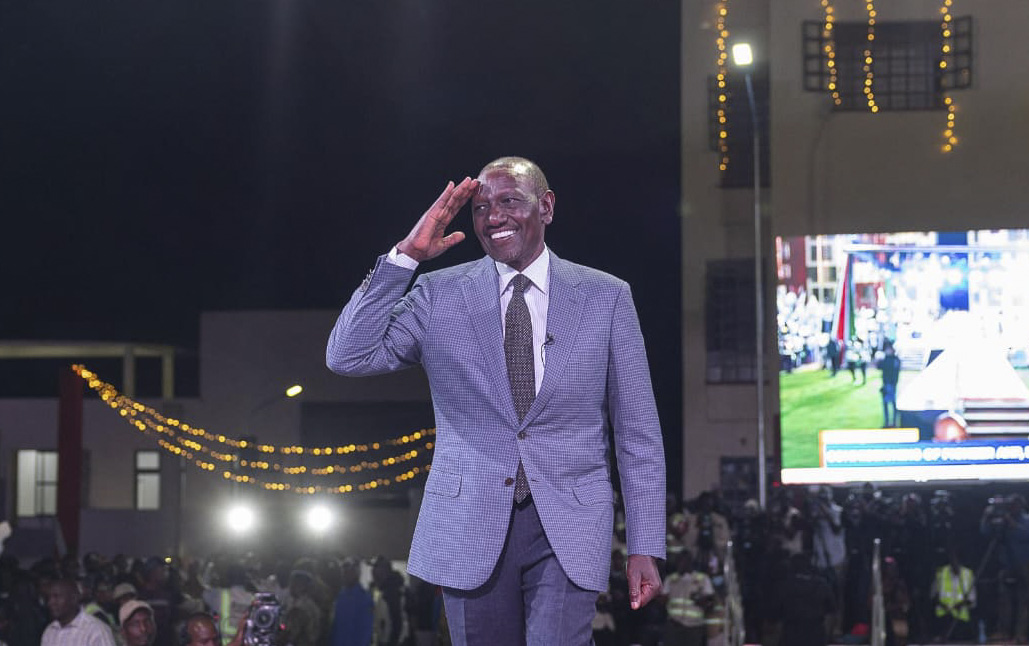
Mashujaa Day is an opportunity for Kenya to reflect on the sacrifices of those who fought for independence, recognise citizens who continue to serve the country and assess whether the nation is living up to the ideals that inspired its founding.
This year’s 63rd Mashujaa Day celebrations carry a lot of significance at a time when households are grappling with the cost of living, young people are struggling to secure decent employment, public debt is constraining government spending and questions about accountability remain central to public debate.


The president’s Mashujaa Day address this year should therefore go beyond patriotic messages and promises of a better future. Kenyans need measurable commitments, credible timelines and an honest assessment of what the government has achieved, what remains unfinished and how public resources will be used to improve their lives.
Here are 5 things the president should focus on in his address the nation during the 63rd Mashujaa Day celebration.
-
The cost of living and the pressure on household incomes
For many Kenyans today, the most important question is whether their incomes can keep pace with the cost of meeting basic needs. Food, transport, rent, electricity and school expenses continue to determine how much money households have left after paying for essentials.
This year’s Mashujaa Day celebrations follow a move by the Matatu Owners Association to increase fares by about 10%. This will further put a strain on people’s incomes over and above what they are already going through.
The number of Kenyans going through economic and household difficulties is at an alarmingly high point.
The latest figures from the Kenya National Bureau of Statistics (KNBS) are particularly concerning. Annual consumer price inflation reached 6.8% in September 2026, with food and non-alcoholic beverages rising by 9.5% and transport costs increasing by 15.6% over the preceding 12 months. Housing, water, electricity, gas and other fuels recorded a 3.2% increase.
These figures matter because inflation is not merely an economic statistic. It affects the purchasing power of wages, the affordability of nutritious food and the ability of families to save. When food and transport costs rise faster than household incomes, workers can effectively become poorer even when their salaries remain unchanged.
The President should explain what his administration is doing to ease these pressures, particularly for low-income households, informal workers and small businesses. That discussion should include agricultural productivity, the cost of farm inputs, food storage and distribution, energy costs, competition in essential goods markets and the tax burden on ordinary consumers.
Kenya also needs a clearer account of how wage growth and employment policies will improve household purchasing power. Lower inflation alone does not necessarily mean that life has become affordable. If prices have already risen substantially, a slower rate of increase does not reverse those earlier increases.
A credible address would therefore distinguish between controlling inflation and restoring affordability. The government should set out how it intends to reduce the cost of essential goods, strengthen domestic food supply and ensure that economic growth translates into improved living standards.
The President should also explain how proposed tax changes will affect workers at different income levels. Tax relief can improve disposable income, but its impact depends on the amount saved, the prices households face and whether the government can maintain essential services without imposing other costs on citizens.
For a national celebration dedicated to the people who helped build Kenya, addressing the daily struggle to afford food, transport and housing would be a direct acknowledgement of the economic challenges facing ordinary citizens.
-
Youth unemployment and the quality of jobs being created A Priority On Mashujaa Day
Kenya’s young people deserve more than assurances that jobs are being created. They need opportunities that offer reliable earnings, useful skills, career progression and a realistic path towards financial independence.
President Ruto has repeatedly identified unemployment and limited opportunities as major challenges facing young people. In an official statement marking International Youth Day in August 2025, he outlined government initiatives spanning affordable housing, digital employment, overseas labour mobility, business financing and public works. The administration also announced targets for expanding employment and enterprise support.
These initiatives provide a starting point for a more substantive discussion during Mashujaa Day. The President should explain how many sustainable jobs have actually been created, how many beneficiaries remain employed and how much workers are earning from the opportunities provided.
The distinction between jobs announced and jobs sustained is important. A temporary public works position can provide essential income, but it is not equivalent to a permanent job with predictable earnings and social protection. Similarly, training thousands of young people does not automatically translate into employment if businesses are not creating enough positions to absorb them.
Kenya’s Labour Market Information System provides further evidence of the scale of the challenge. Its latest displayed national snapshot reports a youth unemployment rate of 17.7%, youth underemployment of 35.9% and a rate of 15% for young people not in employment, education or training. These indicators describe different dimensions of labour-market exclusion and should not be added together.
The President should address the disconnect between education and labour-market demand, the barriers facing young entrepreneurs and the difficulties small businesses encounter when trying to expand. Access to affordable credit matters, but businesses also need customers, reliable electricity, predictable regulations and manageable operating costs.
The government should provide measurable updates on its digital jobs programme, affordable housing employment targets, youth enterprise funding and overseas recruitment initiatives. For labour mobility, the focus should include not only the number of Kenyans placed abroad but also recruitment costs, contract enforcement, worker protection and the prevention of exploitation.
The informal economy also deserves greater attention. Millions of Kenyans earn their livelihoods through small-scale trading, transport, construction, domestic work and other activities that may not provide stable earnings or adequate social protection. Policies that help these workers improve productivity, access markets and formalise their businesses could have a substantial impact on household welfare.
The message on Mashujaa Day should be that young people are not merely a demographic to be trained or mobilised. They are citizens whose skills and ambitions must translate into productive work. The President should give them clear employment targets, timelines and transparent progress reports.
-
Public debt, taxation and responsible management of public money
Kenya’s public debt is another issue that deserves a candid explanation from the President. Borrowing is not inherently bad. Governments borrow to finance infrastructure, support development and respond to economic shocks. The critical question is whether the benefits of borrowing justify its cost and whether the country can meet its obligations without placing excessive pressure on taxpayers.
The scale of Kenya’s debt makes this an important national conversation. According to reporting by The Standard, citing the National Treasury’s June 2026 Public Debt Bulletin, Kenya’s public and publicly guaranteed debt stood at approximately Sh13.12 trillion at the end of June 2026, equivalent to 68.5% of GDP.
The National Treasury’s 2026 Medium-Term Debt Management Strategy had already highlighted the risks facing the country. Its assessment, based on the 2025 debt sustainability analysis, classified Kenya as being at high risk of debt distress, even though its debt was considered sustainable.
For ordinary citizens, the implications extend beyond the headline debt figure. Interest payments and refinancing obligations compete with spending on healthcare, education, roads, water and other public services. When the government faces large debt repayments, it has less flexibility to respond to economic shocks or fund emerging priorities without additional borrowing, spending cuts or higher revenues.
During Mashujaa Day, President Ruto should explain how his administration intends to stabilise public debt while protecting essential services. Kenyans need clarity on the borrowing strategy, the expected cost of servicing debt, the risks associated with refinancing maturing obligations and the measures being taken to ensure that borrowed funds generate economic value.
Taxation should form part of this discussion. The government must explain how it will balance revenue mobilisation with the ability of households and businesses to pay. Businesses facing high operating costs and uncertain demand may postpone investment, while workers who experience repeated reductions in disposable income may cut spending on other goods and services.
A credible fiscal strategy should therefore be judged not simply by how much revenue the government collects, but by whether public spending produces measurable results and whether the tax system is fair, predictable and supportive of productive economic activity.
The President should also explain how citizens will be able to track major public projects, their costs, completion dates and economic benefits. Greater transparency would help distinguish productive borrowing from expenditure that creates little lasting value.
Ultimately, debt management is about preserving the country’s capacity to invest in its future. Kenyans deserve to know how the government intends to ensure that today’s borrowing does not become tomorrow’s obstacle to development.
-
Corruption, accountability and the protection of public resources
Few issues undermine public confidence in government as profoundly as corruption. It raises the cost of doing business, weakens public institutions and deprives citizens of services they have already paid for through taxes.
The Ethics and Anti-Corruption Commission’s National Ethics and Corruption Survey 2024 offers a sobering picture. The survey found that 30.5% of respondents who sought public services encountered bribery in some form, up from 25.7% in 2023. Giving bribes was identified as the most commonly witnessed form of corruption in public offices, at 52.1%, followed by receiving bribes at 41.9%.
The survey also ranked corruption among the country’s leading public concerns. Unemployment came first at 49.1%, followed by corruption at 44.6%, poverty at 32.3% and the high cost of living at 29.9%.
These findings suggest that corruption is not simply an institutional problem confined to major procurement scandals. It can also affect citizens seeking government jobs, business licences, public services and access to opportunities.
President Ruto should use Mashujaa Day to explain how his administration will strengthen accountability across national and county institutions. This means moving beyond declarations of zero tolerance for corruption and setting out how investigations, prosecutions, asset recovery and institutional reforms will be pursued without political favouritism.
There is also a need for greater transparency in public procurement. Citizens should be able to establish who won major government contracts, how much was paid, whether the work was completed and whether the delivered goods or services met the required standards.
The President should provide a clear account of how public officials implicated in wrongdoing are handled, while respecting the independence of investigative agencies, prosecutors and the courts. Allegations should be investigated fairly, and guilt should be established through due process rather than political pronouncements.
Protecting whistleblowers and witnesses, strengthening internal controls and improving the accessibility of public expenditure information would also help make accountability more effective.
The economic argument is straightforward. Money lost through corruption cannot be used to equip hospitals, improve schools, build infrastructure or support vulnerable households. Recovering stolen assets and preventing future losses can therefore produce tangible public benefits without necessarily increasing taxes.
Mashujaa Day is an appropriate occasion to connect the sacrifices of Kenya’s national heroes with the responsibility of public officials to protect the resources entrusted to them. Integrity should be demonstrated through transparent institutions and enforceable consequences, not merely celebrated in speeches.
-
Affordable healthcare and the future of the Social Health Authority
Healthcare is another issue that deserves a central place in the President’s Mashujaa Day address. For households living close to the poverty line, an unexpected illness can wipe out savings, force families into debt or prevent patients from seeking treatment altogether.
Kenya has made investments in health infrastructure, staffing and health financing reforms. However, the success of these initiatives should ultimately be measured by whether citizens can access timely, affordable and reliable care when they need it.
The 2026 Economic Survey by KNBS reported that the number of operational health facilities increased by 4.6% to 16,713 in 2025. The number of hospital beds also rose by 5% to approximately 106,300. These figures point to an expansion in physical capacity, although infrastructure alone cannot guarantee quality healthcare.
The transition from the National Hospital Insurance Fund to the Social Health Authority has also placed health financing under scrutiny. The KNBS Economic Survey 2026 reported that, during the 2024/25 financial year, the Social Health Insurance Fund collected Sh57.7 billion in contributions but recorded claims amounting to Sh91.5 billion, including outstanding claims liabilities. This translated into a reported utilisation ratio of 158.6%.
The figures raise important questions about the scheme’s financial sustainability, the management of claims and the government’s ability to ensure that healthcare providers are paid promptly. They should not be interpreted in isolation, since claims liabilities, payment timing and the scheme’s financing arrangements affect how the figures are understood.
In April 2026, Health Cabinet Secretary Aden Duale told the Senate that the government had allocated Sh4 billion towards settling verified claims under the defunct NHIF. He also reported a 74% settlement rate for SHA claims and said a 90-day payment timeline was being enforced.
The President should provide an updated account of the progress made since those announcements. How much has been paid to healthcare providers? What remains outstanding? How is the government ensuring that hospitals have the resources needed to treat patients without disruption?
Equally important is the experience of patients. Kenyans need clarity on registration, access to covered services, referral procedures, benefit limits and the handling of rejected claims. The government should explain how it intends to protect vulnerable households from unaffordable out-of-pocket expenses and ensure that people in rural and underserved areas can access essential services.
The financing model also requires transparency. Citizens should understand how contributions are used, how public subsidies support those unable to pay and how the government intends to reconcile the cost of benefits with available resources.
A successful health reform should be judged by more than the number of people registered or the amount of money collected. It should be judged by whether patients receive treatment when they need it, whether hospitals are paid fairly and promptly, and whether families can obtain care without falling into financial distress.
For Mashujaa Day, the President should set out clear commitments on financing, claims settlement, healthcare access and accountability. Health is not merely a budgetary issue; it is fundamental to the dignity and productivity of the population.
Turning promises into measurable results
Mashujaa Day offers Kenya an opportunity to celebrate its history while reflecting on the responsibilities that come with independence. The country’s heroes fought for freedom, dignity and the opportunity for citizens to determine their own future. Those ideals remain relevant to the economic and social questions facing the country today.
The five issues discussed here are interconnected. High living costs can make healthcare unaffordable. Youth unemployment can deepen household poverty. Poor management of public finances can constrain investment in essential services. Corruption can undermine the effectiveness of every government programme.
Kenya’s broader economic performance provides both opportunities and challenges. According to the KNBS Economic Survey 2026, the economy grew by 4.6% in 2025, compared with 4.7% in 2024. Growth is important, but its significance depends on how effectively it translates into jobs, higher household incomes, better public services and more productive businesses.
President Ruto should therefore use his Mashujaa Day speech to explain not only what his administration intends to do, but also how progress will be measured. Clear targets, public reporting, realistic timelines and independent oversight would give citizens a basis for assessing whether commitments are being fulfilled.
The address should acknowledge genuine progress where it exists, confront shortcomings where they remain and avoid treating criticism as opposition to national development. Public accountability is an essential part of democratic governance.
ALSO READ: 7 Urgent Calls from Kenya’s 2025 National Prayer Breakfast